Choosing a thermoforming vacuum machine is not simply a matter of comparing prices. The wrong choice can create thin corners, uneven walls, slow cycles, and excessive material waste. A reliable decision begins with the products you plan to form, not the machine brochure.
In practical production reviews, technicians often examine sheet thickness, mold size, forming depth, heating zones, and vacuum performance. These details matter on the factory floor. A machine may handle a small tray beautifully but struggle with a deep automotive panel. Watch the first test cycle closely. Listen for pump vibration. Check whether the sheet softens evenly before forming.
No machine is perfect.
The seven tips in this guide focus on measurable factors, including forming area, temperature control, vacuum speed, automation, maintenance access, supplier support, and total operating cost. Each point connects equipment specifications with daily production demands. A strong vacuum system can improve detail, but it cannot correct poor mold design or careless temperature settings. That limitation is easy to overlook.
Experienced buyers should request sample testing with their actual material and mold. Ask for cycle data, energy estimates, spare-parts availability, and operator training details. Independent technical advice can also reveal gaps in a supplier’s claims. Specifications help, but evidence is stronger. Small production trials often expose problems that polished demonstrations hide.
This guide does not promise a flawless purchase. It offers a practical way to question assumptions, compare risks, and choose equipment with greater confidence.
Start with the part. List its material, thickness, length, width, and maximum draw depth. Then define how many acceptable parts you need per hour, not just the machine’s advertised cycle rate. Include changeovers, trimming, cooling, and expected scrap. These details shape the forming area, heating zones, vacuum capacity, and automation level.
PlasticsEurope’s Plastics – the Fast Facts 2024 report puts global plastics production at 413.8 million tonnes in 2023. Grand View Research estimated the thermoformed plastics market at USD 48.4 billion that year, with a projected 5.6% annual growth rate through 2030. Those figures show a broad, active market; they do not tell you what one factory needs. Match the machine to your own product mix. Ask suppliers to run your actual sheet material and record cycle time, part quality, and scrap. A practical trap is sizing for today’s easiest product. Yet forecasting growth too aggressively can leave expensive capacity idle. Early estimates are often imperfect, so document assumptions and revise them after production trials. Keep it measurable.
Choosing a thermoforming vacuum machine starts with the product, not the price. Manual machines suit prototypes and short runs, while semi-automatic models improve repeatability. Fully automatic systems fit stable, high-volume production. I have seen small workshops choose large machines too early. The unused forming area became expensive floor space.
Compare the forming area with your largest intended part. Leave enough margin for sheet clamping, trimming, and material movement. A machine listed with a 600 × 400 mm area may not form that full size efficiently. Check the usable area, mold height, and maximum draw depth. These details often matter more than the headline specification. Thin packaging may need fast heating, while thicker panels require stronger heating control and longer cycles.
Capacity should include more than hourly output. Ask how many cycles the machine can complete, how quickly it changes molds, and how much downtime cleaning creates. A vacuum pump must match the mold’s air volume and the material’s forming demands. Otherwise, corners may look soft, and fine textures can disappear. Review sheet thickness, heating zones, cooling time, and operator skill before deciding. My own mistake was trusting theoretical capacity without testing real molds. A short trial with your material can reveal uneven heating, slow release, or awkward loading. That evidence is worth more than a polished brochure.
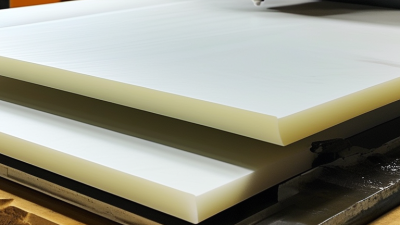
Choosing a thermoforming vacuum machine starts with the sheet, not the sales brochure. Polypropylene, PET, ABS, HIPS, and PLA soften across different temperature ranges. PET may need controlled pre-drying, while PLA can deform under excessive heat. PlasticsEurope reported 400.3 million tonnes of global plastics production in 2022, highlighting the material range manufacturers now face. Ask for trials using your actual thickness, color, and recycled content. A clean test sheet can mislead. Watch the corners.
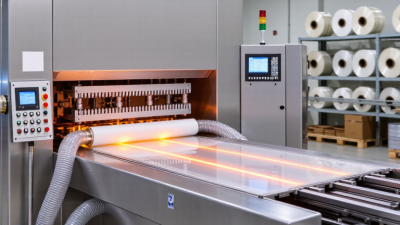
Heating must remain even across the mold area. Request mapped temperatures from every heating zone, not only the controller display. Infrared elements can create hot spots, especially with dark or multilayer sheets. Measure sheet temperature with a calibrated infrared device, then compare wall thickness after forming. Grand View Research reported continued growth in the global thermoforming market, but market expansion does not guarantee process quality. A larger machine may still waste energy and produce thin corners.
Vacuum performance depends on pump capacity, valve timing, mold venting, and leakage. Check ultimate vacuum, evacuation time, and pressure stability under load. A fast pump cannot fix blocked vents. Request a pressure trace during a real production cycle. Small leaks can cause webbing, incomplete details, or uneven walls. ISO 20430:2020 provides safety requirements for plastics and rubber machines, but it does not replace process validation. Test after several hours of operation. Heat drift is easy to miss. Cheap tests become expensive lessons.
| Tip | Selection Dimension | What to Check | Practical Reference Data | Why It Matters |
|---|---|---|---|---|
| 1 | Material Compatibility | Confirm that the heating system, clamping frame, mold surface, and vacuum system are suitable for the selected thermoplastic sheet. | Common thermoforming materials include ABS, HIPS, PETG, PVC, PP, and acrylic. Typical forming temperatures vary by grade and are commonly within approximately 120–200°C. | Correct compatibility reduces warping, sticking, incomplete forming, and material degradation. |
| 2 | Heating Uniformity | Review the number of heating zones, temperature control accuracy, warm-up time, and heat distribution across the sheet. | Independent temperature zones and closed-loop control can help maintain more consistent sheet temperatures. A practical target is to keep temperature variation as low as the material and process allow. | Uneven heating can create thin corners, webbing, surface defects, and inconsistent wall thickness. |
| 3 | Vacuum Performance | Check ultimate vacuum level, pump capacity, evacuation time, vacuum-line diameter, and sealing quality. | Many forming applications operate with vacuum levels around 0.7–0.95 bar below atmospheric pressure, depending on the machine, mold, sheet, and part geometry. | Stable vacuum helps the softened sheet capture fine details and reduces incomplete forming. |
| 4 | Forming Area and Depth | Match the usable forming area, maximum draw depth, mold dimensions, and sheet thickness range to the intended products. | The available forming area should exceed the finished part footprint and include space for clamping, trimming, and material draw-down. | Insufficient area or depth may cause excessive stretching, short forming, or poor dimensional accuracy. |
| 5 | Clamping and Sealing | Inspect frame rigidity, clamping pressure, gasket condition, sheet retention, and the airtight contact between the sheet and mold. | The clamping system should hold the sheet evenly around the full perimeter without visible gaps or localized slippage. | Air leakage or uneven clamping can reduce vacuum efficiency and produce irregular shapes. |
| 6 | Controls and Process Repeatability | Evaluate programmable heating, forming, vacuum, cooling, and release sequences, along with recipe storage and alarm functions. | A repeatable cycle should maintain consistent heating time, vacuum timing, pressure conditions, and cooling time from batch to batch. | Repeatable controls help reduce scrap, simplify operator training, and improve production consistency. |
| 7 | Cooling, Maintenance, and Safety | Check cooling provisions, emergency stops, thermal protection, access to filters and seals, electrical safety, and availability of replacement parts. | Cooling time depends on material thickness, mold temperature, part geometry, and cooling method; maintenance intervals should be defined for pumps, seals, filters, and heating elements. | Effective cooling improves dimensional stability, while accessible maintenance features reduce downtime and safety risks. |
Note: Actual operating settings depend on the specific thermoplastic grade, sheet thickness, mold design, part geometry, and machine configuration. Always verify recommended processing conditions with the material supplier and conduct a forming trial before production.
Controls should make routine adjustments clear, not hide them behind layered menus.
During a demonstration, ask an operator to set heating zones, vacuum level, and cycle time. Watch whether values are easy to read and confirm. Small labels can be hard to see near a warm, busy machine. A readable display matters.
Check whether the machine shows alarms, process status, and the cause of a stopped cycle. Ask how recipes are saved and restored after a power interruption; do not assume every system handles this the same way.
Safety deserves close inspection. Look for accessible emergency stops, guarded pinch points, and interlocks that prevent hazardous motion when an access panel opens. Ask the supplier to explain routine checks and demonstrate how safety functions are tested. Test them.
Ease of operation also depends on setup and cleaning. Can one trained operator load a sheet, start a cycle, and remove a formed part without awkward reaching? Observe a real changeover, including mold alignment and vacuum-line connections.
A demonstration may look smoother than a busy shift. Note where operators pause, improvise, or need another person; those moments can reveal training needs and workflow friction. Review the manual and ask which maintenance tasks require qualified support.
7 Tips for Choosing a Thermoforming Vacuum Machine
A machine’s purchase price rarely reflects its real cost. PlasticsEurope reported 413.8 million tonnes of global plastics production in 2023, increasing pressure on manufacturers to protect uptime and material efficiency. Review heater calibration, vacuum stability, mold-change time, and access to filters, seals, and pumps. Small delays become expensive during continuous production.
Maintenance records reveal more than sales claims. Ask for recommended service intervals, failure histories, and documented energy performance. The U.S. Department of Energy reports that compressed-air leaks can waste 20–30% of compressor output. Vacuum systems need similar discipline, although their operating conditions differ. Inspect hoses, valves, and gaskets regularly. One overlooked seal can weaken forming quality.
Supplier support affects total cost of ownership. Confirm response times, remote diagnostics, technician coverage, and spare-parts availability before signing. Ask whether training includes fault finding, not just machine operation. The 2024 PMMI manufacturing outlook highlights labor and productivity pressures across packaging operations, making practical training increasingly valuable. A cheaper machine may demand more attention. I have seen maintenance assumptions fail when production schedules become aggressive. That is an uncomfortable point, but it deserves a line in the budget. Calculate electricity, tooling changes, rejected sheets, labor, service contracts, and planned downtime over five years. Review the numbers annually.
This illustrative scoring framework highlights factors to compare when reviewing machine options. Scores are planning examples, not market data; adjust them to your production requirements and supplier quotations. Include maintenance needs, supplier support, and total cost of ownership in your evaluation.