Top Tooling CNC Machines for Global Buyers

Selecting a tooling cnc machine for international production requires more than comparing spindle speed and price. Global buyers must examine accuracy, rigidity, control systems, maintenance access, and supplier support. A machine may look impressive in a showroom, yet perform differently beside a dusty workshop floor.

This guide introduces leading tooling CNC machines for manufacturers serving diverse markets. It considers machining capacity, repeatability, energy use, operator training, and compatible tooling standards. Practical details matter: a stable cast-iron frame, accessible lubrication points, and a clear controller can reduce daily production problems. Buyers should also review electrical requirements, installation conditions, documentation, warranty coverage, and local service availability. Reliable suppliers provide test-cut evidence, inspection records, and realistic delivery information.

No machine is perfect.

Some published specifications need careful interpretation. Maximum travel does not always equal useful working space, and high spindle speed may offer little value for heavy cutting. Experienced buyers should compare complete operating costs, not only the initial quotation. Operator skill, material type, batch size, and future automation plans can change the best choice. Independent references and factory demonstrations add confidence, although they cannot replace a detailed acceptance test. This overview aims to support informed decisions through practical evaluation, transparent criteria, and attention to long-term reliability. Small omissions can become expensive. That deserves reflection before any purchase.

Top Tooling CNC Machines for Global Buyers

CNC Tooling Machine Basics and Core Functions

CNC tooling machines rely on controlled motion, rigid workholding, and correctly matched cutting tools. The controller converts digital coordinates into spindle and axis movement. Toolholders maintain concentricity, while collets or hydraulic systems reduce runout. ISO 230-2 defines tests for positioning accuracy and repeatability. Buyers should request both values, not only advertised resolution. A small error at the tool tip can spread across a long component.

Core functions include milling, drilling, tapping, boring, and automatic tool changing. Usable performance depends on spindle torque, speed range, axis travel, table load, coolant flow, and chip evacuation. The International Federation of Robotics reported 541,302 industrial robot installations worldwide in 2023. This figure shows how quickly factories are adopting automated production. CNC equipment increasingly needs reliable data exchange and repeatable tool handling. That matters.

Global buyers should compare thermal stability, electrical compatibility, guarding, documentation, and local maintenance skills. ISO 14955 provides a framework for assessing machine-tool energy efficiency, including idle and cutting conditions. Energy claims need context. Vendors may present ideal measurements only. I have seen blocked chips and unstable clamping cause more downtime than slow cutting speeds. Not always. A perfect setup is a myth. Ask for sample-part results, inspection records, and a clear acceptance test. Leave room for doubt; real production is rarely as clean as a brochure.

Top CNC Tooling Machines: Representative Axis Configurations

CNC machine capability is commonly described by the number of controlled axes. More axes can reduce repositioning and support the machining of complex geometries, while simpler configurations are often efficient for standard turning and milling work.

A 2-axis CNC lathe primarily performs turning operations. Three-axis machining centers handle conventional milling, four-axis machines add rotary positioning, and five-axis machines can coordinate tool movement around multiple surfaces in a single setup.

主要 Types of Tooling CNC Machines for Industrial Use

Tooling CNC Machines for Industrial Use

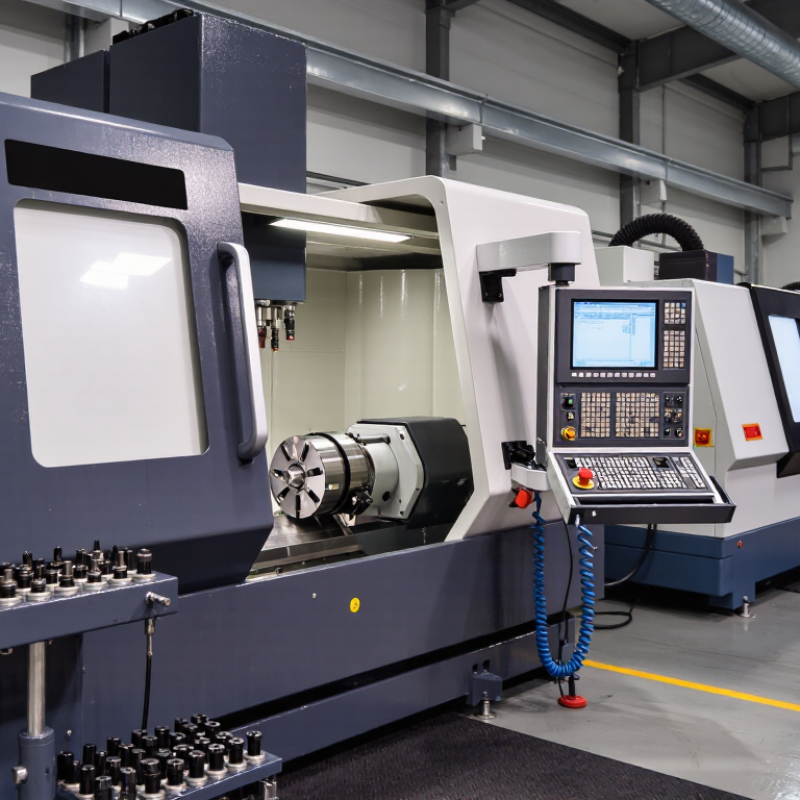
Vertical machining centers are common in general industrial work. Their upright spindle gives operators clear access to fixtures and cutting tools. They suit plates, brackets, molds, and medium-sized components. A rigid frame helps reduce vibration during steel cutting. However, limited working height can restrict larger parts.

Horizontal machining centers handle production work from multiple sides. Their spindle reaches the workpiece horizontally, while chips fall away more naturally. This can improve surface quality and reduce chip recutting. They often use pallet systems for repeatable batch manufacturing. Floor space and higher installation costs need careful planning.

Five-axis CNC machines cut complex surfaces with fewer setups. They are useful for aerospace structures, medical components, and detailed tooling. Fewer setups can improve alignment and shorten handling time. CNC lathes are better for shafts, pins, bushings, and other rotational parts. Turning centers may add live tooling for drilling and milling operations. Wire and sinker EDM machines support extremely hard materials and fine internal features.

Global buyers should compare spindle speed, torque, axis travel, control functions, and tool capacity. Power requirements vary across regions, so electrical compatibility matters. Service response is equally important. A machine can be technically impressive yet impractical without local training or spare parts. In practice, buyers sometimes overvalue speed and undervalue rigidity. That mistake can appear later as chatter, tool wear, and inconsistent dimensions. Clearance checks should never be skipped.

Top Tooling CNC Machines for Global Buyers - Main Types of Tooling CNC Machines for Industrial Use

The specifications below are typical industry ranges for comparison. Actual performance depends on machine configuration, control system, workholding, cutting tools, material, and process conditions.

Machine Type Typical Axis Configuration Primary Machining Operations Common Workpiece Materials Typical Accuracy Range* Typical Spindle or Process Range Best Industrial Applications Key Advantages Important Buying Considerations
3-Axis Vertical Machining Center X, Y, and Z linear axes
  • Face milling
  • End milling
  • Drilling and tapping
  • Contour machining
Aluminum Steel Stainless steel Cast iron Engineering plastics Approximately ±0.005 to ±0.010 mm positioning accuracy on many precision configurations Approximately 6,000–24,000 rpm; commonly equipped with 10–32 tool positions General component production, jigs and fixtures, mold bases, brackets, plates, and maintenance parts Broad versatility, relatively simple programming, accessible work area, and lower initial investment than multi-axis systems Check table size, Z-axis clearance, spindle taper, chip evacuation, tool-change time, and rigidity for the intended material
4-Axis Vertical Machining Center X, Y, Z, plus one rotary axis, commonly A or B
  • Multi-face machining
  • Indexing operations
  • Radial drilling
  • Reduced-repositioning milling
Aluminum alloys, carbon steel, stainless steel, brass, copper, and titanium alloys with suitable tooling Approximately ±0.005 to ±0.012 mm, depending on rotary-axis calibration and configuration Approximately 6,000–20,000 rpm; rotary tables often range from about 100–500 mm in diameter Valve bodies, flanges, manifolds, drive components, small housings, and parts requiring machining on several faces Fewer setups, improved feature-to-feature consistency, and better access to multiple workpiece surfaces Evaluate rotary-table load capacity, through-hole size, indexing accuracy, interference clearance, and post-processor compatibility
5-Axis Machining Center Three linear axes plus two simultaneous or positioning rotary axes
  • Complex surface machining
  • Impeller and blade machining
  • Angled-hole drilling
  • Deep-cavity and undercut machining
Aluminum, titanium, nickel-based alloys, tool steel, stainless steel, and composite materials Approximately ±0.003 to ±0.010 mm linear positioning accuracy; volumetric accuracy varies by machine and calibration Approximately 8,000–30,000 rpm; high-speed models may exceed this range for non-ferrous materials Aerospace parts, medical components, turbine blades, energy components, precision molds, and complex tooling Fewer setups, shorter tools, improved surface access, and better consistency on complex geometries Review simultaneous-axis capability, rotary-axis torque, collision avoidance, CAM requirements, machine kinematics, and operator training
Horizontal Machining Center Usually X, Y, and Z linear axes with a rotary B axis
  • Heavy milling
  • Deep-hole drilling
  • Multi-face production machining
  • Palletized machining
Cast iron, carbon steel, alloy steel, stainless steel, aluminum, and ductile iron Approximately ±0.004 to ±0.010 mm positioning accuracy on precision production models Approximately 4,000–18,000 rpm; high torque is prioritized for many heavy-cutting applications Automotive and industrial housings, transmission parts, pump bodies, engine components, and large batch production Excellent chip evacuation, strong cutting rigidity, multiple-pallet automation, and efficient multi-side machining Assess floor space, pallet size, spindle torque, tombstone compatibility, coolant filtration, and automation interface
CNC Turning Center X and Z axes; optional C axis, Y axis, and live tooling
  • Turning and facing
  • Boring and threading
  • Grooving and parting
  • Milling with live tools
Steel, stainless steel, aluminum, brass, bronze, cast iron, and titanium alloys Approximately ±0.003 to ±0.010 mm positioning accuracy, depending on size and configuration Approximately 2,000–6,000 rpm for many turning spindles; bar capacity commonly ranges from about 20–100 mm Shafts, pins, bushings, threaded components, flanges, fittings, and rotational tooling components Efficient production of cylindrical parts, automatic bar feeding options, and integration of turning and milling operations Check maximum turning diameter, swing over bed, chuck size, bar capacity, spindle bore, tailstock, and chip-control capability
CNC Swiss-Type Turning Machine Sliding-headstock design with multiple linear tools and optional C or Y axes
  • Precision turning
  • Micro-drilling
  • Threading
  • Cross-milling and backworking
Stainless steel, titanium, cobalt-chrome alloys, brass, aluminum, and medical-grade polymers Approximately ±0.002 to ±0.008 mm in suitable production conditions Approximately 4,000–12,000 rpm; typical bar capacities are often below 40 mm Medical fasteners, miniature shafts, connectors, watch components, precision pins, and small complex parts Excellent support near the cutting zone, low deflection, high productivity, and complete machining of small components Consider minimum and maximum bar diameter, guide-bushing system, tooling capacity, bar loader integration, and material waste
CNC Wire Electrical Discharge Machine Usually X and Y axes with U and V taper-control axes; Z controls workpiece height
  • Profile cutting
  • Fine-pitch punch production
  • Die cutting
  • Taper and intricate contour machining
Electrically conductive materials such as hardened steel, carbide, copper, graphite, and titanium alloys Approximately ±0.002 to ±0.010 mm; fine-finish capability depends on passes and process settings Wire diameters commonly range from about 0.10–0.30 mm; cutting speed depends strongly on thickness and material Stamping dies, extrusion tooling, precision inserts, carbide components, and intricate profiles that are difficult to mill Machines hardened materials without conventional cutting forces and produces narrow, accurate profiles Verify maximum workpiece size, submerged or flushing design, taper angle, dielectric filtration, wire consumption, and automation
CNC Sinker Electrical Discharge Machine Typically three controlled linear axes with an electrode and work tank
  • Blind cavity machining
  • Rib and slot production
  • Fine-detail erosion
  • Hard-material cavity finishing
Hardened tool steel, carbide, conductive alloys, and other electrically conductive materials Approximately ±0.005 to ±0.015 mm; fine finishing may achieve very low surface roughness with multiple passes Electrode materials commonly include graphite or copper; surface roughness can reach approximately Ra 0.1–3.2 µm depending on settings Injection molds, die-casting dies, forging dies, deep cavities, sharp internal corners, and hardened tooling Creates complex cavities and sharp details after heat treatment with minimal mechanical cutting force Assess electrode-production requirements, tank dimensions, flushing performance, power capacity, dielectric filtration, and electrode wear control
CNC Tool and Cutter Grinder Commonly 5 or more controlled axes for wheel and tool positioning
  • End-mill sharpening
  • Drill and reamer grinding
  • Profile grinding
  • Tool geometry production
High-speed steel, carbide, cermet, ceramic, and polycrystalline cutting-tool materials Approximately ±0.002 to ±0.010 mm, depending on tool size and measurement system Grinding-wheel speeds commonly range from about 3,000–12,000 rpm; wheel selection depends on tool material Cutting-tool manufacturing, reconditioning, drills, end mills, form tools, and specialized tooling production Accurate tool geometry, repeatable regrinding, automated measurement, and reduced dependence on manual grinding Check wheel diameter, tool diameter range, collet system, optical or laser measurement, coolant filtration, and grinding software
CNC Surface Grinder Usually X and Y table movement with Z grinding-head control
  • Surface finishing
  • Parallelism correction
  • Flatness improvement
  • Precision plate and insert grinding
Hardened tool steel, alloy steel, carbide, ceramics, cast iron, and selected non-ferrous materials Approximately ±0.002 to ±0.010 mm for suitable workpieces and process conditions Grinding-wheel speeds commonly range from about 1,500–3,600 rpm; table sizes vary widely by machine class Die plates, mold components, gauge blocks, machine-tool parts, inserts, and precision tooling surfaces High flatness and parallelism, controlled material removal, and consistent surface finish Evaluate magnetic-chuck size, grinding-wheel diameter, automatic dressing, coolant system, table travel, and thermal stability
CNC Router Usually three linear axes; optional rotary axis or automatic tool changer
  • 2D and 3D profiling
  • Drilling and pocketing
  • Engraving
  • Sheet and panel cutting
Wood, plastics, acrylic, aluminum, composite panels, foam, and non-ferrous sheet materials Approximately ±0.02 to ±0.10 mm, depending on frame design, work area, and material Approximately 12,000–30,000 rpm; larger working areas commonly exceed 1,000 × 2,000 mm Pattern making, signage, furniture tooling, composite trimming, prototype fixtures, and non-metallic mold models Large working envelope, high cutting speed for light materials, and flexible sheet-processing capability Check gantry rigidity, vacuum-table design, dust extraction, spindle power, work-area flatness, and material-support system
CNC Plasma or Fiber-Laser Cutting Machine Typically X and Y motion with controlled Z height; laser systems may include rotary or bevel axes
  • Sheet profiling
  • Plate cutting
  • Slot and hole cutting
  • Part nesting
Carbon steel, stainless steel, aluminum, copper, and other electrically conductive metals Approximately ±0.05 to ±0.20 mm for many production systems; process capability varies by thickness Laser power commonly ranges from about 1–20 kW; plasma systems are selected by amperage and plate thickness Sheet-metal tooling, brackets, machine frames, enclosures, structural parts, and rapid blank preparation Fast sheet processing, low mechanical cutting force, efficient nesting, and reduced setup time Review material thickness range, power source, assist-gas requirements, fume extraction, bed size, consumables, and safety systems

Key Specifications for Comparing CNC Tooling Equipment

Top Tooling CNC Machines for Global Buyers

Comparing tooling CNC machines requires more than checking spindle speed. Start with working travel, table load, and spindle taper. These figures show whether the machine suits your parts and cutting tools. Check spindle torque across the usable speed range. High speed means little if torque drops during heavy cuts. Positioning accuracy and repeatability also matter. A small error can become visible on a long aluminum component.

Review the tool magazine capacity, change time, and maximum tool diameter. Confirm whether the control system supports your preferred file formats and inspection routines. Coolant pressure, chip evacuation, and power requirements affect daily productivity. Global buyers should also verify voltage compatibility, installation space, crating dimensions, and technical support response times. Service quality is often harder to measure. It deserves careful questioning.

Tips: Request test-cut data, not only catalog values. Ask for accuracy results at operating temperature. Compare the same material, tool, and cutting depth. Also inspect sample videos carefully; polished footage can hide vibration or poor chip control. I have found that an impressive specification sheet may still miss practical details, especially maintenance access. That is a useful warning. A machine can meet every headline requirement and still frustrate operators when filters clog, doors are cramped, or software training is weak. Get these points in writing before purchase.

How Global Buyers Evaluate Suppliers and Machine Quality

Top Tooling CNC Machines for Global Buyers

How Global Buyers Evaluate Suppliers and Machine Quality

Global buyers assess more than cutting speed when selecting a tooling CNC machine supplier. They examine process control, documentation, service capacity, and communication. A polished showroom can still hide weak production discipline. Factory audits should include assembly areas, inspection rooms, and spare-parts storage. Ask to see calibration records, not only certificates.

Machine quality becomes clearer through a witnessed test cut. Buyers should check surface finish, dimensional stability, tool-change repeatability, and chip removal. Measure spindle runout with suitable inspection equipment. Review results at different speeds and loads. Numbers matter. Ask for the raw measurement data. Some suppliers present only their best sample, which can create a misleading impression.

Reliable evaluation also includes long-term support. Confirm response times, technician training, remote diagnosis, and local maintenance options. Request clear warranty terms and a complete list of recommended consumables. Installation procedures deserve attention, especially for overseas facilities with different power conditions. Translation gaps can cause expensive mistakes. Use drawings, photos, and signed specifications to reduce ambiguity.

Experienced buyers often compare several machines using the same material and tooling. This makes performance differences easier to identify. They also inspect rejected parts and maintenance logs when available. That step is sometimes skipped. It should not be. A supplier’s answer to an uncomfortable question may reveal more than a perfect demonstration. Machine quality is technical, but supplier reliability appears in small details.

International Purchase, Shipping, Installation, and Support Considerations

Top Tooling CNC Machines for Global Buyers

International Purchase, Shipping, Installation, and Support Considerations

Choosing a tooling CNC machine involves more than comparing spindle speed and table size. Confirm material compatibility, machining tolerance, electrical standards, and available floor space. Request a detailed specification sheet, utility checklist, and factory acceptance test records. Ask how accuracy was measured.

Shipping requires careful planning. Clarify the delivery term, crate dimensions, gross weight, insurance coverage, and customs documents before payment. A machine may arrive safely but remain unusable if the lifting plan is missing. Check port access, unloading equipment, foundation strength, voltage, compressed air, and coolant requirements. Photograph the crate before opening it. Small evidence can prevent large disputes.

Installation support should include leveling instructions, calibration procedures, operator training, and safety documentation. Remote video assistance is useful, but complex alignment may require a qualified local technician. Confirm spare-part availability, response times, language coverage, and time-zone support. Keep digital copies of manuals and maintenance records. No checklist is perfect. I have seen buyers focus heavily on machine price and overlook installation delays, which often cost more than expected. Build a realistic schedule with contingency time, especially when importing into regions with slower inspections or limited technical services.

Go to Top