Why Choose Titanium Hemispheric Bolt for Global Sourcing?
Why Choose Titanium Hemispheric Bolt for Global Sourcing?
Global sourcing decisions often begin with one practical question: will the fastener remain reliable after years of exposure, vibration, and maintenance? A Titanium Hemispheric Bolt offers a strong answer for demanding assemblies. Its rounded head can reduce snagging points, while titanium’s low density helps control overall equipment weight. It also provides strong corrosion resistance in humid, marine, and chemically challenging environments.
Matthew J. Donachie Jr., author of Titanium: A Technical Guide, wrote, “Titanium alloys are used where their unique properties justify their higher cost.” This principle remains valuable for sourcing teams. The lowest unit price is not always the lowest total cost. A bolt that resists corrosion may reduce replacement work, shutdowns, and inspection pressure. That matters in aircraft structures, medical equipment, offshore systems, and precision machinery.
Details matter.
Buyers should verify grade, diameter, thread accuracy, surface finish, head dimensions, and batch traceability. Supplier audits and material certificates also deserve attention. However, titanium is not automatically the best choice. Its higher material price, possible galling during installation, and specialized machining requirements can create avoidable problems. In my view, this is where many sourcing comparisons become too optimistic.
A realistic evaluation should compare purchase cost, service conditions, installation practice, and expected maintenance. It should also confirm compliance with the destination market’s technical requirements. With disciplined supplier selection, the Titanium Hemispheric Bolt can deliver dependable performance rather than merely an impressive specification.
What Is a Titanium Hemispheric Bolt? Grade 5 Density: 4.43 g/cm³
Why Choose Titanium Hemispheric Bolt for Global Sourcing?
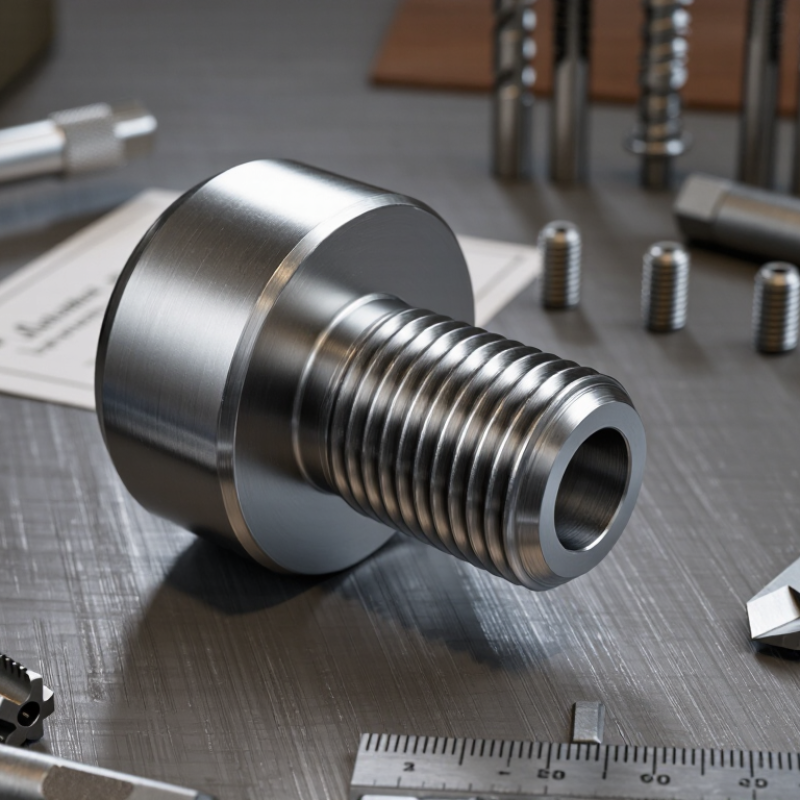
A titanium hemispheric bolt has a rounded, dome-shaped head and a threaded shaft. The curved head reduces sharp contact points and can distribute pressure across mating surfaces. This design is useful where exposed fasteners need smoother profiles and lower snagging risks. Grade 5 titanium, usually Ti-6Al-4V, has a density of approximately 4.43 g/cm³. That is far lighter than many steel alternatives. It also provides strong corrosion resistance and a useful strength-to-weight ratio.
In practical sourcing, this lower density can reduce assembly weight and handling effort. The material performs well in demanding outdoor, marine, and engineering environments. However, lightweight does not mean universally stronger. Thread design, preload, surface condition, and joint geometry still control performance. This detail is easy to overlook. A bolt may meet a material specification yet fail an application requirement. Reliable suppliers should provide dimensional inspection records, material certificates, batch traceability, and clear information about thread standards. Checking actual density is uncommon, but reviewing the stated alloy and certification remains valuable.
Tips: Confirm head diameter, thread pitch, length, and tolerance before ordering. Request samples for fit testing. Compare strength data at the expected temperature. Do not select Grade 5 only because it weighs less. A small design review can prevent expensive rework.
Why Titanium? About 43% Lower Density Than Steel (4.43 vs 7.85 g/cm³)
Why Choose Titanium Hemispheric Bolt for Global Sourcing?
Titanium hemispheric bolts offer a clear weight advantage in demanding assemblies. Titanium has a density of about 4.43 g/cm³, compared with steel at 7.85 g/cm³. That is roughly 43% lower. A box of bolts feels noticeably lighter during handling and shipping. This difference can reduce structural weight in aerospace, marine, medical, and high-performance equipment applications. Less mass may also simplify installation where access is limited.
However, weight is not everything. In practical sourcing work, I have found that thread accuracy, material grade, surface condition, and heat treatment matter just as much. A titanium bolt may resist corrosion well, but poor galling control can damage threads during tightening. Hemispheric heads also require careful contact design. The mating surface must distribute pressure evenly. One overlooked detail can create expensive rework.
Tips: Request density, tensile strength, hardness, and chemical composition reports. Confirm the exact diameter, thread standard, pitch, head radius, and tolerance. Test sample bolts with the intended torque tools before approving mass production. Compare shipping weight using real order quantities, not only individual part data. Titanium costs more, and the weight saving may not justify it in every application. That is worth checking honestly.
Performance Data: Grade 5 Tensile Strength Reaches 895 MPa
Why Choose Titanium Hemispheric Bolt for Global Sourcing?
Grade 5 titanium offers a strong performance case for demanding bolt applications. ASTM B348 specifies a minimum tensile strength of 895 MPa for this alloy. Its minimum yield strength is 828 MPa, with approximately 10% elongation. These figures support reliable clamping under high mechanical loads. They also provide useful design margin.
The hemispheric head spreads contact pressure across a rounded surface. This can reduce sharp stress concentration around the joint, especially on curved or uneven assemblies. In practical sourcing work, engineers should verify head radius, thread accuracy, surface finish, and dimensional tolerance. A bolt can meet the alloy requirement and still perform poorly if its geometry is inconsistent.
Corrosion resistance is another reason to consider titanium. ASM Handbook, Volume 17, identifies Grade 5 as a high-strength titanium alloy with strong resistance in many aggressive environments. However, the 895 MPa value is not a universal guarantee. Temperature, thread engagement, preload, machining damage, and galvanic contact can change actual performance. This is often overlooked.
For global purchasing, request material certificates, tensile-test records, heat-treatment details, and inspection results. ASTM-based testing improves traceability between suppliers. Independent verification is still sensible for critical assemblies. Country-specific documentation rules may also vary. A lower quoted price can hide weaker inspection control. That deserves careful review.
