Why Choose Heat Resistant Rubber Hose?
A Heat Resistant Rubber Hose is chosen when ordinary tubing cannot reliably handle hot air, steam, oil, or heated process fluids. The right hose helps maintain flow and reduces premature cracking, softening, or leakage. But “heat resistant” is not a complete specification. The actual temperature, pressure, fluid, and operating cycle all matter.
Lord Kelvin, the physicist and engineer, offered a useful principle: “When you can measure what you are speaking about, and express it in numbers, you know something about it.” He was not speaking specifically about rubber hose. Still, his point applies: compare the hose’s stated temperature range with real operating conditions, including brief heat spikes. Check its pressure rating, reinforcement, fittings, and fluid compatibility. A hot hose under pressure behaves differently from one carrying warm air at low pressure.
Small details matter. A hose near an engine may face radiant heat, vibration, and tight bends. A line in a workshop may experience repeated heating and cooling instead. Manufacturer data sheets and application guidance are more dependable than choosing by appearance or a broad product label. If conditions are uncertain, confirm them before installation; guessing can be costly.
No hose is perfect for every setup. Even a suitable product can fail when bent too sharply, poorly supported, or used beyond its rating. That part is easy to overlook. This guide explains why a Heat Resistant Rubber Hose may be the practical choice, what specifications deserve attention, and where careful selection still requires judgment.
What Defines a Heat-Resistant Rubber Hose and Its Service Limits?
Why Choose Heat Resistant Rubber Hose?
What Defines a Heat-Resistant Rubber Hose and Its Service Limits?
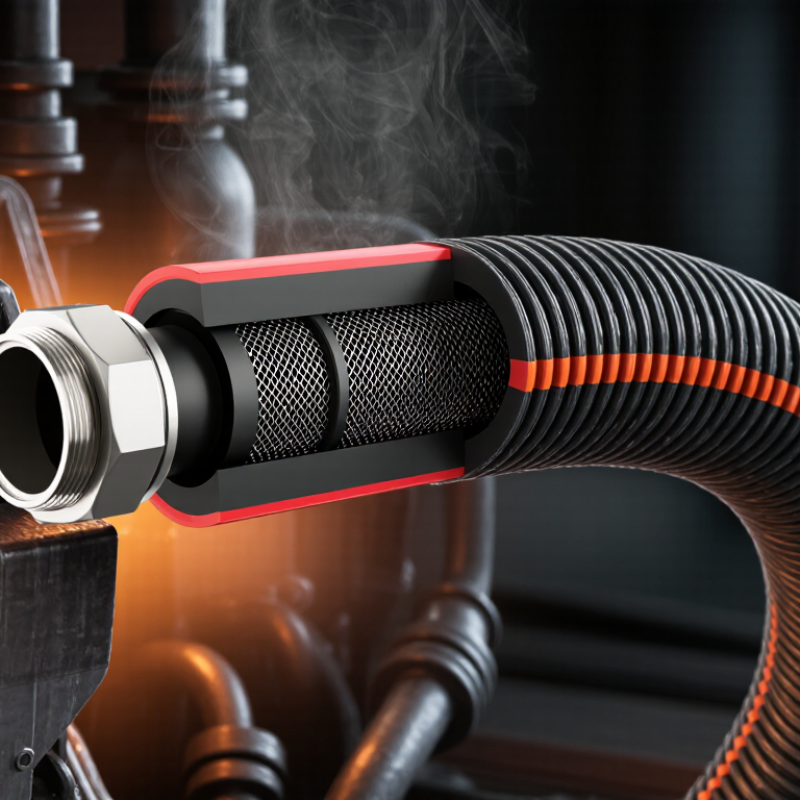
A heat-resistant rubber hose uses heat-tolerant elastomers and reinforcement to carry fluids or gases in warm operating conditions. Its temperature rating depends on the hose construction, conveyed material, pressure, and exposure time. There is no single rating for every hose. A hose that handles brief heat spikes may not withstand continuous high temperatures. Check the manufacturer’s specifications for both working and peak temperatures.
Service limits also depend on installation. Tight bends, vibration, hot surfaces, and pressure surges can shorten hose life. For example, a hose routed close to a heater may age faster than one exposed to the same air temperature elsewhere. Inspect for hardening, cracks, swelling, or loose fittings. Ratings can look reassuring on paper, but real installations are rarely perfect; that deserves a second look.
Tips: Confirm temperature and pressure limits together. Allow room for movement, keep the hose clear of hot surfaces, and inspect it regularly. Replace it if damage appears. A rating is a boundary, not a target.
How Do EPDM, Silicone, and NBR Compare in Heat Tolerance?
Why Choose Heat Resistant Rubber Hose?
How Do EPDM, Silicone, and NBR Compare in Heat Tolerance?
Heat tolerance depends on the rubber compound, fluid, pressure, and exposure time. A hose near a hot engine may face brief temperature spikes, while a washdown line may stay hot for hours. Check the hose’s rated working temperature, not just the polymer’s headline limit. The details matter.
EPDM often handles hot water, steam, and outdoor weather well. Many compounds suit continuous service around 120–150°C, though ratings vary. EPDM is usually a poor choice for petroleum oils and fuels. A fitting that looks suitable may still fail if the fluid swells the inner tube.
Silicone can tolerate a wide temperature range, often around -50°C to 200°C, depending on construction. It stays flexible in cold conditions, but may resist abrasion and tearing less effectively than other options. NBR is commonly chosen for oils and fuels, with standard heat limits often near 100–120°C. Specialized compounds may go higher. Not interchangeable. Before choosing, compare the actual hose data sheet with measured operating conditions. Temperature alone can mislead; pressure and repeated heat cycles matter too. I would not treat these typical ranges as guarantees.
How Does SAE J20 Relate to Coolant-Hose Service Around 125°C?
Why Choose Heat Resistant Rubber Hose?
Coolant service near 125°C puts rubber under sustained thermal stress. SAE J20 sets performance requirements for automotive coolant hoses, including testing for heat, pressure, and aging. However, SAE J20 is not a blanket temperature guarantee. Hose types and constructions differ, so confirm that the specific hose is rated for the expected continuous temperature and coolant.
Under the hood, temperature can vary with engine load, airflow, and hose location. A hose beside a hot engine component may face harsher conditions than one in a cooler section. Repeated heating and cooling can harden rubber, while pressure pulses and vibration add wear. That distinction is easy to miss: a familiar standard marking alone may feel reassuring, but it does not replace checking the product data. For service around 125°C, review the hose’s exact SAE J20 designation, pressure limits, and chemical compatibility.
Tips: Check the hose rating against actual operating conditions, not just coolant temperature. Inspect for cracks, swelling, or soft spots, especially near clamps and bends. Leave room for engine movement. Small routing details matter.
How Do ASTM D573 Heat-Aging Tests Assess Rubber Durability?
Why Choose Heat Resistant Rubber Hose?
How Do ASTM D573 Heat-Aging Tests Assess Rubber Durability?
ASTM D573 assesses how rubber changes after exposure to heated air in a controlled oven. A laboratory records the test temperature and exposure time, then compares the rubber’s properties before and after aging. Common measurements include tensile strength, elongation at break, and hardness. The exact conditions matter; results from different test settings may not be directly comparable. Small changes matter.
Tips: Ask for the test temperature, duration, and measured properties when reviewing a hose specification. Check whether the tested material represents the hose’s rubber compound. A test coupon is useful, but it is not the whole hose.
Heat aging can reveal hardening, softening, or loss of flexibility that may affect service. Yet ASTM D573 results do not predict an exact service life. A hose also faces pressure, bending, vibration, and contact with fluids. Those conditions can change how it performs. Not a lifespan promise. Compare test data with the hose’s actual operating temperature and use, and remember that a lab result cannot capture every field condition.
Which Temperature, Pressure, and Fluid Data Guide Hose Selection?
Selecting a heat resistant rubber hose starts with the real operating temperature, not just the highest temperature listed in a catalog. Record the normal temperature, brief peaks, and how long each peak lasts. A hose carrying hot fluid continuously may need a different rating from one exposed to occasional heat. Check whether the stated limit applies to the hose itself, the fluid, or both. Details matter.
Pressure needs the same care. Note the working pressure and any sudden surges during startup, valve closure, or pump changes. The hose assembly’s rating can be lower than the hose’s rating once fittings are installed. Compare your operating conditions with the manufacturer’s published limits, and allow for temperature-related pressure reductions where specified. A generous safety margin is sensible, but guessing one is not.
Identify the fluid precisely, including concentration, additives, and cleaning agents. Rubber compounds do not respond alike: a hose compatible with water may swell, soften, or crack when exposed to oils or chemicals. Check compatibility data and ask for clarification when the fluid blend is unclear. Also consider bend radius, vibration, and contact with hot surfaces. I would not choose by temperature alone; that shortcut is easy to make, and easy to regret. After installation, inspect for leaks, surface damage, or unusual softening.
