
What Is a Portable Metal Tool Box Used For?

A Portable Metal Tool Box is designed to keep essential tools organized, protected, and ready to carry. It serves homeowners, technicians, mechanics, maintenance workers, and hobbyists in many daily situations. Its rigid metal body helps shield tools from dust, light impacts, and workshop clutter. That protection matters when a toolbox travels between a garage, job site, or service vehicle.

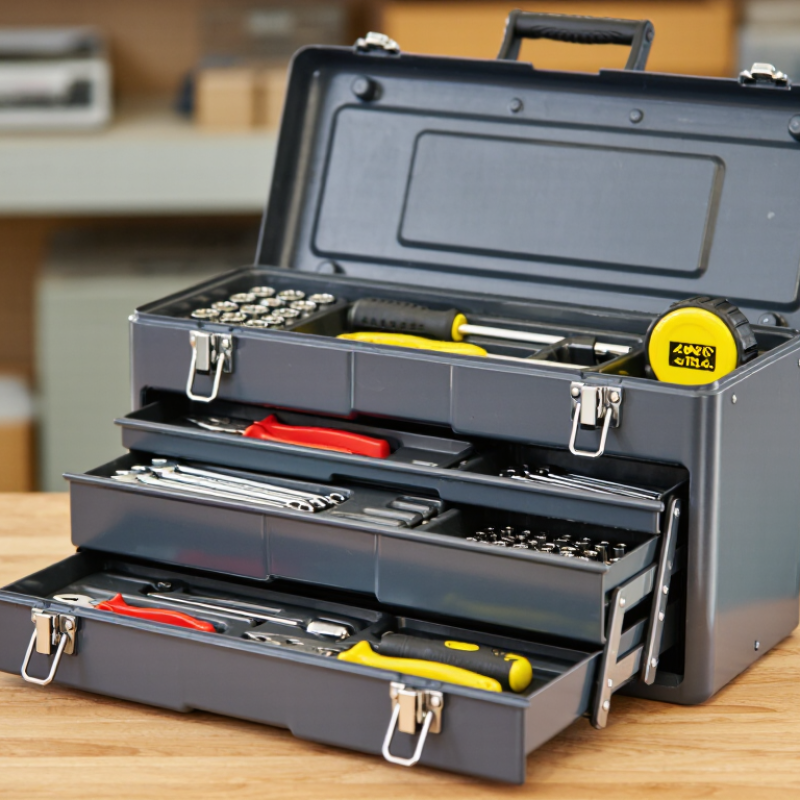
Inside, removable trays and divided compartments can separate screwdrivers, pliers, wrenches, sockets, and measuring tools. A technician can often find a 10-millimeter wrench without searching through a loose pile. The strong handle supports short-distance transport, while a secure latch helps prevent accidental opening. Some models also provide space for small fasteners, electrical tape, or spare blades. Keep sharp items protected.

From practical experience, metal boxes usually offer better impact resistance than many lightweight plastic alternatives. They may also tolerate warmer workshop conditions without deforming easily. However, they can become heavy when fully loaded and may develop rust if moisture remains inside. That limitation deserves attention. Wipe the box dry and inspect hinges regularly. A quality design should balance weight, storage capacity, handle comfort, and corrosion resistance.

This article explores what a Portable Metal Tool Box is used for and how it supports efficient tool management. It will examine common applications, useful features, maintenance habits, and selection considerations. The goal is practical guidance based on real workshop needs, not exaggerated product claims. A toolbox cannot replace careful work. It can, however, make careful work easier.
What Is a Portable Metal Tool Box Used For?

Portable Metal Tool Boxes: Definition, Structure, and Core Functions

A portable metal tool box is a compact storage case designed to carry hand tools between work areas. Its steel or aluminum body provides a rigid shell, while a hinged lid protects contents from dust, impacts, and accidental drops. Many models include a folding handle, recessed latches, and a removable tray for smaller items.

The internal structure supports practical organization. A shallow upper tray can hold screwdrivers, tape measures, or fasteners. The deeper compartment stores pliers, wrenches, and compact power accessories. Dividers are useful, but they may reduce available space. Some boxes also have lockable hasps, though a lock does not make the box completely theft-proof.

In daily workshop use, a metal tool box helps prevent tools from scattering across a bench or vehicle floor. Its flat base improves stability during transport. Ventilation is rarely a major concern for ordinary hand tools, but damp tools should be dried before storage. Moisture trapped inside can cause rust, especially around hinges and tray supports.

Metal cases are durable, yet they are not weightless. A fully loaded box can strain the wrist or damage a weak shelf. Check the handle, hinges, and rated load regularly. I have found that neat compartments encourage better tool care, but an overfilled box becomes difficult to inspect. This small design weakness deserves attention.

How OSHA 29 CFR 1910.176(b) Guides Safe Tool Storage

What Is a Portable Metal Tool Box Used For?

A portable metal tool box protects hand tools during transport, maintenance, and short-term storage. Its value depends on how workers place and secure it. OSHA 29 CFR 1910.176(b) requires stored materials to remain stable and avoid creating hazards. A box left on a narrow walkway fails that basic purpose.

The rule does not specifically require metal tool boxes. It requires safe material storage. OSHA guidance emphasizes clear aisles, stable stacking, and protection from falling objects. A closed box can reduce loose-tool hazards, but it cannot correct poor housekeeping. Workers should keep heavy tools low, close drawers before movement, and prevent the box from sliding near edges. Small details matter. A dropped wrench can cause a serious foot injury.

The Bureau of Labor Statistics reported 2.6 million nonfatal private-industry injuries and illnesses in 2023. That figure covers many causes, not storage alone, but it shows why routine controls deserve attention. A portable box should have a defined location, not an improvised one. Supervisors can inspect handles, latches, sharp edges, and overloaded compartments during regular checks. The honest weakness is human behavior. Someone may still leave the box beside an exit during a rushed repair. OSHA compliance therefore requires practical supervision, visible storage rules, and repeated correction.

How ASME B107.600 Relates to Tool Storage Quality and Durability

A portable metal tool box keeps hand tools organized, protected, and ready for transport. It suits workshops, maintenance teams, and technicians moving between work areas. Steel walls resist punctures and twisting better than many lightweight materials. A firm handle also reduces dropped tools during short trips.

ASME B107.600 relates to the quality and durability of tool storage equipment. Its requirements can address construction, operation, load performance, and storage-related safety features. The exact scope depends on the applicable edition and product category. Buyers should check the manufacturer’s declared compliance, test information, and ratings instead of trusting a logo alone. That detail matters.

In daily use, a box influenced by this standard should open smoothly, support its intended load, and keep closures secure. Hinges should not loosen after repeated movement. Drawers, if included, should resist binding under normal weight. Still, compliance does not make every box weatherproof or corrosion-proof. Poor storage can defeat good engineering. I have seen tools rust inside strong boxes when moisture stayed trapped beneath a damp cloth. That weakness is easy to overlook. Users should inspect seams, latches, handles, and sharp edges regularly. A portable metal tool box is useful because it combines mobility with protection, but its real durability depends on both tested design and careful handling.

What Is a Portable Metal Tool Box Used For?

A portable metal tool box is used to organize, protect, and transport hand tools, small parts, and maintenance equipment. Its value depends on practical storage design as well as construction quality and durability.

How ASME B107.600 Relates to Tool Storage Quality and Durability

ASME B107.600 establishes requirements for portable metal tool boxes, including dimensional characteristics, construction-related features, performance considerations, and product identification. The chart uses a scope indicator rather than a performance score: 1 means the topic is addressed by the standard, while 0 means it is not represented as a separate scope category.

How Load Capacity, Steel Gauge, and IEC 60529 Ratings Affect Selection

What Is a Portable Metal Tool Box Used For?

A portable metal tool box stores, protects, and transports hand tools between work areas. Steel resists impact better than many lightweight materials. It also tolerates hot vehicles, crowded workshops, and repeated loading. Load capacity deserves careful attention. The rating should include tools, removable trays, dividers, and small spare parts. NIOSH’s Revised Lifting Equation uses a 23 kg load constant under ideal lifting conditions. A loaded box may still feel unsafe when carried one-handed or over stairs. That difference is easy to underestimate.

Steel gauge affects durability and portability. A lower gauge number usually means thicker steel. Thicker panels resist dents, but they increase empty weight. A 20-gauge box may suit light maintenance, while heavier work may justify 18-gauge construction. Check the manufacturer’s test method, not only the headline capacity. The U.S. Bureau of Labor Statistics reported that sprains, strains, and tears remained a major category of days-away-from-work cases in 2023. Poor carrying posture can turn a useful box into a daily burden. I have seen buyers choose maximum strength, then stop carrying the box regularly.

Tips: Match capacity to real contents, then leave practical headroom. Check hinge alignment, handle fasteners, and tray movement. For dusty or wet sites, read the IEC 60529 rating carefully. IP54 limits dust entry and resists water splashes. IP65 provides dust-tight protection and water-jet resistance. IP67 covers temporary immersion under specified test conditions. No rating protects an open lid, damaged seal, or careless storage.

What Is a Portable Metal Tool Box Used For? - How Load Capacity, Steel Gauge, and IEC 60529 Ratings Affect Selection

Application Typical Contents Recommended Working Load Suggested Steel Gauge* Useful IEC 60529 Rating Selection Rationale
Home and DIY repairs Hand tools, measuring devices, fasteners, and small accessories 10–20 kg 24–22 gauge
(approximately 0.51–0.76 mm)
IP20–IP43 A lighter box is easier to carry and is generally sufficient for indoor storage or occasional transport.
Automotive service Sockets, ratchets, wrenches, screwdrivers, pliers, and diagnostic tools 20–35 kg 22–20 gauge
(approximately 0.76–0.95 mm)
IP43–IP54 Choose reinforced corners, a strong latch, and resistance to dust and splashing fluids around garages or service areas.
Electrical and maintenance work Insulated tools, cable accessories, test instruments, and replacement parts 15–30 kg 22–20 gauge
(approximately 0.76–0.95 mm)
IP54–IP65 Dust protection helps protect equipment, while a sealed design can reduce water ingress during outdoor maintenance.
Construction and field work Heavy hand tools, drill accessories, blades, anchors, and consumables 25–45 kg 20–18 gauge
(approximately 0.95–1.22 mm)
IP54–IP65 Thicker steel, folded edges, and reinforced handles help withstand impacts and repeated loading on job sites.
Outdoor utility and landscaping Pruning tools, repair tools, measuring equipment, gloves, and small hardware 15–30 kg 22–20 gauge
(approximately 0.76–0.95 mm)
IP54–IP66 Select a corrosion-resistant finish and a water-resistant closure when the box may encounter rain, mud, or spray.
Industrial production support Machine tools, gauges, replacement components, lubricating accessories, and fixtures 30–60 kg 18–16 gauge
(approximately 1.22–1.52 mm)
IP55–IP66 A rigid enclosure and higher load rating are appropriate for frequent handling, vibration, and industrial dust or water jets.
Transport in wet or exposed environments Sensitive instruments, emergency tools, spare parts, and outdoor service equipment 15–40 kg 20–16 gauge
(approximately 0.95–1.52 mm)
IP65–IP67 Use a continuous gasket, protected hinges, and a verified enclosure rating when temporary immersion or powerful water jets are possible.
Technical notes:
  • Load figures are practical planning ranges, not universal certification limits. Always verify the manufacturer's rated load, handle rating, latch strength, and base capacity.
  • Steel gauge conventions vary by material and measurement system. The approximate thickness values shown are more useful for comparison than gauge numbers alone.
  • Under IEC 60529, the first IP digit describes protection against solids and dust, while the second describes protection against water. IP54 means dust-protected and protected against water splashes; IP65 means dust-tight and protected against water jets; IP66 means dust-tight and protected against powerful water jets; IP67 means dust-tight and protected against temporary immersion up to 1 metre for up to 30 minutes under specified test conditions.
  • An IP rating applies to a tested enclosure in its specified configuration. Open lids, damaged seals, cable openings, or unsealed modifications can reduce the actual protection level.

Where Portable Metal Tool Boxes Support Construction, Maintenance, and Repair

What Is a Portable Metal Tool Box Used For?

Where Portable Metal Tool Boxes Support Construction, Maintenance, and Repair

A portable metal tool box keeps essential equipment together when work moves between locations. On construction sites, it can hold tape measures, levels, adjustable wrenches, driver bits, fasteners, and marking tools. Its rigid walls protect contents from impacts, dust, and pressure inside a crowded vehicle. A secure latch also helps prevent tools from spilling during transport. Small parts stay visible.

During maintenance work, technicians often carry one box through workshops, plant rooms, and service corridors. Removable trays can separate electrical testers, pliers, gloves, and replacement hardware. Metal construction handles repeated loading better than many lightweight alternatives. It also tolerates warm, rough working environments when stored correctly. However, metal can add weight. That matters on stairs.

Repair teams use portable boxes for planned jobs and urgent fixes. A prepared box may contain sockets, screwdrivers, spare connectors, cleaning cloths, and inspection lights. Keeping each item in a fixed position reduces searching time. In my experience, this works best when the box is checked after every task. Missing one small adapter can delay a simple repair. I have also seen workers overfill boxes, then leave useful tools behind because carrying became uncomfortable. A practical setup should match the job, not every possible problem. Regular inspection for rust, damaged hinges, and sharp edges supports safer, more reliable use.

Go to Top