
Top Underhood Fuse Box Manufacturers for Global Buyers

An Underhood Fuse Box is a compact component with an outsized role: it helps distribute and protect electrical circuits in a demanding engine-bay environment. Heat, vibration, moisture, and limited installation space all test the design. For global buyers, choosing a manufacturer is therefore about more than price. Material quality, terminal design, sealing, traceability, and production consistency deserve close attention.

The market context is changing quickly. The International Energy Agency’s Global EV Outlook 2024 reported nearly 14 million electric-car sales in 2023 and projected about 17 million in 2024. Electrification can reshape vehicle electrical architectures, but conventional and hybrid vehicles still require dependable circuit protection. Scale matters. OICA reported global motor-vehicle production of roughly 93.5 million units in 2023, underscoring the breadth of potential sourcing needs. These figures describe the wider automotive market, not fuse-box demand specifically.

This guide examines leading Underhood Fuse Box manufacturers through practical sourcing criteria, including engineering capability, quality systems, customization, and support across regions. Buyers should verify specifications against their own vehicle requirements and request evidence, such as validation records and production controls. A polished catalog is useful, but it cannot replace technical review. One caution: public company information rarely reveals the full story behind long-term field performance. Comparing suppliers carefully—and asking direct questions about testing, change management, and delivery capacity—can make the shortlist more reliable.
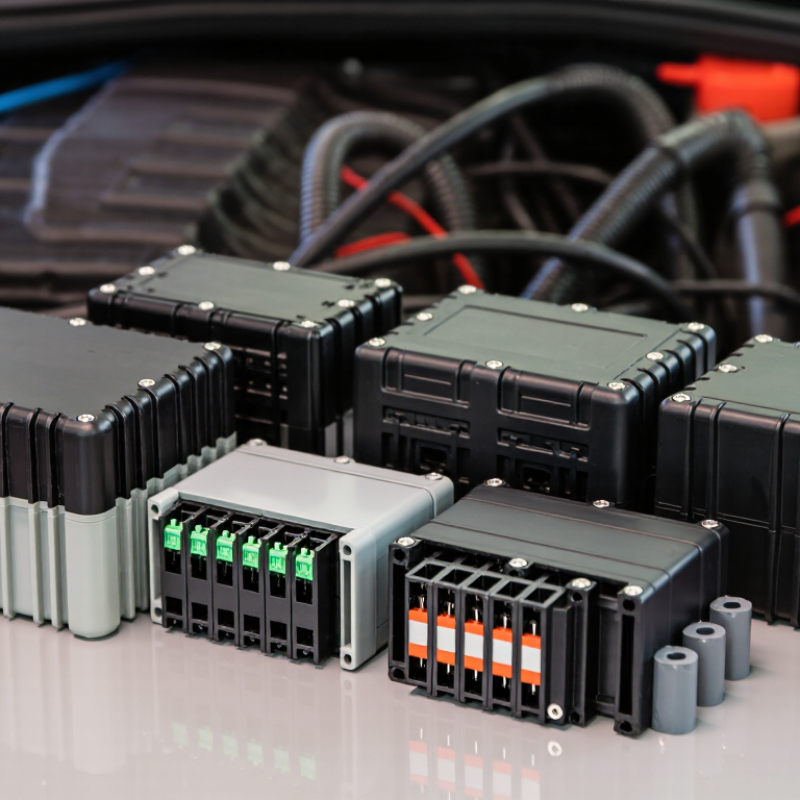
Top Underhood Fuse Box Manufacturers for Global Buyers

What an Underhood Fuse Box Does in a Vehicle Electrical System

An underhood fuse box distributes battery power to essential circuits near the engine. It contains fuses and often relays, helping manage power for systems such as cooling fans, fuel pumps, and headlights. When current exceeds a fuse’s rating, its element melts and interrupts that circuit. A relay, by contrast, lets a low-current control signal switch a higher-current load. Small, but critical. The box also shields connections from heat, splash, dust, and vibration, though no enclosure can eliminate every failure.

Vehicle platforms differ, so fuse-box design must match circuit loads, wiring size, connector layout, and service access. OICA’s 2023 production statistics recorded about 93.5 million motor vehicles built worldwide. That scale underlines the need for designs that can serve varied vehicle architectures without making inspection difficult. A crowded layout can slow diagnosis. It is easy to overlook how much clear labeling matters.

Tips: Check the fuse diagram before replacing a fuse, and use the specified rating. Never install a higher-rated fuse to stop repeated failures; investigate the circuit instead. Look for discoloration, loose terminals, or moisture, but remember that a clean-looking box does not prove every connection is sound.

Common Automotive Blade Fuse Ratings

An underhood fuse box distributes and protects vehicle electrical circuits. A fuse is designed to open when current exceeds its rating, helping limit damage to wiring and components. The values shown are common automotive blade-fuse ratings; the correct fuse for each circuit depends on the vehicle manufacturer’s specifications.

Key Design and Manufacturing Requirements for Underhood Fuse Boxes

Underhood fuse boxes must protect circuits beside engines, fans, and hot exhaust paths. SAE J1455, a vehicle environmental-practice standard, includes engine-compartment thermal exposures reaching 125°C. Treat this as a design checkpoint, not a universal operating limit. Map real hot spots, airflow, and heat soak after shutdown. Small details matter.

Housing materials must withstand heat, oil mist, coolant, road salt, and vibration without losing latch force. ISO 16750-3 and ISO 16750-4 specify test frameworks for mechanical and climatic loads in road vehicles. A robust validation plan combines temperature cycling, vibration, ingress checks, terminal retention, and high-current temperature-rise tests. Measure voltage drop across loaded terminals; even a few milliohms can cause localized heating at high current.

Manufacturers should document busbar materials, plating, fuse compatibility, sealing, and service access. Connector cavities need drainage or barriers to prevent water pooling near electrical interfaces. Test production-intent assemblies, not ideal prototypes. Honestly, this is where schedules get tight. Yet skipping a heat-soak retest may hide warped covers or weakened seals, so buyers should request traceable test records and clear acceptance limits.

Top Underhood Fuse Box Manufacturers for Global Buyers - Key Design and Manufacturing Requirements for Underhood Fuse Boxes

Evaluation Area Key Requirement Design or Manufacturing Consideration What Global Buyers Should Verify
Electrical system compatibility Match the vehicle’s nominal system voltage, circuit architecture, and electrical loads. Specify supported fuse types, circuit count, busbar layout, and provisions for high-current connections. Confirm that ratings are suitable for the actual application. Request circuit schedules, terminal and fuse specifications, and evidence that the assembly has been evaluated for the intended vehicle system.
Fuse and circuit protection Use correctly selected fuse-links and provide clear, reliable circuit identification. Fuse-link selection should account for load current, inrush, wiring protection, and the vehicle’s fault-protection strategy. ISO 8820 provides requirements for road-vehicle fuse-links. Check fuse-link compatibility, ratings, circuit labels, and applicable customer or regional requirements. Do not treat a fuse-box housing as a substitute for circuit-level validation.
Temperature performance Withstand the temperature conditions expected at the installation location. Material choice, terminal design, current loading, and enclosure layout affect heat generation and dissipation. Temperature limits should be defined by the vehicle specification and validated under representative operating conditions. Review temperature test conditions and results for the intended mounting location, load profile, and surrounding components.
Environmental durability Resist the relevant combination of heat, cold, vibration, humidity, water, dust, and chemical exposure. Environmental tests should reflect the vehicle use case. ISO 16750 includes environmental conditions and testing guidance for road-vehicle electrical and electronic equipment. Confirm the agreed test plan, severity levels, acceptance criteria, and test reports. Check that the selected requirements match the installation environment.
Ingress protection and sealing Protect live parts and connections against the water and particulate exposure expected in service. Sealing depends on the enclosure, cover, connector interfaces, cable exits, and assembly process. Any IP classification should apply to the tested configuration and use conditions. Ask which configuration was tested, where water or dust can enter, and how seal integrity is controlled during production.
Housing and material selection Use materials suitable for underhood heat, vibration, ageing, and exposure to automotive fluids. Check the specified resin, flame and thermal properties, dimensional stability, and resistance to relevant fluids. Material suitability depends on the vehicle program and applicable requirements. Request material specifications, change-control procedures, and evidence that production materials match approved samples.
Terminals and busbars Maintain secure electrical contact and acceptable resistance throughout the intended service life. Terminal alloy, plating, contact force, joint design, and corrosion protection must be appropriate for the current and environment. Avoid relying on nominal material descriptions alone. Review terminal drawings, plating specifications, retention requirements, resistance checks, and corrosion or durability test results where applicable.
Mechanical design and mounting Fit the vehicle packaging, mounting points, harness routing, and service-access needs. Design for secure fastening, connector retention, cover access, clearance, and protection from foreseeable mechanical loads. Avoid harness strain and interference with nearby components. Check interface drawings, tolerance stack-ups, mounting validation, service access, and compatibility with the intended harness and vehicle layout.
Manufacturing process control Produce consistent assemblies with controlled materials, dimensions, and electrical connections. Relevant controls may include moulding-process monitoring, terminal insertion or joining checks, assembly error-proofing, and defined inspection criteria. Review process flow, inspection plans, defect controls, calibration practices, and corrective-action procedures for the proposed production site.
Testing and validation Demonstrate that the complete assembly meets agreed electrical, mechanical, and environmental requirements. Validation may include continuity, voltage drop or resistance, thermal performance, vibration, temperature cycling, and sealing tests, as applicable to the design and customer specification. Request test reports identifying the sample configuration, test conditions, acceptance criteria, and any deviations or limitations.
Traceability and change management Trace production lots and control changes that could affect fit, function, or reliability. Traceability can cover component lots, materials, production dates, and inspection records. Changes to tooling, materials, processes, or production locations should follow an agreed approval process. Confirm lot-level records, retention periods, notification rules, and the process for approving engineering or manufacturing changes.
Global sourcing and compliance Align the product documentation and delivery plan with the destination market and customer program. Applicable requirements vary by vehicle, market, and contract. Standards and regulatory obligations should be identified for the specific application rather than assumed to be universal. Verify the compliance matrix, language and labeling needs, production capacity, lead times, logistics plan, and availability of technical support.

Note: Requirements and test limits vary by vehicle platform, installation location, customer specification, and destination market. Buyers should agree on the applicable standards, test methods, and acceptance criteria before production approval.

How to Evaluate Underhood Fuse Box Manufacturers

When evaluating underhood fuse box manufacturers, look beyond a polished catalog. The enclosure sits near engine heat, vibration, moisture, and road contaminants. Ask how the design manages these conditions across repeated thermal cycles. Details matter.

Request drawings, material specifications, and test records for the exact configuration being quoted. Confirm rated current, terminal retention, sealing performance, and temperature limits against your vehicle requirements. Inspect a sample for loose terminals, uneven seals, sharp edges, and clear circuit labeling. Ask for evidence. If a supplier shares only generic reports, check whether they cover the same materials and production process.

Manufacturing control matters as much as prototype performance. Review how incoming terminals and plastics are checked, how assembly settings are monitored, and how lot traceability works. Ask about change notification and corrective-action timelines. A site audit or video review can reveal practical details, such as clean storage and calibrated test equipment. Small gaps can be easy to miss. I would not rely on one successful bench test; heat, vibration, and moisture can interact in service. No checklist removes all uncertainty, so record open issues and agree on measurable acceptance criteria before production approval.

Manufacturer Capabilities and Global Supply Options

Underhood fuse box manufacturers serve buyers with different vehicle platforms, climates, and production volumes. Strong suppliers can explain their molding processes, terminal materials, sealing methods, and test procedures. Ask how they check fit, electrical continuity, and resistance to heat and vibration. A clear answer matters more than a polished catalog. Request sample units and drawings before approving tooling. Small details count, such as latch feel and whether a cover stays secure after repeated use.

Global supply options depend on more than factory capacity. Check minimum order quantities, production lead times, export packaging, and the supplier’s ability to maintain consistent specifications across repeat orders. Ask whether technical support can respond across time zones. For distant shipments, confirm carton protection and how traceability information is shared. A capable manufacturer should provide realistic delivery estimates, not just optimistic promises. Still, even a careful supplier may face delays when components or freight routes change. Build some flexibility into launch schedules.

Tips: Compare test records, sample fit, and communication quality together. Ask for a sample inspection report. Keep one approved reference unit. It helps resolve disagreements later. Don’t rely on price alone; a lower quote can exclude testing, packaging, or engineering support.

Quality Standards, Compliance, and Sourcing Considerations

For global buyers, an underhood fuse box must withstand heat, moisture, vibration, and electrical loads near the engine. Ask manufacturers for test reports covering the exact housing, terminals, and sealing design—not a generic product family. Check temperature cycling, water and dust protection, vibration resistance, and terminal retention. Small details matter. A loose connection may cause intermittent faults before the enclosure shows visible damage.

Review the manufacturer’s quality system and confirm that its scope covers the relevant production site. ISO 9001 or IATF 16949 certification can indicate controlled processes, but neither proves that a specific fuse box meets your requirements. Request material declarations, inspection records, batch traceability, and documented change control. Compliance needs vary by destination and vehicle program, so confirm applicable requirements with your engineering and regulatory teams.

During sourcing, compare samples against approved drawings and test criteria. Inspect connector fit, molded edges, gasket placement, and labeling under bright light. Ask how defects are contained and reported, not just how they are prevented. Even a careful audit has blind spots. A rushed sample review can miss a terminal that loosens after repeated thermal cycling. Include realistic validation time in the purchasing schedule.

Go to Top