What Are the Top X Ray Security Scanner Types in 2026?
X Ray Security Scanner selection is no longer a simple choice between older and newer equipment. Airports, logistics hubs, and public venues face different screening volumes, objects, and space constraints. The right system must fit its environment. No scanner is a universal answer.
Demand provides useful context. IATA’s 2024 passenger forecast projected 4.96 billion air travelers worldwide that year, while the U.S. Transportation Security Administration reported screening about 904 million passengers in 2023. These figures show the scale of screening, but they do not prove that one scanner type suits every site. In its public comments on computed tomography (CT), TSA Administrator David Pekoske has emphasized stronger detection alongside an efficient passenger experience. That balance matters at a crowded checkpoint, where minutes and available floor space are tangible constraints.
This guide compares the leading X Ray Security Scanner types expected to matter in 2026: conventional single-view and dual-view systems, 3D CT scanners, compact parcel units, and high-throughput cargo scanners. It examines image clarity, throughput, installation needs, maintenance, and operational fit. A vivid image is useful only when trained staff can interpret it consistently. And throughput matters. Buyers should also check independent test evidence, service support, and lifecycle costs rather than relying on promotional claims. Technology changes quickly; performance still depends on people, procedures, and the setting.
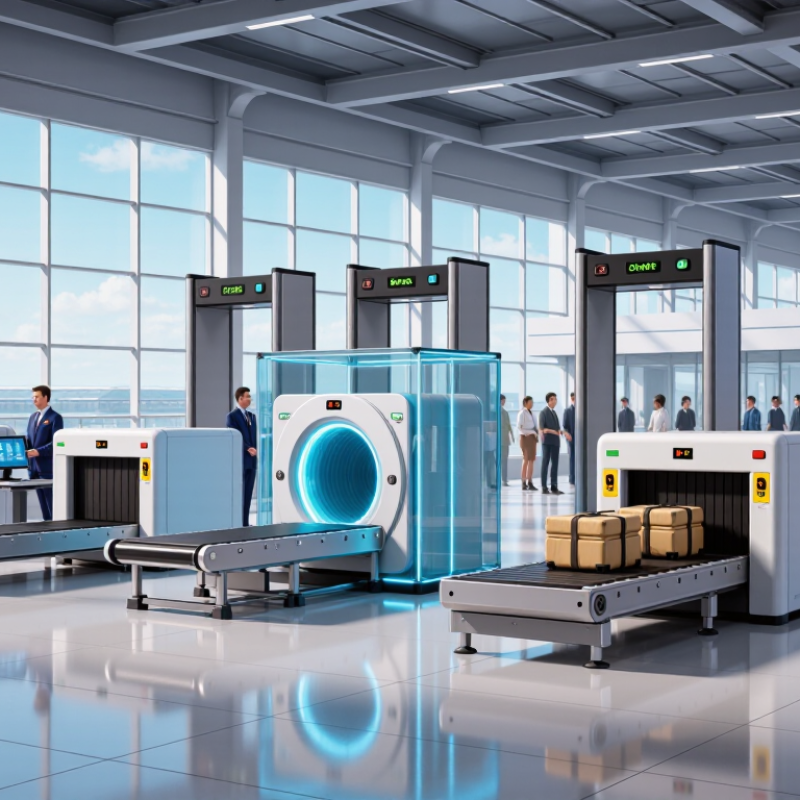
How X-Ray Security Scanners Are Classified
X-ray security scanners are commonly classified by the objects they inspect, their imaging method, and their operating environment. These categories can overlap. A scanner may be designed for parcels and also use dual-view imaging.
By application, systems range from compact units for small bags to larger equipment for baggage, parcels, or freight. Size matters: a narrow conveyor suits a steady flow of hand-carried items, while bulky shipments need a wider inspection tunnel. The setting matters too. A busy entrance may require a different belt speed and operator layout than a quiet receiving area. The distinction is practical.
Imaging method provides another useful classification. Single-view scanners produce one projection, while dual-view systems capture images from two angles. Computed tomography systems collect multiple projections and reconstruct a three-dimensional view. Systems may also differ in how they distinguish materials, such as using single-energy or dual-energy imaging. No label tells the whole story. Real performance depends on image quality, training, maintenance, and the objects being screened. A tidy category chart can hide those trade-offs. It is worth checking throughput, image display, and service requirements against the actual site before comparing equipment.
Cabinet Scanners for Baggage, Parcels, and Personal Items
Cabinet X-ray scanners suit fixed checkpoints where staff need a clear view of bags, parcels, and personal items. A compact single-view unit can handle small parcels and hand-carried belongings in reception areas. Larger conveyor cabinets fit busier baggage points, while dual-view systems show contents from two angles. That can reduce the need to reposition a bag, though image quality still depends on training and setup.
Sizing matters. A suitcase that barely fits may slow the belt or obscure useful views. Operators should compare tunnel dimensions, conveyor height, throughput, and image-display features with the items they actually inspect. Small details matter. A scanner is only one part of a screening workflow; it does not prevent every handling error or replace attentive staff.
SITA’s 2024 Baggage IT Insights report recorded 6.9 mishandled bags per 1,000 passengers in 2023, down from 7.6 in 2022. That figure tracks baggage handling outcomes, not scanner performance, so it should not be treated as proof that a particular cabinet design reduces mishandling. It does show why dependable processes matter. In practice, routine image checks, clear loading instructions, and maintenance records help teams spot problems early. The trade-off is real: a faster system may still create bottlenecks if bags arrive unevenly or staff lack time to review images carefully.
Computed Tomography Scanners for 3D Threat Detection
Computed tomography scanners capture multiple x-ray views as an item moves through the inspection tunnel. Software combines those views into a three-dimensional image, allowing operators to rotate it and inspect overlapping objects from different angles. An object partly obscured by a laptop may be easier to assess than in a flat image. Detail matters.
In a busy checkpoint, this can reduce uncertainty and support more consistent review. Operators can examine cross-sections, compare material densities, and focus on a specific region without repositioning the item. The result depends on more than imaging hardware: belt speed, image settings, routine calibration, and operator training all affect image quality. Small changes count.
CT images cannot identify every object with certainty. Unusual shapes, tightly packed contents, motion, or poor image quality can complicate interpretation. A three-dimensional rendering may look persuasive while still leaving questions unanswered. Not magic. Teams should maintain equipment, follow established review procedures, and use additional inspection when an image remains unclear. Even experienced staff need to pause sometimes; speed should not replace careful judgment.
Cargo and Vehicle Scanners for Large-Scale Inspection
What Are the Top X Ray Security Scanner Types in 2026?
Cargo and Vehicle Scanners for Large-Scale Inspection
Large-scale inspection sites often use drive-through portal scanners or mobile gantry systems. Portal systems scan vehicles as they pass through a fixed inspection lane. Mobile units can serve several lanes, but need suitable ground conditions and careful positioning. For cargo containers, high-energy systems can produce images through dense loads. The right choice depends on vehicle dimensions, daily traffic, available space, and the detail operators need to assess.
A busy freight terminal may process trucks in steady queues, while a smaller depot handles vehicles in short bursts. Throughput matters, but speed alone is not enough. Image quality, operator training, maintenance access, and radiation safety procedures all affect reliable operation. Site planning should account for turning space, weather exposure, and clear separation between inspection and public areas. A scanner can meet technical specifications and still fit poorly into a real workflow. That deserves attention.
Tips: Before selecting equipment, map vehicle routes and measure the largest loads. Ask operators to review sample images and practice interpreting them. Schedule routine checks and keep records of system performance. Small workflow problems can persist. Revisit procedures after installation, because actual traffic patterns may differ from early estimates.
Mobile and Portable X-Ray Scanners for Flexible Screening
Mobile and portable X-ray scanners bring screening to places where fixed equipment is impractical. A mobile unit can serve several entrances or temporary sites, while a portable system can move between rooms or travel in a vehicle. The distinction matters: mobility may mean wheels and onboard power, not easy one-person handling. Small detail, big difference.
For flexible screening, match the scanner to object size, expected throughput, available power, and working space. A stable setup helps operators capture images consistently and avoid rushed positioning. Test battery life, warm-up time, display brightness, and storage in the actual environment. Specs alone can mislead. Image interpretation still depends on trained operators and routine equipment checks; software cannot replace sound judgement.
Portability brings trade-offs. Compact units may have smaller imaging areas, slower workflows, or less ergonomic controls than fixed systems. A wheeled scanner can be awkward on stairs or uneven ground. Before deployment, rehearse setup, cable routing, queue flow, and safe operating procedures, then record recurring issues. The lightest scanner is not always the most useful one.
