
7 Best Prototype Sheet Metal Suppliers for Global Buyers

Prototype Sheet Metal sourcing is a practical test of a supplier’s engineering, communication, and delivery discipline. A clean sample matters, but so does the process behind it. Can the supplier interpret a flat pattern, hold bend dimensions, remove sharp edges, and document inspection results? Small details become costly when parts must fit an assembly or reach a production team on schedule.

Global sourcing adds another variable: logistics. The World Bank’s Logistics Performance Index 2023 covers 139 economies and assesses areas including shipment tracking, customs, and delivery timeliness. Its findings underline why buyers should evaluate shipping capability alongside fabrication quality. Deloitte’s 2024 Manufacturing Industry Outlook also discusses ongoing pressure to strengthen operations and address workforce challenges. For prototype buyers, that makes responsive engineering support especially valuable. A delayed clarification can stall a build.

This guide compares seven suppliers through buyer-focused criteria: prototyping experience, material options, finishing services, quality controls, quotation clarity, and international delivery support. Look for concrete evidence, such as sample inspection reports, stated tolerances, and clear revision procedures. Ask what happens when a bend conflicts with the design. Good suppliers explain trade-offs before cutting the first sheet.

No ranking can replace a well-scoped request for quotation. That is easy to overlook. Share drawings, quantities, material requirements, and delivery expectations before comparing offers. The cheapest quote may not be the lowest-cost choice if rework, freight, or unclear communication erases the savings.
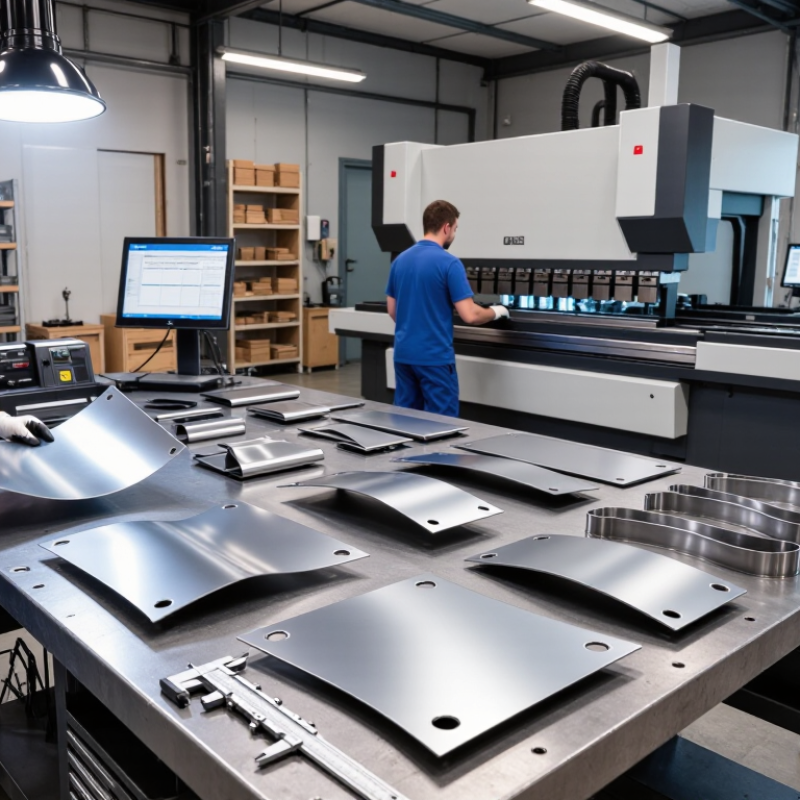
7 Best Prototype Sheet Metal Suppliers for Global Buyers

What Prototype Sheet Metal Suppliers Offer Global Buyers

Global buyers need more than a low quote from a prototype sheet metal supplier. They need clear design feedback, dependable lead times, and parts that match the drawing. A capable supplier can review bend radii, hole spacing, material thickness, and likely tooling issues before cutting begins. Small runs matter. Laser-cut edges should be checked for burrs, while formed panels need practical checks for angle and flatness. Material certificates and inspection records also help teams compare parts across locations.

McKinsey’s 2020 report on global value chains found that 93% of surveyed supply-chain leaders planned to improve resilience. For buyers, that makes backup capacity, realistic shipping estimates, and responsive communication useful—not optional extras. Deloitte and MAPI’s 2024 smart manufacturing survey reported that 86% of manufacturing executives expected smart manufacturing to support competitiveness within five years. Digital inspection records and controlled drawing revisions can make supplier handoffs easier to track. Yet drawings can mislead. A supplier should flag unclear tolerances rather than quietly guess. I would still ask how a prototype was measured, especially when a flat panel becomes a bent assembly. Details travel badly. Packaging plans, sample photos, and a named contact can reduce avoidable surprises during international delivery.

Key Criteria for Comparing Prototype Sheet Metal Suppliers

Prototype Sheet Metal Suppliers: Key Comparison Criteria

A supplier’s quote is only useful when its assumptions are clear. Compare the listed alloy, sheet thickness, finish, and forming method against your design. A 1.5 mm stainless panel, for example, may need different bend allowances from an aluminum part. Ask how the supplier handles tight radii, small holes near bends, and cosmetic surfaces. Their answers can reveal whether design-for-manufacturing feedback is specific or generic. Check sample inspection records and stated measurement methods, too. A tolerance without a measurement plan is hard to evaluate.

Tips: Send the same drawing and revision to every supplier. Ask for a marked-up review, not just a price. Confirm whether the quote includes tooling, finishing, inspection, and packaging.

Lead time deserves careful checking. Ask when production starts, what could delay it, and whether prototype parts receive the same inspection attention as larger orders. Clear updates matter when a fit check is scheduled around a fixed date. Compare packaging details as well; a scratched panel can make a good fabrication job look poor. A low quote can still be the wrong choice. It is easy to overvalue price and overlook communication or rework risk. No comparison is perfect, but written criteria make trade-offs visible.

Key Criteria for Comparing Prototype Sheet Metal Suppliers

Suggested evaluation weighting for global buyers. These are planning weights, not measured supplier performance; adjust them to fit your project.

Prioritize capability, quality, lead time, and communication based on part complexity, inspection needs, delivery deadlines, and cross-border coordination.

Seven Leading Suppliers and Their Core Capabilities

For global buyers, the best supplier depends on the part, schedule, and inspection needs. A useful shortlist covers seven capability profiles. Rapid-turn prototype shops can cut and bend a simple bracket within days. Laser-cutting specialists handle clean edges and repeatable flat patterns. Precision machining and sheet metal teams suit parts with tapped holes or tight interfaces. Details matter.

Electronics-enclosure suppliers often provide formed panels, inserts, and practical advice on access and ventilation. Welding-focused shops build frames and assemblies, with fixture quality affecting alignment. Multi-process networks coordinate cutting, bending, finishing, and inspection across larger programs. Low-volume production partners help bridge prototypes and initial batches, often with better process control than a one-off shop.

These profiles are not a fixed ranking. A supplier may excel at thin stainless panels but struggle with deep draws or cosmetic finishes. Ask for sample inspection records, material traceability, and clear tolerance assumptions. Request a pilot part before approving a larger batch. Not always. Even a careful review can miss a communication gap, especially across time zones. A concise drawing review and one photographed first article can prevent costly surprises.

7 Best Prototype Sheet Metal Suppliers for Global Buyers — Seven Leading Supplier Profiles and Their Core Capabilities
Supplier Profile Best Fit Core Processes Common Materials Prototype Strengths Global-Buyer Checks
1. Rapid-turnaround prototype shop One-off parts and early design validation Laser cutting, punching, press-brake forming, hardware insertion Aluminum, carbon steel, stainless steel Short production runs; quick design feedback; digital drawing review Confirm quoted lead time, inspection scope, and whether finishing is included.
2. High-mix job shop Projects with varied part geometries or frequent engineering revisions CNC laser cutting, forming, tapping, spot welding, assembly Common sheet-metal grades selected to match strength, corrosion, and cost requirements Flexible routing and the ability to combine multiple fabrication operations Check revision control, change-order handling, and consistency across repeat batches.
3. Precision enclosure fabricator Instrument housings, control boxes, and electronic enclosures Laser cutting, bending, PEM-style fastener installation, welding, finishing Aluminum, galvanized steel, stainless steel Enclosure features such as mounting holes, flanges, vents, and door interfaces Specify dimensional datums, fit requirements, coating thickness, and grounding features.
4. Welding-focused prototype supplier Brackets, frames, chassis, and welded subassemblies Cutting, forming, MIG/TIG welding, grinding, fixture-based assembly Carbon steel, stainless steel, aluminum (process availability varies) Combines formed parts into functional assemblies and can support weld trials Request weld symbols, material traceability requirements, and inspection criteria.
5. Finishing-integrated supplier Prototypes that need a representative appearance or corrosion protection Sheet-metal fabrication plus powder coating, wet painting, or anodizing coordination Aluminum and steel, with finish compatibility depending on material and process Can coordinate fabrication and finishing to reduce handoffs between vendors Confirm finish standard, color reference, masking areas, and cosmetic acceptance criteria.
6. Production-transition supplier Prototype programs expected to progress toward repeat or low-volume production Laser cutting, turret punching, forming, hardware insertion, assembly Aluminum, carbon steel, stainless steel, and other grades by quotation Can review part design for manufacturability and discuss repeatability requirements Ask how tooling, process changes, first-article inspection, and batch records are handled.
7. International-sourcing fabrication partner Buyers coordinating suppliers across borders or multiple delivery locations Fabrication operations selected to match the part; finishing and assembly may be coordinated Material availability depends on the selected facility and specification May support export packing, consolidated shipments, and communication across time zones Verify export documentation, packaging, shipping terms, quality records, and communication ownership.

These are representative supplier profiles, not named or independently ranked companies. Actual material availability, tolerances, processes, lead times, certifications, and inspection capabilities vary by facility and part design; confirm them in a project-specific quotation.

How Materials, Lead Times, and Logistics Differ Across Suppliers

Prototype sheet metal suppliers can look similar online, but their material access often differs. One may keep common gauges of aluminum and stainless steel in stock, while another sources them after receiving a drawing. That difference can affect both price and delivery. Ask which alloys and thicknesses are available now, and confirm whether the quoted material matches your intended production grade. A sample part should also be checked for bend marks, burrs, and dimensional consistency. Small details matter.

Lead times depend on more than cutting speed. Tooling, finishing, inspection, and workload can all add days. A useful quote separates fabrication time from shipping time and states what could cause delays. For example, a formed panel may be ready quickly but wait for powder coating or a consolidated freight pickup. Compare shipping options by destination, packaging, and tracking, not just cost. Confirm how parts are protected from scratches and whether customs paperwork is included in the shipment service. Fast is not always predictable. I have seen buyers focus on a short quoted lead time, then overlook a finishing step that was excluded. Ask for a realistic schedule with clear assumptions before choosing a supplier.

How to Match a Supplier to Your Project Requirements

Match a prototype sheet-metal supplier to the part’s risks, not its sales pitch. For a folded aluminum enclosure, request a sample using the specified alloy, thickness, bend radii, and finish. Ask how the shop controls springback, deburring, and hole-to-bend tolerances; these details often decide whether parts fit during assembly. Request a first-article inspection report and a quote that separates setup, inspection, and shipping costs. Ask for evidence.

McKinsey Global Institute’s 2020 report, Risk, Resilience, and Rebalancing in Global Value Chains, estimates that companies face disruptions lasting a month or longer every 3.7 years on average. Even for small runs, check backup capacity, shipping routes, and recovery plans. Deloitte’s 2024 Manufacturing Industry Outlook reports that 86% of surveyed manufacturing executives expect smart factory solutions to drive competitiveness within five years. Treat that figure as context, not a supplier score. Ask how the supplier tracks drawing revisions, shares inspection results, and flags tolerance problems before cutting metal. A fast quote is useful, but it does not prove repeatability. Compare response quality, sample fit, and documented process controls alongside price.

Go to Top