
Top 10 Lead Flange Manufacturers for Global Buyers

Selecting a Lead Flange manufacturer takes more than comparing prices and catalog photographs. Buyers need to confirm the product’s composition, dimensions, pressure requirements, and intended service before requesting a quotation. Details matter. A flange made from lead is not interchangeable with a lead-coated or lead-lined component, and product descriptions do not always make that distinction clear. The International Lead and Zinc Study Group’s Lead and Zinc Statistical Bulletin offers context on lead supply and use, while the World Bank’s Commodity Markets Outlook tracks broader commodity-market conditions. Neither report verifies an individual supplier. That requires direct checks.

This guide reviews ten manufacturers through practical purchasing questions: Can they provide material test documentation? Do their drawings show face dimensions, bolt patterns, and tolerances? Can they explain inspection and packaging procedures? For global orders, buyers should also ask about production lead times, export documents, and how changes to specifications are approved. Applicable standards depend on the product and service; do not assume a familiar piping standard automatically covers a lead component. That assumption deserves scrutiny. A polished website may be useful, but it cannot replace traceable records or a clear technical response. The ranking is a starting point, not a substitute for engineering review. Some supplier details may remain difficult to compare, and that is worth acknowledging. A careful shortlist can still help buyers ask better questions before committing.
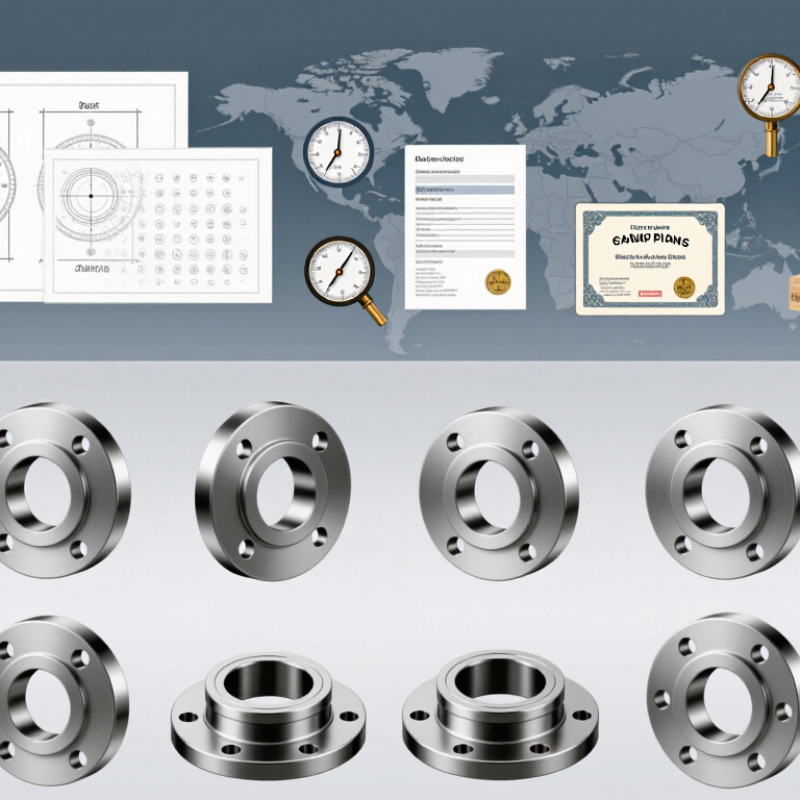
Top 10 Lead Flange Manufacturers for Global Buyers

Lead Flanges: Definition, Uses, and Industrial Applications

A lead flange is a bolted connection point made from lead, or more commonly, steel with a lead lining. It joins pipe sections, valves, or equipment while helping protect the wetted surface from selected corrosive fluids. The distinction matters. A solid-lead flange is relatively soft and can deform under bolt load; lined steel provides structural support, but its lining and gasket must remain continuous at the joint.

These components have been used in chemical-processing systems, including some sulfuric-acid services, where material choice depends on acid concentration, temperature, flow, and contamination. Lead-lined equipment may also be specified where shielding is needed, though shielding is a separate design function from piping. USGS Mineral Commodity Summaries 2024 estimated global mine production at about 4.5 million metric tons in 2023. That figure describes lead supply, not flange demand or suitability. It is easy to mistake one for the other.

For buyers, review drawings and ask whether the flange is solid lead or lined steel. Check pressure and temperature limits, lining thickness, gasket compatibility, and inspection requirements. Lead exposure is a serious occupational health concern, so fabrication, maintenance, and disposal need controlled procedures and qualified oversight. A small gap at a flange face can matter. Material certificates and documented compatibility checks are useful, but they do not replace engineering review for the actual service conditions.

Materials, Dimensions, and Standards for Lead Flanges

Lead flanges require careful material identification. The term may describe solid lead, a lead-alloy component, or steel with a lead lining. These constructions behave differently. Pure lead is soft and can creep beneath bolt load, so pressure, temperature, and gasket compression need explicit engineering review. ASTM B29 specifies refined-lead grades, but it does not establish flange dimensions or pressure ratings.

For dimensions, ASME B16.5-2020 covers steel flanges from NPS 1/2 through NPS 24, across pressure classes 150 to 2500. These figures are useful interface references, not proof that a lead flange meets those ratings. Confirm the bore, outside diameter, bolt circle, hole count, facing, and thickness against the mating flange drawing. Small details count.

A practical caveat: “standard dimensions” can mislead buyers when the pressure-boundary material is lead. Request a material certificate, a dimensioned drawing, and documented design limits from the manufacturer. For lead-lined steel, specify lining thickness and termination details; for solid lead, ask how bolt loads and long-term deformation are addressed. ASTM material specifications and ASME dimensional tables provide useful checkpoints, but neither replaces application-specific qualification. That distinction is easy to miss.

How Global Buyers Evaluate Lead Flange Manufacturers

Global buyers should assess a lead flange manufacturer by material traceability, dimensional control, and application-specific documentation. The USGS Mineral Commodity Summaries 2025 estimated worldwide lead mine production at 4.6 million metric tons in 2024. That figure gives supply context, but it does not verify a supplier’s alloy quality or finished-product consistency. Ask for a mill test certificate, chemical-composition results, dimensional inspection records, and clear tolerances. Check that drawings specify flange face, bore, thickness, and connection dimensions. Small mismatches matter.

Manufacturing capability should be demonstrated, not promised. Request sample inspection reports and ask how the factory controls casting, machining, and batch identification. Confirm the product’s intended service and applicable specifications before comparing quotations. Lead can pose health and environmental risks, so buyers should verify safe handling guidance and suitability for the installation. A polished catalogue is not evidence of process control. I would still inspect a sample.

Tips: Compare like-for-like specifications, not price alone. Ask who performs testing, how often, and whether records can be traced to each batch. Include packaging and shipping protection in the review; a damaged flange can delay installation even when its dimensions are correct. Keep the questions in writing.

Profiles of 10 Lead Flange Manufacturers for International Buyers

A useful profile of ten lead flange manufacturers should compare capabilities, not just catalog size. Look for firms that state alloy grades, flange dimensions, pressure limits, and machining tolerances. Strong profiles also explain how they inspect castings or fabricated parts, and whether each shipment includes material certificates and dimensional records. Ask about production lead times. Small details matter.

For international buyers, the profiles should distinguish standard inventory from made-to-order work. Check whether manufacturers can provide drawings, protective packaging, export documents, and clear answers about project-specific requirements. The USGS Mineral Commodity Summaries 2025 reports that recycled lead supplies about 70% of U.S. apparent lead consumption. This is useful context, not proof of a flange’s material quality. Buyers should request batch-level traceability and confirm that the stated material matches the order. A glossy brochure is not enough.

Tips: Send the same drawing and inspection checklist to every shortlisted supplier. Compare tolerances, test records, packaging, and quoted delivery dates side by side. If an answer is vague, ask again in writing. Procurement gets messy; a perfect comparison rarely survives the first revision.

Top 10 Lead Flange Manufacturers for Global Buyers - Profiles of 10 Lead Flange Manufacturers for International Buyers

Anonymous buyer-screening profiles. These are capability archetypes, not verified profiles or rankings of specific manufacturers; confirm all supplier claims directly.

Profile Supplier capability archetype Potential buyer requirement Evidence to request Key qualification check
01 Custom lead fabricator Non-standard flange geometry or one-off parts Manufacturing drawing, dimensional inspection report, material certificate Confirm the design is engineered for the intended service; do not assume a standard pressure rating.
02 Lead sheet and plate processor Components formed from lead sheet or plate stock Stock specification, thickness records, lot traceability ASTM B29 covers refined lead ingots; it is not a finished lead-flange product standard.
03 Radiation-shielding component fabricator Lead parts used as part of a shielding assembly Drawings, shielding calculations, inspection records Verify shielding performance for the specified application; a flange alone does not establish system performance.
04 Chemical-service lining fabricator Lead-lined equipment or connection details Process compatibility statement, lining details, quality-control plan Check chemical concentration, temperature, exposure conditions, and the complete joint design.
05 Lead casting specialist Cast shapes or custom profiles requiring machining Casting process description, material analysis, dimensional report Confirm allowable defects, machining allowance, and acceptance criteria before production.
06 Precision machining supplier Machined faces, holes, or close-tolerance features Inspection method, tolerance schedule, sample inspection report Agree measurement points and tolerances on the approved drawing; lead is a relatively soft material.
07 Lead-alloy product supplier Parts requiring a specified lead alloy rather than refined lead Chemical composition report and batch identification Specify the alloy and verify composition against the purchase specification.
08 Project-based industrial fabricator Assemblies supplied against project drawings and schedules Drawing revision log, inspection plan, delivery schedule Check revision control, packaging requirements, and document handover at order placement.
09 Export-oriented custom-parts supplier International shipments with defined documentation needs Packing list, commercial documents, origin and shipping details as applicable Confirm destination-country import, packaging, and regulatory requirements with the relevant parties.
10 Engineering-led specialty fabricator Applications needing design review before manufacture Design review records, approved calculations, signed-off drawings ASME B16.5 addresses specified pipe flanges and flanged fittings, not a general lead-flange product specification.

Lead is a soft, dense metal. Confirm mechanical loads, joint design, service conditions, worker-safety controls, and applicable regulations with qualified engineering and compliance professionals before purchase.

Quality Verification and Global Sourcing Considerations

Lead flange sourcing is a verification task, not a catalog exercise. Match the quoted standard and edition to the project specification, then confirm material grade, pressure class, facing, dimensions, and bolt-hole pattern. Ask for material test reports that link chemistry and mechanical results to each heat number. Paperwork matters. A certificate without traceable heat identification is weak evidence.

During inspection, compare flange thickness and outside diameter with the approved drawing. Check the face for dents, corrosion, and machining damage. Use positive material identification when the order or risk assessment requires it; it supports, but does not replace, mill documentation. Define acceptance criteria for dimensional checks and any non-destructive testing before production. A sample inspection can miss a batch-level problem, so agree on inspection timing and lot identification in writing.

Shipping deserves equal attention. UNCTAD’s Review of Maritime Transport 2024 states that over 80% of world merchandise trade by volume moves by sea, making packaging and dispatch planning material sourcing concerns. The World Bank’s 2023 Logistics Performance Index assessed 139 economies, highlighting how logistics capability varies across sourcing locations. Request export packing details, shipment milestones, and clear remedies for shortages or damage. One uncomfortable question is often overlooked: who pays when inspection finds a defect after dispatch? Define that responsibility before placing the order.

Top 10 Lead Flange Manufacturers: Global Buyer Quality Verification

Selected international standards relevant to supplier qualification, shown by the publication year of the edition listed.

Use these standards as sourcing reference points, not as proof that a flange meets a product specification. Verify the supplier’s certification scope and request product-specific material, dimensional, and inspection records; confirm the applicable edition with the standards body.

Go to Top