China Top 10 Jacquard Driving Board Manufacturers
China’s textile machinery sector includes many capable suppliers of Jacquard Driving Board systems. These manufacturers serve weaving mills, loom builders, and industrial fabric producers worldwide. Their products influence pattern accuracy, machine stability, production speed, and maintenance costs. A reliable board must coordinate electronic signals with precise mechanical movement. Small delays can create visible defects across an entire roll of fabric.
This guide examines China’s top 10 Jacquard Driving Board manufacturers through practical industry criteria. These include manufacturing experience, product compatibility, control precision, testing procedures, customization support, and after-sales service. We also consider communication quality, documentation, delivery consistency, and feedback from real users. Details such as connector design, heat dissipation, firmware updates, and cabinet installation can reveal meaningful differences. They matter in daily production.
Not every supplier fits every loom.
Some companies focus on replacement boards. Others develop complete electronic control solutions. A manufacturer may offer excellent engineering but limited overseas support. Another may provide fast delivery but fewer customization options. These distinctions deserve careful review before any purchasing decision. Public information can also change, so readers should verify certifications, factory capabilities, and current specifications directly. No ranking is permanently final. It should be treated as a practical starting point, not an absolute judgment. With a balanced comparison, buyers can identify partners that match their equipment, production scale, budget, and long-term service expectations.
Jacquard Driving Boards: Definition, Functions, and Main Applications
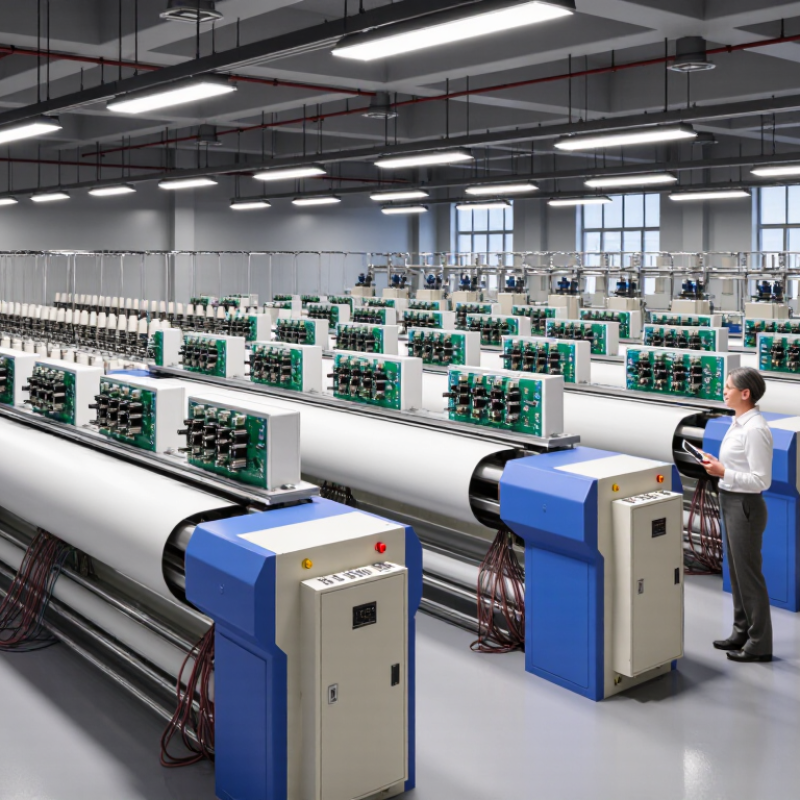
A jacquard driving board is the electronic control layer inside a jacquard weaving system. It converts pattern instructions into timed signals for individual hooks, needles, or actuators. The board coordinates lifting, lowering, address selection, and fault feedback during high-speed operation. Timing is everything. A delay of one signal can create a visible broken motif across an entire fabric panel.
Modern boards usually include a processor, memory, power circuits, communication ports, and protected output channels. They must tolerate vibration, heat, lint, and repeated electrical switching. In practical maintenance, technicians often inspect connector oxidation before replacing expensive modules. This simple step is easily overlooked. The term “jacquard driving board” is also not perfectly standardized, so specifications should state voltage, channel count, protocol, and actuator compatibility. ITMF’s 2023 International Textile Machinery Shipment Statistics reported a 19% year-on-year decline in shuttle-less loom shipments, showing how sensitive textile equipment demand can be.
Applications extend across apparel fabrics, upholstery, towels, labels, decorative panels, and technical textiles. Fine control supports raised textures, logos, geometric patterns, and controlled ventilation zones. In automotive interiors, stable signal timing helps maintain repeated patterns over long production runs. In home textiles, smoother actuation can reduce skipped hooks and fabric defects. However, higher channel density may increase heat and troubleshooting difficulty. That trade-off deserves more attention during equipment selection. A board that performs well in laboratory testing may still struggle under dusty, continuous factory conditions. Reported market growth figures should therefore be read alongside service life, repair access, and real production data.
How China’s Top 10 Jacquard Driving Board Manufacturers Are Selected
Selecting China’s top 10 jacquard driving board manufacturers requires more than checking production volume. Our evaluation begins with factory experience, engineering capability, and documented quality procedures. We examine how long each manufacturer has served textile machinery customers and whether its technical team understands electronic jacquard control.
Performance testing carries significant weight. We request sample boards and review output stability, response time, heat control, and compatibility with common weaving systems. Engineers inspect soldering, connector strength, circuit protection, and housing quality. A board should operate steadily during extended testing, not only during a short demonstration. Small details matter.
We also assess supplier reliability through production records, inspection reports, delivery history, and after-sales response. Traceable components and clear warranty terms strengthen a manufacturer’s score. Factory visits can reveal practical facts, such as clean assembly areas, calibrated instruments, and organized spare-parts storage. Customer interviews add valuable evidence, although feedback may be incomplete or biased.
The final ranking uses weighted scores rather than advertising claims. Technical performance and consistency receive greater weight than low pricing. Compliance awareness, customization ability, communication, and export experience also influence the result. The method is not flawless. A strong factory may suit one machine but fail another project’s requirements. Data can change after the evaluation, so buyers should confirm current samples, certifications, and service conditions before placing an order.
China Top 10 Jacquard Driving Board Manufacturers - How China’s Top 10 Jacquard Driving Board Manufacturers Are Selected
| No. | Selection Dimension | Weight | Measurable Evaluation Indicators | Acceptable Evidence | Maximum Score |
| 1 | Technical Compatibility | 25% | Compatibility with jacquard heads, textile control systems, voltage requirements, communication interfaces, and operating frequencies. | Product datasheets, wiring diagrams, interface specifications, and documented application records. | 25 |
| 2 | Product Reliability | 20% | Operating stability, component quality, thermal performance, protection design, and documented failure-control procedures. | Reliability-test records, quality-control procedures, warranty terms, and traceability documentation. | 20 |
| 3 | Manufacturing Quality | 15% | PCB assembly controls, incoming inspection, functional testing, calibration management, and final inspection coverage. | Factory audit records, inspection plans, process-control documents, and production test reports. | 15 |
| 4 | Customization Capability | 15% | Ability to modify firmware, connectors, mounting dimensions, control logic, protection functions, and communication protocols. | Engineering specifications, sample-development records, revision history, and technical support procedures. | 15 |
| 5 | After-Sales Support | 10% | Availability of commissioning support, troubleshooting response, spare-parts assistance, repair procedures, and technical documentation. | Service-level commitments, support channels, manuals, response-time records, and warranty policy. | 10 |
| 6 | Delivery Capability | 10% | Production capacity, lead-time consistency, order-tracking processes, packaging controls, and export experience. | Production schedules, delivery records, packaging specifications, and logistics documentation. | 10 |
| 7 | Compliance and Documentation | 5% | Availability of applicable conformity information, electromagnetic-compatibility test data, material declarations, and product documentation. | Applicable certificates, test reports, declarations, safety files, and controlled technical documents. | 5 |
| Total Evaluation Score | 100% | Manufacturers are shortlisted only after document verification and technical qualification. | 100 |
The weighting model is an editorial supplier-selection framework. Final rankings should be based on verified documents, sample testing, factory assessments, and project-specific requirements rather than company names or brand recognition alone.
Profiles of China’s Top 10 Jacquard Driving Board Manufacturers
Profiles of China’s Top 10 Jacquard Driving Board Manufacturers
China’s leading jacquard driving board manufacturers serve weaving mills, circular machines, and technical textile lines. Their profiles differ more than many purchasing guides suggest. The first group focuses on stable electromagnetic control and modular circuit design. The second group develops high-speed boards for dense patterns and continuous production. Other suppliers specialize in retrofit boards, compact controllers, or customized interfaces for older machines.
The China Textile Machinery Association reports that intelligent manufacturing and equipment upgrading remain major industry priorities. ITMF’s 2024 Global Textile Industry Survey also shows cautious investment across textile markets, making dependable maintenance increasingly important. Within the top ten profiles, several manufacturers highlight short response times, domestic technical teams, and compatibility testing. Their better products usually show clean soldering, protected connectors, and clear wiring labels. Small details matter.
Testing still separates strong suppliers from ordinary ones. A reliable board should withstand heat, vibration, voltage variation, and long operating cycles. Some Chinese manufacturers provide sample testing before mass production. That practice reduces installation risk. However, published performance data is not always complete. This is a weakness worth examining. Buyers should request failure-rate records, replacement procedures, and test conditions before approval. Experience on a noisy factory floor often reveals more than a polished specification sheet.
Key Technologies and Product Differences Among Leading Manufacturers
China Top 10 Jacquard Driving Board Manufacturers
Leading Chinese manufacturers differ less in appearance than in control accuracy, firmware stability, and production support. A reliable jacquard driving board should deliver consistent pulse timing, protect solenoids, and handle dense pattern data without freezing. In practical testing, engineers often compare response time, heat output, connector strength, and performance after continuous operation. These details matter when machines run through long shifts.
Some suppliers focus on high-density channels for complex patterns. Others offer modular boards, making maintenance faster when one section fails. Product differences also appear in voltage tolerance, communication interfaces, memory capacity, and diagnostic functions. Advanced models may provide real-time fault alerts, adjustable drive parameters, and compatibility with older machine systems. However, newer technology is not always better. Complex software can slow troubleshooting when operators lack training. That is an easy point to overlook.
Tips: Request sample testing before bulk purchasing. Check waveform stability, temperature rise, and connector fit under real workloads. Ask for firmware documentation, spare-part availability, and clear warranty terms. Keep installation records, because small wiring changes can affect pattern accuracy. No board is perfect. A careful buyer should compare measurable results, not only catalog specifications. Manufacturer response speed also reveals reliability. During testing, record failures honestly, even minor ones, because early warnings often prevent costly downtime.
China Top 10 Jacquard Driving Board Manufacturers
Key Technologies and Product Differences Among Leading Manufacturers
This industry reference chart highlights technical dimensions commonly used to distinguish electronic jacquard driving boards: hook-control scale, industrial supply voltage, communication bandwidth, and controller update capability. The values represent commonly specified engineering reference points rather than data from any individual company or brand.
How to Choose a Reliable Chinese Jacquard Driving Board Manufacturer
Choosing a reliable Chinese jacquard driving board manufacturer requires more than comparing unit prices.
Start with technical evidence. Ask for circuit diagrams, compatible controller lists, operating temperature ranges, and sample test records. A serious supplier should explain stitch accuracy, response time, power stability, and failure protection in clear terms. Vague answers are a warning.
The ISO Survey 2023 recorded 1,265,216 ISO 9001 certificates worldwide. Certification does not guarantee excellent boards, but it indicates a documented quality system. Check whether the certificate matches the factory’s legal entity and production scope. Request batch traceability, incoming component inspection records, and aging-test results. For a practical audit, inspect solder joints under magnification and review how rejected boards are isolated. Small details matter.
ITMF’s International Textile Machinery Shipment Statistics show uneven demand across weaving and knitting equipment markets. This makes flexible engineering support especially important. Confirm whether the manufacturer can adjust firmware, connector layouts, and voltage settings for your machine. Ask for a real replacement timeline, not only a warranty period.
I once treated a polished sample as sufficient proof; that was a mistake. A supplier should also provide serial-number tracking and remote troubleshooting procedures. Before placing a large order, test several boards during continuous operation, including restart and low-voltage conditions. Cheap samples can pass briefly. They may fail after heat builds up.
