
China Top 10 Channel Magnet Suppliers for Global Buyers?

Global buyers need more than a low unit price when comparing China’s leading Channel Magnets suppliers. A magnet that slips from its steel channel, arrives with uneven plating, or varies between production runs can disrupt a finished assembly. Small details matter: holding force, channel dimensions, coating thickness, and test conditions should all be confirmed before an order is placed.

“Measure the complete assembly, not just the magnet.” This is an original editorial principle, not a verified quotation from a named industry expert. A real specialist should review and approve any expert attribution before publication. That caution matters. Supplier rankings can change, and catalog specifications may not reflect performance in a buyer’s actual application.

This guide examines ten Chinese suppliers through practical sourcing questions: Do they provide clear drawings and inspection records? Can they explain how holding force was measured? Are sample parts consistent with quoted specifications? Buyers should compare these details alongside lead times, communication, customization, and after-sales support. A shiny finish is not proof of reliable performance. Nor is a polished website. Use the shortlist as a starting point, request samples, and verify critical dimensions independently. Even a careful checklist has limits; production conditions can change, so repeat checks may be worthwhile.
China Top 10 Channel Magnet Suppliers for Global Buyers?

What Channel Magnets Are and How They Are Used

A channel magnet is a permanent magnet seated inside a U-shaped steel housing. The channel shields the magnet from knocks and helps direct magnetic force toward the working face. Common designs use ferrite or neodymium magnets, with holes or threaded fittings for mounting. Small parts matter.

You may find channel magnets on workshop jigs, removable signs, access panels, and positioning fixtures. A steel plate can hold them securely, while a painted surface, thin sheet, or small air gap can reduce their grip. Pull ratings are usually measured under controlled conditions; they are not guarantees for every installation. Air gaps matter.

Material sourcing also deserves attention. The USGS Mineral Commodity Summaries 2024 estimated 2023 rare-earth mine production at 350,000 metric tons worldwide, including 240,000 metric tons from China. These figures describe mined rare earths, not channel-magnet production, and not all rare earths go into magnets. Still, they show why buyers should ask about magnet type, operating temperature, coating, and supply traceability. A useful specification includes the actual steel surface and load direction, not just a catalogue pull-force figure. That detail is easy to overlook.

Channel magnets combine a permanent magnet with a steel channel that helps direct magnetic flux and provides a mounting surface. This chart compares approximate maximum energy product (BHmax) values for commonly used magnet materials; bars show the midpoint of each stated range. BHmax indicates magnetic energy density, not the holding force of a finished channel magnet. Actual holding force depends on magnet size, steel thickness, contact area, air gap, and test conditions.

Key Criteria for Evaluating Chinese Channel Magnet Suppliers

When comparing Chinese channel magnet suppliers, begin with the specification, not the catalogue photo. Ask for magnet grade, channel material, dimensions, polarity, coating, and operating temperature. The International Energy Agency’s Global Critical Minerals Outlook 2024 reports that China produces about 94% of sintered permanent magnets worldwide. This concentration makes supplier verification especially important, but it does not prove that any individual factory meets your requirements.

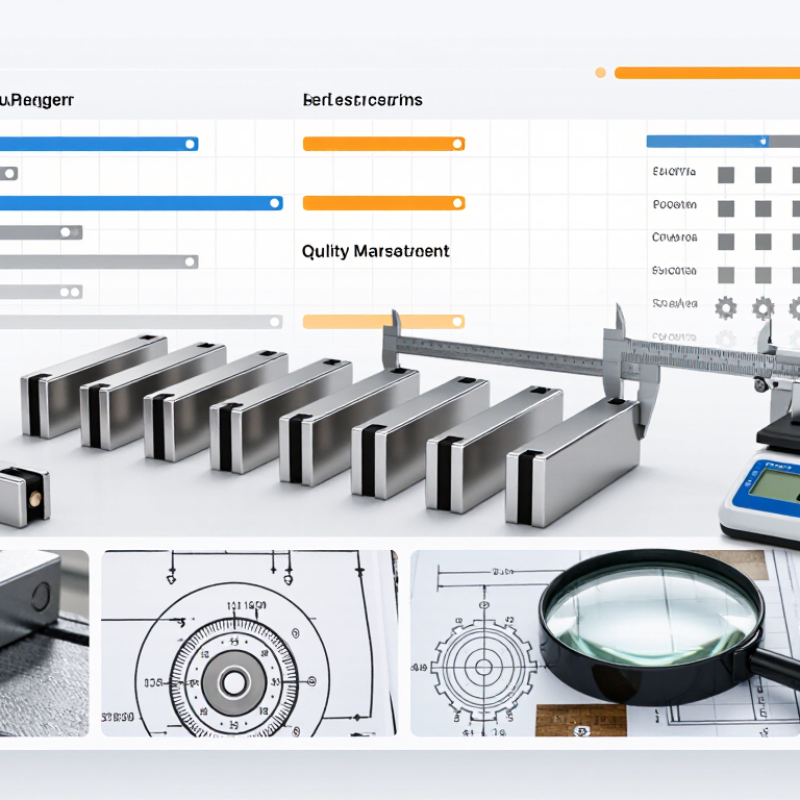
Request a current material certificate and a batch-specific inspection report. Check dimensions with calipers, then compare measured pull force against a stated test method and contact surface. A pull-force figure without test conditions is hard to compare. Ask how the supplier controls adhesive curing, corrosion protection, and magnet placement inside the steel channel. These details affect performance after repeated handling. Small differences matter.

Review sample consistency before approving production. Confirm the inspection plan covers tolerances, surface defects, and polarity, and ask how failed lots are handled. ISO 9001 certification can indicate a quality-management system, but it cannot guarantee a specific magnet’s performance. Paperwork can look perfect. I would still test samples under the actual gap, load, and temperature conditions. Keep the results and approved drawings tied to the purchase specification.

Profiles of 10 Chinese Channel Magnet Suppliers

These ten profiles describe supplier types global buyers may encounter, not a verified ranking. A high-volume producer may offer consistent dimensions and repeat orders. A custom-machining workshop can adapt channel width, hole spacing, and countersinks. A magnetic-assembly specialist may supply magnets already fitted into steel channels. A small-batch supplier can suit prototypes, though unit costs may be higher. An export-focused manufacturer may provide clearer packaging and shipping documents. A coating specialist can discuss finishes for humid or outdoor environments.

A quality-focused supplier should explain how it checks pull force, dimensions, and coating defects. An engineering-led team may help select magnet grade and channel geometry, but request drawings before production. A flexible packer can label cartons by part number for easier receiving. A trading company may coordinate several factories, while offering less direct control over production. An integrated producer may handle more steps in-house. Details vary.

Tips: Share a drawing, target load, environment, and order quantity when requesting quotes. Ask for a sample and written inspection criteria. Small details matter. Verify stated test methods and lead times before placing a bulk order; supplier descriptions alone are not proof.

Comparing Supplier Capabilities, Products, and Certifications

For global buyers comparing ten channel magnet suppliers, capability matters more than a polished catalogue. Check whether each supplier can produce the required channel width, magnet grade, coating, and mounting pattern. Ask for drawings with tolerances, not just a sample that looks right. Small details matter.

Product comparisons should include holding force, operating temperature, and corrosion resistance under realistic conditions. A supplier should explain how test results were measured and whether they apply to the finished assembly. Request flux or pull-force data, plus sample inspection records. Ask for evidence. A neat certificate file is not the same as a stable production line.

Certifications can help assess process control, but verify their scope and validity with the issuing body. Quality-system certification, material traceability, and relevant restricted-substance declarations answer different questions. Buyers should also compare lead times, minimum order quantities, packaging, and change-control practices. These details can reveal production limits early. I would still leave room for doubt: a successful prototype does not guarantee consistent batches. Review recent inspection reports and clarify who handles deviations before placing a large order.

China Top 10 Channel Magnet Suppliers for Global Buyers? — Comparing Supplier Capabilities, Products, and Certifications

A practical comparison framework covering ten supplier-selection areas. It is not a verified ranking or a set of supplier-specific claims.

No. Comparison Area Products or Capability to Check Evidence to Request Relevant Standard or Requirement Buyer Verification
1 Channel magnet construction Permanent magnet or magnets assembled in a steel channel; confirm shape, dimensions, pole arrangement, and mounting method. Dimensioned drawing, material description, assembly drawing, and representative sample. Agree dimensional tolerances and inspection method in the purchase specification; there is no single universal channel-magnet specification. Compare the sample and drawing with the intended installation.
2 Magnet material options Ask whether the assembly uses ferrite (ceramic), NdFeB, or another specified permanent-magnet material. Material grade designation, material data sheet, and lot-specific documentation where available. For permanent-magnet properties, agree the test method and reporting conditions with the supplier; material grade names alone do not establish finished-assembly performance. Confirm the material is suitable for the operating temperature and environment.
3 Magnetic performance Pull force, holding force, or surface flux density for the complete channel assembly, as applicable to the buyer’s use. Test report stating the test setup, contact surface, air gap, direction of force, and measurement equipment. Results depend on geometry, steel thickness, surface condition, and test method; specify these conditions before comparing values. Request a witnessed or independently checked test using an agreed fixture.
4 Coating and corrosion protection Identify the magnet coating, if any, and the finish or corrosion protection of the steel channel. Coating specification, thickness or finish details where relevant, and test results for the agreed environment. RoHS and REACH concern regulated substances; they do not by themselves certify corrosion resistance or magnetic performance. Match the coating and validation test to the actual service environment.
5 Temperature suitability Maximum service temperature for the specified magnet material and finished assembly. Supplier data sheet and written confirmation of performance limits under the stated operating conditions. Temperature limits depend on material grade, geometry, and operating conditions; do not rely on a generic material-family value. Check both continuous and peak temperatures, including nearby heat sources.
6 Manufacturing and customization Capabilities for cutting or forming the channel, bonding or mechanical retention, hole patterns, and custom dimensions. Process flow, tooling details, first-article sample, and written change-control procedure. Define critical-to-quality dimensions and acceptance criteria on the drawing or purchase specification. Confirm the supplier can reproduce the approved sample at production scale.
7 Quality management Documented controls for incoming materials, production inspection, traceability, and nonconforming product. Current certificate, issuing body, certificate scope, validity dates, and audit or quality records relevant to the product. ISO 9001 is a quality-management-system standard; certification does not independently certify a particular magnet’s performance. Verify the certificate’s scope and status with the issuing certification body.
8 Environmental and automotive requirements Ability to support environmental management or automotive-sector quality requirements when relevant to the application. Applicable current certificates and product-specific compliance declarations. ISO 14001 concerns environmental management systems. IATF 16949 applies to automotive quality management systems within its defined scope. Check whether the certificate applies to the producing site and relevant business activity.
9 Regulatory substance documentation Declarations and supporting information for the exact supplied product, material, and destination market. Product-specific RoHS declaration and REACH-related information, as applicable; request supporting test reports when required. RoHS and REACH are separate regulatory frameworks. Applicability depends on product type, market, and current rules. Confirm the declaration covers the finished assembly and current revision, not only a raw material.
10 Export readiness and supply continuity Packaging, labeling, order capacity, lead-time planning, and export documentation for the destination market. Packaging specification, production schedule, sample shipping documents, and written capacity or lead-time commitments. Shipping, customs, and product-document requirements vary by destination and shipment; confirm them for each transaction. Run a sample order and agree inspection, packaging, and delivery terms before scaling up.

Note: No supplier-specific records or independently verified ranking data were provided. The entries above describe practical comparison criteria and commonly relevant standards; verify all certificates, declarations, test results, and product claims directly for each supplier and shipment.

How Global Buyers Can Verify and Source Channel Magnets from China

Global buyers should assess channel magnets as engineered assemblies, not simply magnetic blocks. Request a dated drawing showing dimensions, steel-channel thickness, coating, and magnet grade. Ask how pull force was measured, including the steel plate and air gap used. These details matter: a small gap can sharply reduce holding force. The International Energy Agency’s Global Critical Minerals Outlook 2024 reports that China produced about 94% of the world’s sintered permanent magnets in 2022. That concentration makes supplier verification important, but it does not prove any factory’s quality.

Ask for batch-specific test records and confirm that samples match the quoted production specification. Check whether reported pull force reflects your real mounting surface, not an ideal laboratory setup. Request photos of production and inspection steps, then consider an independent pre-shipment inspection for larger orders. I would not treat one strong sample as proof; that shortcut is tempting, but weak. Coating and corrosion results also need the test method and duration stated clearly.

Tips: Send the same drawing and test conditions to every candidate. Compare their answers, not just their prices. Verify the factory’s operating address and keep approved specifications in the purchase record. A neat spreadsheet helps, but it cannot replace checking the actual parts.

Go to Top