
Top 10 Air Centrifugal Blower Manufacturers Worldwide?

An Air Centrifugal Blower can look simple on a product sheet: a casing, an impeller, and a motor. Real performance depends on how those parts work together under changing flow and pressure demands. A unit that runs quietly at one test point may behave differently in a dusty plant room or beside a hot process line. Small details matter. Impeller design, materials, sealing, controls, and service access can shape efficiency and uptime.

This overview of the top 10 Air Centrifugal Blower manufacturers worldwide is intended as a practical starting point, not a universal ranking. It considers product range, engineering capability, application experience, support, and the quality of available technical information. Fan-design author Frank P. Bleier’s guidance can be paraphrased this way: “Judge a blower across its operating range, not by one catalog point.” This is a paraphrase, not a verified verbatim quotation. Buyers should still check certified performance data, operating limits, noise, energy use, and maintenance requirements for their own duty conditions. Numbers matter. So does service. Manufacturer claims also deserve scrutiny; a polished brochure cannot replace measured data or a clear discussion with an applications engineer. The comparison may leave some gaps, since public specifications are not always directly comparable. That is worth remembering when narrowing a shortlist.
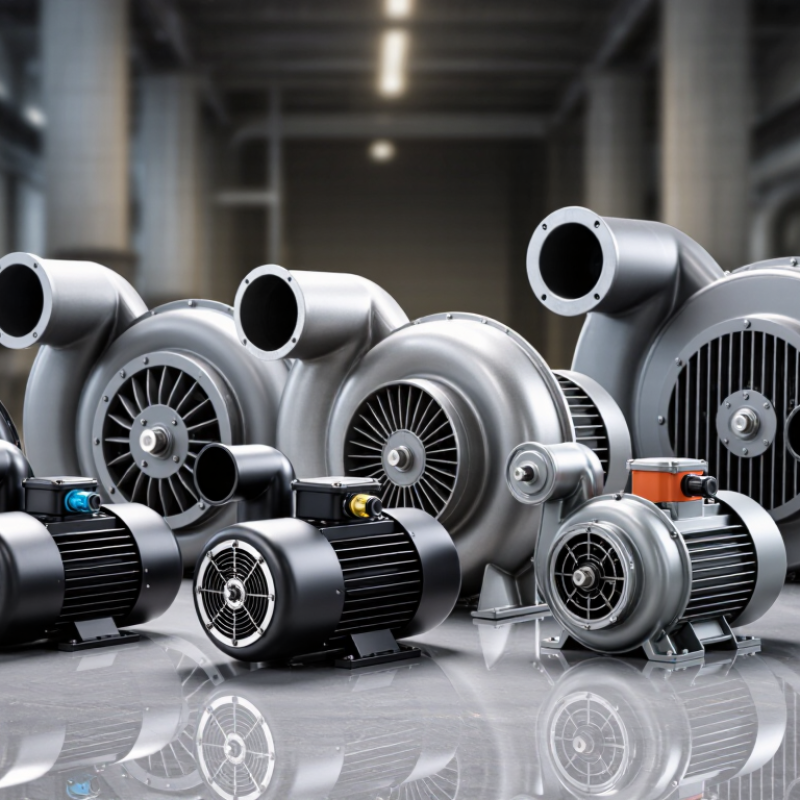
Top 10 Air Centrifugal Blower Manufacturers Worldwide?

How Air Centrifugal Blowers Work and Where They Are Used

An air centrifugal blower draws in ambient air and spins it with a high-speed impeller. The impeller adds velocity; a diffuser then converts much of that velocity into pressure. The result is a steady, high-volume airflow at relatively modest pressure. That suits processes needing continuous air rather than sharp pressure pulses. It is a different operating principle from a positive-displacement blower.

Wastewater aeration is a major application. Fine bubbles rise through tanks, supplying oxygen to microorganisms that break down organic matter. The U.S. EPA’s 2013 Energy Efficiency in Water and Wastewater Facilities guide reports that aeration can account for roughly 25–60% of a treatment plant’s energy use, depending on the facility. That matters at scale. Centrifugal units also support industrial combustion, cooling, and pneumatic conveying, where consistent airflow helps keep processes stable.

Efficiency depends on more than the blower. Operators should match airflow and pressure to real demand, then check filters, inlet temperature, and control settings. The U.S. Department of Energy’s Improving Compressed Air System Performance guide notes that compressed air can represent about 10% of industrial electricity use; this is a broad benchmark, not a blower-specific figure. I would not treat either number as a promise. Poor system design can erase expected savings, and that is easy to overlook.

Criteria for Evaluating Global Blower Manufacturers

Evaluating global air centrifugal blower manufacturers requires verified performance, not polished catalog claims. Ask for test curves showing airflow, pressure, power consumption, and efficiency at your actual duty point. Check whether testing follows ISO 5801 or another clearly stated, comparable method. The report should identify air density and inlet conditions. Small omissions matter.

The U.S. Department of Energy’s Improving Compressed Air System Performance sourcebook estimates compressed air uses about 10% of U.S. industrial electricity, reaching 30% in some facilities. That is a system-level benchmark, not a blower-only figure, but it underscores why efficiency claims deserve careful checking.

Look beyond peak efficiency. Compare energy use across the expected operating range, including turndown, start-up, and variable-speed operation. Ask how the unit performs with a warm inlet or a partly clogged filter; real sites are rarely laboratory-clean. Review noise and vibration data, materials, maintenance intervals, and the availability of trained local service. Request references from installations with similar airflow, pressure, and duty cycles. Then compare lifecycle cost, including power, maintenance, and spare parts, rather than purchase price alone. A strong manufacturer should explain test limits and provide practical support. Some uncertainty will remain. Field conditions change.

Profiles of 10 Leading Air Centrifugal Blower Manufacturers

A useful worldwide comparison of ten air centrifugal blower manufacturers should focus on documented capabilities, not polished claims. One profile may specialize in large process-air systems, with performance data across several operating points. Another may serve equipment builders, offering compact units that fit tight machinery layouts. A third may prioritize energy efficiency, publishing power input alongside airflow and pressure. Custom engineering defines another profile, where impeller design and casing dimensions can match unusual site constraints.

Other manufacturers stand out through corrosion-resistant materials, quieter operation, or accessible maintenance. A service-focused supplier may provide clear inspection intervals and spare-part guidance. A digitally oriented maker may offer vibration or temperature monitoring, though sensors cannot replace regular checks. A regional specialist may understand local installation conditions, while a broad-line producer serves varied industrial applications. Details matter. Ask how each rating was measured.

These profiles are not a verified ranking of named companies; they are practical lenses for assessing ten kinds of market strength. Compare certified test methods, operating ranges, noise data, and service coverage. Check whether quoted performance reflects your actual air density and duct resistance. Published figures can look precise, yet site conditions often shift results. That is an imperfect part of blower selection, and worth questioning before purchase.

Top 10 Air Centrifugal Blower Manufacturers Worldwide? – Profiles of 10 Leading Air Centrifugal Blower Manufacturers

The profiles below describe common manufacturer specializations in the global air centrifugal blower market. They are category-level profiles, not a company ranking; product configurations and operating ranges vary by model and application.

Profile Typical blower platform Common design focus Typical applications Useful evaluation criteria
1. High-speed turbo blower specialist Single-stage centrifugal turbo blower High rotational speed, compact equipment, and variable-speed operation Wastewater aeration, pneumatic conveying, and industrial process air Efficiency across the operating range, turndown capability, controls, and service access
2. Integrally geared blower manufacturer Multistage centrifugal blower with an integral gearbox Stage matching, impeller speed selection, and engineered package design Large air systems, industrial utilities, and process applications Specified flow and pressure, power consumption, maintenance requirements, and installation footprint
3. Conventional multistage blower specialist Multi-impeller centrifugal blower Robust construction and operation at steady industrial duty points Aeration, combustion air, and general plant services Operating stability, materials, vibration limits, and lifecycle maintenance support
4. Oil-free air system manufacturer Centrifugal blower designed to deliver oil-free process air Air-path cleanliness, bearing arrangement, and package integration Food and beverage processing, electronics, pharmaceuticals, and clean industrial processes Air-quality requirements, applicable standards, filtration, and documented operating conditions
5. Air-bearing turbo blower specialist High-speed turbo blower using air-foil or other aerodynamic bearing technology Reduced mechanical contact during normal operation and compact system design Aeration and other applications suited to high-speed, variable-output equipment Start-stop requirements, ambient conditions, control response, and bearing-system service provisions
6. Magnetic-bearing blower specialist High-speed centrifugal blower with actively controlled magnetic bearings Bearing control, rotor monitoring, and integration of electronic systems Continuous-duty industrial air systems and applications requiring specialized rotor support Control-system redundancy, monitoring functions, backup provisions, and qualified local service
7. Process-air engineering manufacturer Application-engineered centrifugal blower packages Custom materials, inlet and discharge arrangements, and project-specific instrumentation Chemical processing, power generation, and other industrial process-air duties Gas composition, temperature, pressure, corrosion needs, and applicable project specifications
8. Packaged blower-system manufacturer Factory-assembled blower, motor, controls, and supporting equipment Simplified installation, acoustic treatment, and coordinated system controls Municipal utilities, industrial facilities, and space-constrained installations Package dimensions, noise data, electrical requirements, access for maintenance, and commissioning scope
9. Wastewater aeration equipment manufacturer Centrifugal blower configured for biological-treatment aeration systems Airflow control, turndown, and integration with treatment-plant controls Municipal and industrial wastewater treatment Seasonal and daily demand variation, system pressure losses, redundancy, and energy use at actual duty points
10. Blower modernization and service manufacturer Replacement, retrofit, and upgraded centrifugal blower systems Compatibility with existing pipework, drives, controls, and plant operating practices Existing industrial and wastewater facilities seeking equipment renewal Site survey quality, outage planning, parts availability, commissioning, and measured post-installation performance

Comparing Product Designs, Performance, and Service

Comparing air centrifugal blowers means looking beyond rated airflow. Some designs use high-speed, single-stage impellers; others use multiple stages to reach higher pressure. Their housings, diffusers, and inlet arrangements affect efficiency, noise, and installation space. A compact package may fit a tight plant room, but leave little room for maintenance. Details matter.

Performance figures are useful only when their test conditions match the intended site. Compare airflow and pressure at the same operating point, then check efficiency across the expected load range. A unit that performs well at full capacity may use more energy during frequent low-load operation. Ask about inlet temperature, altitude, cooling needs, and sound levels. Brochures rarely show every constraint.

Service can distinguish two otherwise similar machines. Look for clear commissioning procedures, accessible vibration data, practical maintenance intervals, and dependable access to replacement parts. Ask how quickly technical support responds, and whether local technicians can diagnose faults using routine measurements. A polished service promise is not proof. Request specific examples, such as a sample maintenance schedule or a typical troubleshooting report. Even then, comparisons are imperfect: plant layouts and operating habits change results, and buyers sometimes overlook the cost of downtime.

Industries and Regions Served by the Leading Manufacturers

Air centrifugal blowers serve wastewater treatment, cement, chemicals, food processing, and power generation. Their duties range from aerating treatment basins to moving combustion air and conveying dry materials. The operating details matter: a blower handling dusty kiln air faces different wear and maintenance demands from one supplying clean air to a biological process. The International Energy Agency’s Energy Efficiency 2023 report estimates that industry uses about 37% of global energy. Efficient blower selection therefore affects both plant power use and operating costs, though real savings depend on system design and control.

Manufacturers serve industrial regions across Asia, Europe, and North America, with local engineering and service support often shaping purchasing decisions. In fast-growing urban areas, wastewater infrastructure is a key application: UN-Water’s 2024 SDG 6 progress update reports that 42% of household wastewater worldwide was not safely treated in 2022. This points to a substantial treatment challenge, not a guaranteed market for any one machine. Buyers compare airflow, pressure, noise, maintenance access, and performance at changing loads. A neat regional map can still mislead; project funding, climate, and operator skills vary sharply within each region.

Top 10 Air Centrifugal Blower Manufacturers Worldwide

Common industries and applications served by leading manufacturers

A value of 1 indicates a widely recognized industrial application for centrifugal blowers. This is a qualitative application overview, not a manufacturer ranking or market-share comparison; individual product capabilities vary.

Go to Top