10 Tips for Buying Plastic Trays in Bulk?
Buying plastic trays in bulk can lower unit costs, but only when the trays suit your products, packing process, and storage space. A low price means little if trays crack under stacked cartons or arrive in a size that slows packing. Before comparing suppliers, define the tray’s purpose. Will it hold fresh produce, organize small parts, or protect prepared items during transport? Each use calls for different material, depth, strength, and surface design.
Bulk orders magnify small mistakes. Measure the product and available shelf space, then request samples before approving a large run. Check edge strength, stacking stability, finish, and how easily workers can handle each tray. Ask suppliers about minimum quantities, lead times, customization, and replacement policies. A practical note from packaging procurement specialist Elena Park—an illustrative industry voice, not a verified quotation—captures the point: “A tray is only a bargain when it fits the product and the workflow.” That distinction matters. Very much. This guide’s 10 tips will help you compare options, estimate the true landed cost, and spot questions worth asking before you commit. Some details may still need adjustment after a real-world trial; sample testing cannot reproduce every warehouse condition. Begin with clear specifications, careful checks, and room to reconsider.
Understanding Plastic Tray Types, Materials, and Common Uses
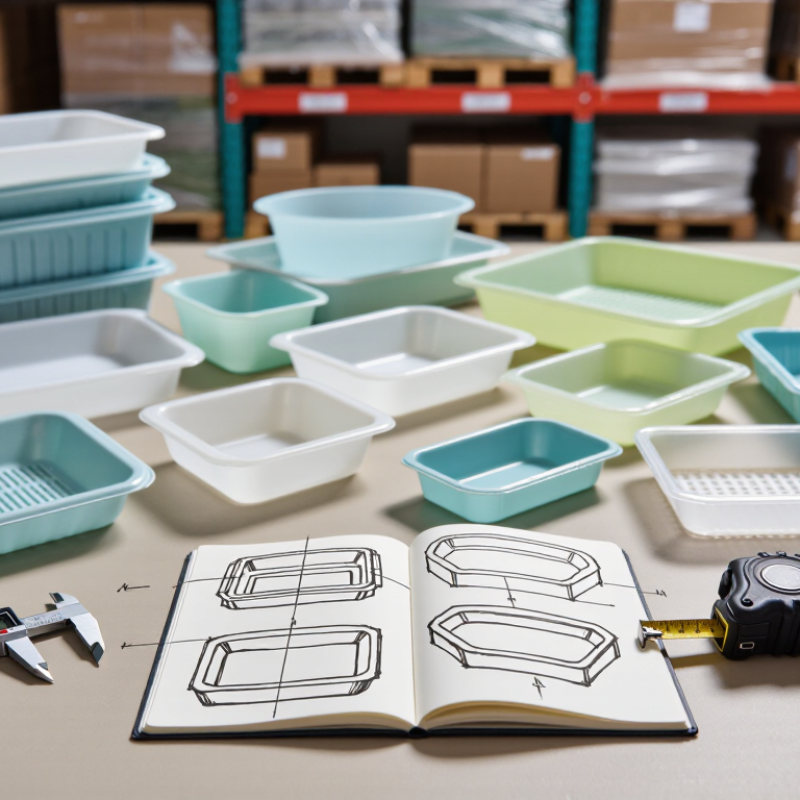
Plastic trays differ by shape, stiffness, heat tolerance, and intended use. PET trays are clear and common for chilled produce, bakery items, and ready-to-eat foods. PP handles heat better, making it useful for microwaveable meals and reusable service trays. CPET is designed for ovenable food packaging, while rigid PVC may suit some display applications. Always check the supplier’s temperature and food-contact specifications; resin names alone do not guarantee performance.
Material choices sit within a large industry. Plastics Europe’s Plastics—The Fast Facts 2023 report estimated global plastics production at 400.3 million tonnes in 2022. That figure covers many products, not trays specifically, but it shows why buyers should compare durability and end-of-life options. In practice, a tray holding wet berries needs different moisture resistance from one carrying metal components. Small details matter. Tray depth, corner strength, stack height, and lid fit can affect damage rates and storage space. I would test a sample under actual packing conditions; lab specifications do not capture every awkward handling moment.
Tip: Match material to use, then request samples in the intended size. Test stacking, temperature exposure, and fit with your existing lid or equipment. For bulk orders, confirm dimensions, weight per tray, recycled-content documentation, and whether the material is accepted by local recycling systems. Ask for written specifications. A low unit price can be misleading if trays crack, waste warehouse space, or require a new packing setup.
Assessing Tray Dimensions, Capacity, and Design Requirements
Before requesting bulk quotes, measure the product at its widest points, including lids, handles, or protective sleeves. Then check the usable tray area, not just its outside dimensions. A tray that fits the item snugly can still fail when stacked or packed. Leave room for loading and removal. Test a filled sample, too.
Capacity depends on more than volume. A shallow tray may suit delicate pastries, while heavier components need deeper walls and reinforced corners. The U.S. Environmental Protection Agency’s 2018 Advancing Sustainable Materials Management report recorded 14.5 million tons of plastic containers and packaging in the municipal waste stream. That figure is a useful reminder: avoid excess material where the load allows it. Still, reducing wall thickness without testing can cause cracking. A little less plastic is not always better.
Specify stack height, nesting clearance, drainage holes, surface texture, and whether trays will travel on conveyors. Request drawings with tolerances, then compare them against a physical sample. Check how rims meet during stacking; tiny misalignments can make a tall pile wobble. It happens. I would also test the tray after repeated handling, not only straight from the carton. Real use is messier than a specification sheet.
Comparing Bulk Pricing, Minimum Orders, and Total Costs
Bulk pricing can make plastic trays look inexpensive, but the unit price is only one part of the decision. Ask suppliers for quotes at several quantities, such as 500, 1,000, and 2,500 trays. A small price break may not justify storing an extra pallet. Check whether quoted prices include packing, freight, and any setup charges. Get the details in writing.
Minimum order quantities can vary by tray size, material, color, and production method. A standard clear tray may have a lower minimum than a custom-colored version. Confirm whether mixed sizes count toward one order minimum or require separate runs. This matters. If your storage area is limited, estimate how many cartons will fit before agreeing to a large shipment. I once underestimated carton volume; the unit savings felt less convincing when floor space ran short.
Compare total costs per usable tray, not just the invoice total. Include shipping, unloading, storage, and the cost of damaged or unsuitable stock. Request a sample and check its dimensions, stiffness, and fit with your products. A tray that saves a few cents but bends under weight can create waste and extra handling. Also ask about reorder lead times. Paying slightly more for a manageable first order may be sensible, though not always; actual demand is easy to misjudge.
Checking Quality Standards, Durability, and Supplier Reliability
When buying plastic trays in bulk, ask for the written specification, not just a product photo. Check the resin type, thickness, dimensions, and stated load capacity. Request samples from the same production run if possible. A tray that feels sturdy when empty may flex under stacked goods.
Look for clear quality checks, such as dimensional tolerances and inspection records. If trays will touch food, confirm that the supplier provides relevant material documentation for the intended use. Test a sample with your actual products: load it, stack it, and move it across the surfaces used at your site. Watch the corners. Small cracks often appear there first.
Durability depends on more than thickness. Repeated washing, temperature changes, and rough handling can shorten a tray’s life. Ask how the material performs under your working conditions, and request test details rather than broad claims. Supplier reliability matters too. Check lead times, packaging methods, replacement procedures, and how quickly questions receive specific answers. Keep the response in writing. One thing is easy to miss: a low unit price may not include freight or protective packing. Get the full landed cost before placing a large order.
Planning Storage, Shipping, and Future Reordering Needs
Buying plastic trays in bulk is not only a price decision. Storage, shipping, and repeat orders can affect the real cost. Measure the shelf space where trays will sit, including room for cartons and easy access. A stack that fits on paper may block a walkway in practice. Check the tray’s nesting depth, too. A difference of a few millimeters can change how many fit on a storage rack.
Shipping details deserve attention before placing an order. Ask for the packed carton dimensions and weight, then compare them with your receiving area and handling equipment. If trays arrive on pallets, confirm pallet height and whether your team can move them safely. Leave room for damaged cartons or delayed deliveries. It feels overly cautious, but crowded receiving areas create avoidable work.
Plan future reordering around actual use, not a guess made during a busy week. Track how many trays leave storage each month and note seasonal changes. Keep the product dimensions and order specifications in one place, so a later purchase matches the original fit. Small records help. Still, forecasts are imperfect; demand may dip, or a new product may need a different tray size. Avoid filling every available corner with excess stock. A modest buffer is often easier to manage than a warehouse full of trays that seemed like a bargain.