
10 IPE BEAM Buying Tips for Global Buyers?

Buying an IPE BEAM across borders requires more than comparing prices per tonne. A reliable decision begins with the project load, span, connection design, and applicable steel standard. Buyers should confirm the exact IPE section, nominal dimensions, steel grade, length tolerance, straightness, and surface condition. A 12-meter beam may look correct in a photograph, yet a small dimensional error can complicate fabrication on site.

Engineering author Henry Petroski wrote, “Form follows failure.” This warning fits steel purchasing well. Every specification should reflect a possible failure, including bending, corrosion, delayed delivery, or incomplete documentation. Ask the supplier for a mill test certificate, heat number traceability, chemical composition, mechanical results, and independent inspection options. Compare EN 10025 requirements carefully with local standards. Do not assume that “equivalent grade” means identical performance.

Freight details also matter. Check bundle weight, lifting points, port access, export packaging, and moisture protection. A strong IPE BEAM can arrive with damaged markings or surface rust after a poorly planned voyage. Incoterms, insurance, customs documents, and delivery penalties deserve written confirmation. The cheapest quotation may become expensive after re-testing, storage, or replacement.

This guide presents ten practical buying tips for global buyers. It focuses on measurable evidence, supplier communication, and realistic risk control. No checklist is flawless. Still, a disciplined review can prevent expensive surprises before production begins.
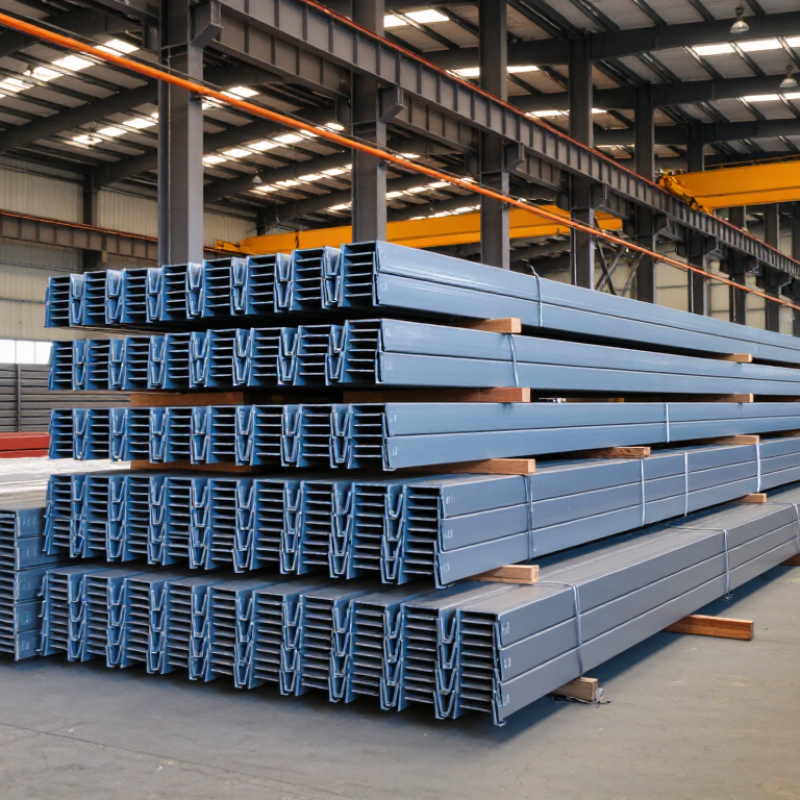
10 IPE BEAM Buying Tips for Global Buyers?

Define IPE Beam Profiles, Sizes, and EN 10365 Dimensions

IPE beams are European parallel-flange I-sections defined by EN 10365. Their designation combines “IPE” with nominal depth, such as IPE 200 or IPE 300. The number refers roughly to section height in millimetres, not the complete beam size.

EN 10365 lists each profile’s height, flange width, web thickness, flange thickness, root radius, cross-sectional area, and mass per metre. An IPE 200, for example, is close to 200 mm deep, but its exact dimensions must come from the standard table. Do not rely on rounded catalogue figures. EN 10034 should also be checked for dimensional and shape tolerances, while EN 1993-1-1 supports structural verification.

Tip: Request the exact EN 10365 profile and steel grade.

The World Steel Association reported approximately 1.89 billion tonnes of crude steel production in 2023. This scale supports broad availability, but it does not guarantee identical stock across markets. Mill rolling ranges, cutting practices, and regional inventory can differ. Buyers should compare mass per metre, total length, heat certificates, and delivery tolerances. A small mass difference can affect freight calculations and connection details. I have seen purchasing teams overlook root radius, then discover fitting problems during fabrication. That mistake is avoidable.

Tip: Confirm h, b, tw, tf, r, and kg/m before ordering.

Ask suppliers to identify whether dimensions are nominal or measured. It sounds obvious, but specifications are sometimes copied incorrectly. Include EN 10365, EN 10034, steel grade, surface condition, length tolerance, and inspection documents in the purchase inquiry.

Match Steel Grades S275 or S355 to Design Loads and EN 10025

When buying IPE beams, match the steel grade to the design load, not only the beam’s visual size. S275 and S355 are commonly specified under EN 10025 for hot-rolled structural steel. S275 provides a nominal yield strength of 275 MPa for thinner sections, while S355 offers 355 MPa. The actual value can reduce as thickness increases.

That difference affects bending resistance and may allow a lighter IPE section. It does not automatically make S355 the better choice. Span, point loads, deflection limits, lateral restraint, and connection details still control the selection. A beam carrying a 20-tonne machine may fail through buckling before its yield strength becomes relevant. Check the design calculations carefully.

In procurement reviews, I have seen buyers select S355 without confirming the engineer’s specification. That creates avoidable cost and documentation problems. Ask for the exact grade, subgrade, section dimensions, and applicable EN 10025 part. Request a material certificate, preferably EN 10204 3.1, and compare its heat number with the beam marking. Inspect straightness, flange damage, surface corrosion, and measured thickness after delivery.

Small details matter. S275 may be sufficient for a lightly loaded roof beam, while S355 can provide useful reserve capacity in a heavily loaded frame. Still, I would not replace one grade with another without written approval. Calculations, certificates, and site conditions must agree. Mistakes happen when catalog tables replace engineering judgment.

10 IPE Beam Buying Tips for Global Buyers: Match S275 or S355 to Design Loads and EN 10025

The chart compares the minimum yield strength specified for S275JR and S355JR structural steel at different nominal thicknesses under EN 10025-2. S355 generally provides higher yield strength, but final IPE beam selection must also consider section modulus, span, buckling, deflection, connection design, corrosion protection, delivery condition, and project-specific design codes.

Verify Section Properties, Tolerances, and Mass per Metre

10 IPE BEAM Buying Tips for Global Buyers

Verify section properties, tolerances, and mass per metre before approving an IPE beam order. Check the nominal height, flange width, web thickness, and flange thickness against the applicable product standard. Then compare the listed area, Iy, Iz, Wel, and Wpl values with your design documents. A small dimensional difference can affect connections, bending capacity, and installation clearance.

Buying tip: Request a dimensional inspection report, not only a catalogue table. Measure several points along the beam, including flange edges and web thickness. Tolerances may vary by standard and product size. Confirm the required tolerance standard in writing. It sounds obvious. It is often missed.

Mass per metre also needs careful checking. Theoretical mass usually uses a steel density near 7.85 kg/dm³, while actual delivery weight may differ within permitted tolerances. Ask for the calculated mass, actual weighbridge records, and heat-related material certificates when required. Do not estimate shipment weight from beam length alone. Add the stated mass per metre, then verify the total quantity and cutting schedule. I still recheck this calculation manually; spreadsheet errors are surprisingly easy. A beam can meet the profile requirement yet create cost or handling problems if its mass is misunderstood.

10 IPE BEAM Buying Tips for Global Buyers? - Verify Section Properties, Tolerances, and Mass per Metre

Practical purchasing checklist with nominal IPE reference data
No. Buying Tip What to Verify Reference Data or Acceptance Check Why It Matters Recommended Purchasing Evidence
1 Confirm the profile designation Check that the quotation states the IPE series and nominal depth in millimetres. Example: IPE 200 means a nominal section depth of 200 mm; it is not interchangeable with HEA 200 or IPN 200. Different European sections can have different flange widths, thicknesses, stiffness, and mass. Signed quotation, order confirmation, drawings, and packing list showing the exact profile designation.
2 Verify mass per metre Compare the declared nominal mass with the specified section and do not rely only on bundle weight. IPE 100: 8.1 kg/m; IPE 200: 22.4 kg/m; IPE 300: 42.2 kg/m; IPE 400: 66.3 kg/m; IPE 600: 122 kg/m. Mass affects freight calculations, lifting plans, structural dead load, and quantity reconciliation. Mill certificate, weighbridge record where required, and a calculation based on mass per metre × ordered length.
3 Check overall dimensions Measure section height, flange width, web thickness, and flange thickness at suitable locations. IPE 200 nominal dimensions: h = 200 mm, b = 100 mm, tw = 5.6 mm, tf = 8.5 mm. Small dimensional differences can affect connections, bearing details, clearances, and fabrication. Inspection report with measured values, measuring locations, and the applicable dimensional-tolerance standard.
4 Verify section properties Use the correct axis and confirm area, second moment of area, and section modulus from the approved section table. IPE 200 nominal properties: A ≈ 28.5 cm²; Iy ≈ 1,943 cm⁴; Wel,y ≈ 194 cm³. Using an incorrect axis or profile table can produce unsafe bending, buckling, or deflection calculations. Approved design calculation, section-property table, and profile designation matching the material certificate.
5 Check geometric tolerances Specify tolerances for height, width, thickness, straightness, out-of-squareness, and end condition. Use the tolerance class and limits stated in the applicable product specification, commonly EN 10034 for hot-rolled I and H sections. Tolerance requirements can affect fit-up, welding preparation, bolted connections, and installation speed. Purchase specification citing the applicable standard, tolerance class, and inspection method.
6 Confirm steel grade and material standard Check yield strength, tensile strength, impact properties, chemical limits, and delivery condition. Common examples include S235JR, S275JR, and S355JR under EN 10025-2; the selected grade must match the design. Nominally identical IPE dimensions can have different structural performance depending on steel grade. EN 10204 3.1 inspection certificate or the certificate level explicitly required by the project.
7 Validate length and cutting allowance Confirm fixed lengths, random lengths, permissible length tolerance, and whether saw-cut ends are required. State the ordered length in millimetres and define whether the quoted mass is based on theoretical length or actual weighed material. Incorrect length assumptions create installation shortages, excess scrap, and inaccurate freight estimates. Cutting list, length schedule, packing list, and final dimensional inspection report.
8 Inspect straightness and surface condition Check longitudinal straightness, flange distortion, edge damage, laminations, cracks, and excessive rust or pitting. Acceptance should follow the specified product standard and project surface-quality requirements; superficial mill scale is not the same as section loss. Distortion and surface defects may prevent proper fabrication or reduce the effective cross-section. Visual inspection record, dimensional report, photographs, and non-destructive testing where specified.
9 Clarify marking and traceability Ensure each bundle or piece can be traced to the heat number, grade, size, and inspection certificate. Minimum traceability fields: profile, nominal size, steel grade, heat number, quantity, length, and certificate number. Traceability supports customs clearance, quality claims, welding control, and project documentation. Bundle tags, heat markings, certificate cross-reference, and a packing list matching the purchase order.
10 Reconcile quantity, mass, and delivery terms Compare pieces, total length, theoretical mass, actual shipment mass, packaging, and agreed Incoterms. For theoretical mass: total length (m) × nominal mass per metre (kg/m). Example: 20 m of IPE 200 ≈ 20 × 22.4 = 448 kg, excluding packaging. This reduces disputes involving short shipment, freight charges, customs declarations, and payment quantities. Commercial invoice, packing list, transport document, weight record, and inspection documents using identical quantities.
Reference note: Dimensions and mass values shown are nominal reference values for standard IPE sections. Final acceptance should be based on the purchase specification, the applicable product standard, the agreed tolerance class, and the actual inspection records.

Assess Mill Certificates, CE Marking, and EN 10204 Type 3.1

10 IPE BEAM Buying Tips for Global Buyers

Assess Mill Certificates, CE Marking, and EN 10204 Type 3.1

When buying IPE beams, start with the mill certificate, not the quoted price. Check the steel grade, beam dimensions, heat number, chemical composition, and mechanical results. The heat number should match the beam bundle and shipping documents. Small mismatches can create costly delays at the receiving yard. Confirm that the stated standard matches your project specification. Do not accept a generic certificate for a specific order.

EN 10204 Type 3.1 provides inspection results for the supplied material. It should identify the manufacturer, product specification, test results, and authorized inspection signatory. The signatory must be independent of the production department. Review yield strength, tensile strength, elongation, and impact testing when required. A neat PDF is not enough. Traceability matters more. Ask how samples were taken and tested.

CE marking needs careful review. It is not simply a quality badge. For applicable structural products, verify the relevant harmonized standard, Declaration of Performance, and factory production control details. Confirm that the beam’s intended use fits the declared scope. Requirements can differ between rolled sections and fabricated assemblies. This is where buyers often make assumptions. I have also seen experienced teams overlook a missing revision number. That mistake is easy to repeat.

A practical check is to compare every certificate line with the purchase order before loading. Use an independent inspection when project risk justifies the cost.

Compare Pricing, Incoterms, Lead Times, and Global Delivery Risks

10 IPE BEAM Buying Tips for Global Buyers

When comparing IPE beam prices, do not judge the lowest quotation alone. Check the steel grade, section weight, length tolerance, certification, and packing method. A cheaper offer may exclude cutting, testing, inland transport, or export handling. Compare the landed cost at your project site, not only the mill price.

Tip 1: Request identical Incoterms from every supplier.

FOB, CFR, and DAP create different cost and risk positions. Under FOB, you usually manage ocean freight and insurance. Under DAP, delivery is easier to budget, but the seller may add a risk premium. Confirm who handles unloading, import clearance, and unexpected storage charges.

Lead time needs more detail than “20 days.” Ask for production time, inspection time, booking time, and estimated transit time separately. Add a practical buffer for port congestion, vessel changes, customs reviews, and regional holidays. A promised date can still fail. That is an uncomfortable reality.

Tip 2: Build a delivery-risk checklist.

Confirm the loading port, transshipment route, packaging, moisture protection, and damage-claim process. Request shipment photos, packing lists, and tracking information before departure. For urgent projects, split the order across shipments when financially sensible. This may cost more, but one delayed vessel will not stop the entire installation.

Tip 3: Use payment milestones linked to measurable documents.

Review the commercial invoice, packing list, inspection report, and material certificates before final payment. Also check currency exposure and destination duties. Many buyers overlook these details, including experienced teams. That mistake deserves a second review.

Go to Top