
How to Choose Wiper Motor Equipment for Your Vehicle?

Choosing Wiper Motor Equipment is a safety decision, not merely a replacement task. The Federal Highway Administration reports that about 21% of U.S. crashes involve hazardous weather, while wet pavement contributes to nearly three-quarters of weather-related incidents. Rain alone is linked to approximately 46% of these crashes. A weak motor can leave blurred arcs across the windshield when visibility matters most.

Industry demand also reflects this concern. Grand View Research identifies the global automotive wiper system market as a multibillion-dollar sector, supported by rising vehicle ownership, stricter safety expectations, and advanced driver-assistance systems. However, market growth does not guarantee compatibility. A motor with the wrong voltage, shaft design, torque, sweep angle, or connector can stall halfway across the glass. That is dangerous.

Richard Reina, Product Training Director at CARiD, offers a practical reminder: “A wiper motor is a safety component, not a cosmetic upgrade.” His point deserves attention. Check the vehicle’s exact year, model, body style, and original motor specifications. Inspect the linkage for rust, looseness, or bent arms before blaming the motor. Also consider sealed housings, thermal protection, noise levels, and intermittent-control compatibility.

Small details matter.

A vehicle used near saltwater may need stronger corrosion resistance. A cold-climate driver may value starting torque more than low price. Some aftermarket listings look convincing but omit connector or load information. That is where this guide becomes useful, although one limitation remains: published specifications can be incomplete. Confirm them with the manufacturer, a service manual, or an experienced technician before purchase.
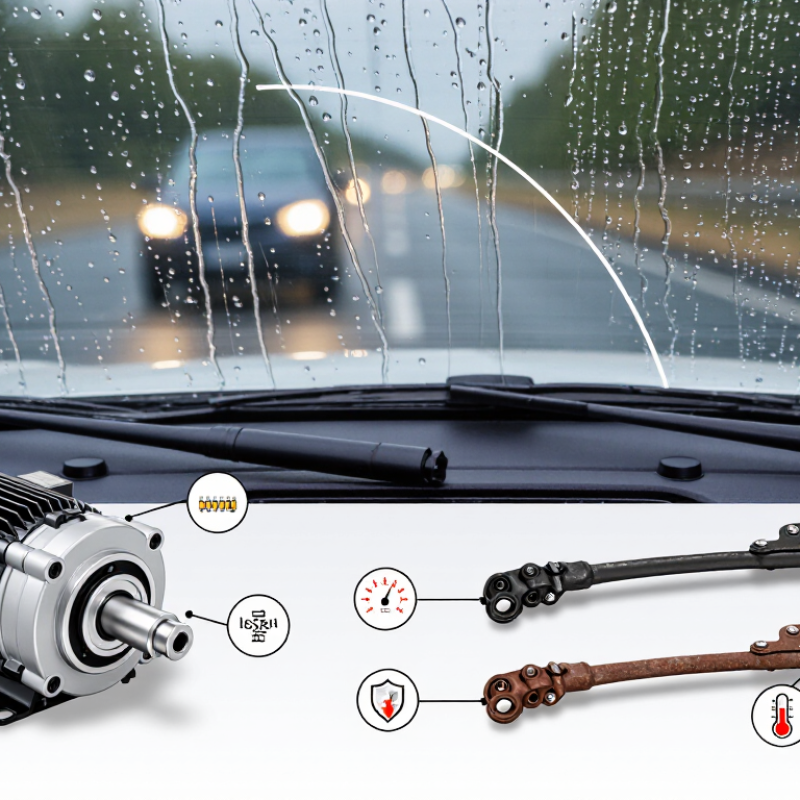
How to Choose Wiper Motor Equipment for Your Vehicle?

Identify Your Vehicle’s Wiper Motor Requirements

Before choosing wiper motor equipment, identify the vehicle’s exact requirements. Record its year, body style, windshield size, and existing motor specifications. Fitment is not universal. Two vehicles with similar glass may use different mounting points or shaft lengths.

Inspect the current motor and linkage carefully. Check the connector shape, operating voltage, rotation direction, shaft diameter, and park position. Measure twice. The motor must provide enough torque for the blade length and linkage resistance. A weak unit may move normally in dry weather but stall during heavy rain or snow. Review the vehicle service manual when possible, then compare its electrical ratings with the replacement equipment.

Your driving conditions also affect the choice. Frequent rain, dust, freezing temperatures, or long highway trips demand dependable duty performance. Examine the wiring for corrosion and test the ground connection before blaming the motor. Do not guess. I once found a “matching” unit with the correct plug but the wrong park angle; the blades stopped across the driver’s view. That detail matters. A small oversight can create noise, uneven wiping, or poor visibility. If the linkage feels stiff, replacing only the motor may not solve the problem. Inspect bushings, pivots, and blade pressure as part of the same assessment. Some measurements are easy to overlook, especially when an old component is already removed.

Compare Wiper Motor Types and Drive Systems

Choosing wiper equipment starts with the drive system, not motor size. In workshop inspections, a brushed DC motor remains practical for standard windshields. It is affordable, easy to replace, and supplies strong starting torque. However, its brushes wear over time. A brushless DC motor offers quieter operation, better efficiency, and longer service life. It usually costs more and needs electronic control.

The linkage design also matters. A single motor with a crank and connecting rods can move two blades economically. Its pivot joints need accurate alignment and regular lubrication.

Direct-drive systems use separate motors near each wiper arm. They reduce mechanical losses and simplify packaging, but electronic synchronization becomes critical. A poorly matched system may leave a narrow unwiped strip near the driver’s view. That is a serious installation flaw.

According to Grand View Research’s 2024 automotive wiper system report, the global market is expected to grow at roughly 6% annually through 2030. This growth reflects demand for quieter, sensor-connected systems. Still, market growth does not make every advanced motor suitable. NHTSA’s FMVSS 104 requires specific windshield wiping performance under defined conditions. Check swept-area coverage, current draw, stall protection, and intermittent-cycle reliability. Test the motor with the actual blade length and glass angle. Bench results can mislead. I have seen a motor run smoothly without blades, then overheat under wet, heavy resistance.

Check Motor Compatibility and Technical Specifications

Choosing a wiper motor starts with compatibility, not price. Check the vehicle’s model year, body style, windshield design, and original motor connector. A small connector difference can stop the system completely. S&P Global Mobility reported that the average U.S. vehicle age reached 12.6 years in 2024. Older vehicles often have undocumented repairs, so never trust the part number alone. Compare mounting holes, shaft length, rotation direction, and linkage geometry against the removed motor.

Electrical specifications require equal attention. Match the system voltage, usually 12 volts in passenger vehicles, but verify it with a service manual. Check current draw, rated speed, intermittent control, park position, and stall protection. The U.S. NHTSA FMVSS No. 104 requires windshield wiping systems to provide at least two speeds, with a high-speed requirement of 45 cycles per minute under specified conditions. That figure is a compliance reference, not a universal replacement target. I have seen motors spin correctly on a bench but fail under a dry, heavy blade load.

Measure twice. Then test.

ISO 8856 outlines performance testing for vehicle windscreen wiping and washing systems, including operating conditions and visibility-related performance. Use its principles when evaluating sweep coverage and consistency. Also inspect the linkage for rust, stiff pivots, or bent arms before installing a stronger motor. Excessive resistance can damage a properly rated unit. One overlooked detail remains the park circuit: incorrect positioning may leave blades across the driver’s viewing area. That is inconvenient, and potentially unsafe.

Evaluate Performance, Durability, and Weather Resistance

Choose a wiper motor by measured output, not catalogue appearance. Check sweep speed, torque, park accuracy, current draw, and noise under load. One clean pass matters. During a practical inspection, watch the blade return fully after several cycles. A quiet motor may still stall against a wet, heavy blade. That small test is easy to skip.

Durability depends on sealing, shaft protection, connector quality, and thermal tolerance. ISO 16750-4 describes environmental tests involving temperature, moisture, vibration, and corrosion for road-vehicle electrical equipment. Use those conditions as a purchasing benchmark. The U.S. Federal Highway Administration reports that weather-related crashes represent about 21% of annual U.S. crashes. Wet pavement is involved in roughly 74% of those crashes. Weather resistance is not cosmetic.

Tips: Request test results for water exposure, salt spray, cold starts, and repeated cycling. Compare the motor’s rated torque with the vehicle’s original requirement. Inspect the housing seal closely; a tiny gap can become a serious fault after winter use. I would also leave room for doubt. A laboratory pass does not guarantee perfect performance after years of dust, ice, and neglected blades. Replace worn blades before judging the motor.

How to Choose Wiper Motor Equipment for Your Vehicle?

Evaluate performance, durability, and weather resistance before selecting a replacement wiper motor.

The chart compares water-exposure test conditions defined by IEC 60529. Higher IP water-test levels indicate stronger resistance to rain and water jets, but they do not replace checks for voltage compatibility, torque, speed, operating noise, service life, and connector fit. Select a motor that matches the vehicle’s electrical system and expected climate.

Choose a Reliable Supplier and Complete the Installation

How to Choose Wiper Motor Equipment for Your Vehicle?

A reliable supplier matters as much as the motor itself. Choose one that provides voltage, torque, speed, connector, and vehicle-fit data. Ask for test reports, batch traceability, and a clear warranty. ISO 9001 certification can support process reliability, but it does not guarantee perfect field performance. Check independent reviews and technical support before ordering. The Federal Highway Administration reports that about 21% of annual vehicle crashes involve weather conditions. A weak motor can quickly become a visibility problem during heavy rain. That risk deserves more attention than a low purchase price.

Installation should follow the vehicle service manual. Disconnect the battery before touching the linkage. Mark the original parked position, then fit the crank arm without forcing it. Tighten fasteners to the specified torque. Check the connector for corrosion and confirm the ground connection. After installation, test low, high, intermittent, and washer functions. Keep hands clear of the linkage. A dry windshield can overload the motor, so use washer fluid during testing. I have seen motors blamed for faults caused by stiff wiper arms. Diagnosis is sometimes less convenient, but it prevents repeated replacement.

Tips: Compare the supplier’s technical sheet with your original motor. Confirm the park angle and shaft size. Avoid parts with vague fitment claims. Inspect the blades and pivots together. If movement remains uneven, stop and recheck alignment. The International Organization for Standardization emphasizes documented quality processes, yet installation accuracy still depends on careful workmanship. One overlooked washer or misaligned arm can create noise, skipping, and premature wear.

How to Choose Wiper Motor Equipment for Your Vehicle? - Choose a Reliable Supplier and Complete the Installation
Selection Dimension Recommended Specification or Check Typical Reference Data Why It Matters Installation and Supplier Verification
Vehicle Compatibility Match the motor to the vehicle model, production year, body style, and windshield configuration. Passenger cars, light commercial vehicles, buses, and utility vehicles may use different motor assemblies. Mounting points, shaft length, electrical connectors, and linkage geometry vary between vehicles. Provide the supplier with the vehicle identification number or the original motor specifications before ordering.
Electrical System Select a motor with the same nominal voltage as the vehicle electrical system. 12 V is common in passenger vehicles; 24 V is common in many heavy-duty vehicles. An incorrect voltage can cause slow operation, overheating, premature failure, or complete malfunction. Confirm voltage, connector pin layout, grounding method, and compatibility with the vehicle control circuit.
Motor Speed Choose a motor that supports the required low-speed and high-speed wiping modes. Many automotive wiper motors provide two operating speeds and an automatic park function. Correct speed control helps maintain visibility during light rain, heavy rain, and snow conditions. Test both speeds and verify that the motor returns the wipers to the designated park position.
Output Torque Use a motor with sufficient torque for the blade length, linkage resistance, and expected weather conditions. Required torque depends on windshield size, blade pressure, ice loading, friction, and linkage design. Insufficient torque may cause stalling or skipped wipes, while excessive torque may damage the linkage. Ask for the rated torque and duty-cycle information; do not select solely by physical appearance.
Mounting Configuration Check mounting holes, bracket shape, shaft orientation, and overall motor dimensions. Common assemblies use vehicle-specific brackets and splined or threaded output shafts. A motor that fits electrically may still be unsuitable if the mounting geometry is incorrect. Compare the replacement part with the original unit before installation and use the specified fasteners.
Linkage Compatibility Confirm compatibility with the existing wiper arms, crank, rods, and linkage mechanism. Linkage length and crank position determine blade sweep angle and synchronization. Incorrect linkage alignment can cause blade collision, incomplete windshield coverage, or excessive noise. Mark the original parked position, inspect ball joints and bushings, and replace worn linkage parts when necessary.
Park Function Select a motor with a park switch or control method compatible with the vehicle. The park circuit normally keeps the motor running until the blades reach the lower rest position. A correctly working park function prevents the blades from stopping in the driver’s viewing area. After wiring, switch the wipers off and confirm that the blades stop at the correct position every time.
Protection and Durability Prefer sealed housings, corrosion-resistant components, and protection against water and dust. Automotive wiper motors operate in wet, dirty, cold, and thermally variable environments. Environmental protection reduces corrosion, electrical faults, bearing wear, and moisture-related failures. Request product test records, operating-temperature information, and details about sealing and corrosion protection.
Operating Temperature Verify that the motor is suitable for the climate and vehicle operating conditions. Automotive components commonly need to function in sub-zero temperatures as well as hot engine-bay conditions. Temperature changes affect grease viscosity, electrical resistance, plastic components, and starting torque. Choose a supplier that can provide temperature-range data and avoid operating the wipers on a frozen windshield.
Noise and Vibration Check for stable rotation, balanced operation, and minimal gear or bearing noise. Unusual clicking, grinding, or vibration may indicate gear wear, poor alignment, or excessive linkage resistance. Low noise generally indicates correct installation and smooth mechanical operation. Run the motor with the blades installed and inspect for abnormal sounds, movement, or vibration.
Supplier Reliability Evaluate technical support, product traceability, quality control, and replacement policy. A reliable supplier should provide specifications, drawings, wiring information, and inspection records. Accurate technical information reduces installation errors and helps ensure consistent replacement quality. Confirm warranty terms, batch traceability, delivery inspection procedures, and after-sales technical support.
Tools and Safety Prepare basic hand tools, protective gloves, electrical test equipment, and suitable trim-removal tools. Typical work may involve sockets, screwdrivers, a multimeter, and a torque wrench. Proper tools help prevent damage to connectors, fasteners, trim panels, and the motor assembly. Disconnect the battery when required, keep hands clear of moving parts, and follow the vehicle service instructions.
Installation Alignment Install the motor and linkage in the correct parked position before tightening all fasteners. The wiper arms should rest within the manufacturer-defined sweep and parking area. Incorrect alignment may reduce visibility and cause the blades to strike the body or each other. Operate the mechanism without contacting the windshield edge, hood, cowl, or adjacent wiper arm.
Final Functional Test Test intermittent, low, high, washer-linked, and park functions when available. Verify complete blade travel, even contact, correct stopping position, and stable motor operation. A complete test identifies wiring, linkage, alignment, and control-system problems before road use. Use clean water or approved washer fluid during testing; never run dry on a dirty or damaged windshield.
Go to Top