
How to Choose the Best Bathroom Shelf

Bathrooms rarely have enough storage, yet adding a shelf can make a cramped room feel more orderly. A carefully chosen Bathroom Shelf keeps daily essentials within reach without crowding the sink or shower. The right option depends on more than appearance. Room dimensions, moisture, wall type, and the items you plan to store all matter.

Measure the available space before browsing. A shelf that looks compact online may block a mirror or door once installed. Small details matter. Check the shelf’s dimensions and stated weight capacity, then compare them with your bottles, towels, or toiletries. Materials also affect upkeep. Stainless steel and certain plastics are generally easy to wipe clean, while wood may need suitable sealing and care in humid rooms. Always follow the manufacturer’s instructions.

Mounting deserves careful thought. Drilled shelves can feel secure, but the right fasteners depend on your wall surface and the product design. Adhesive options may suit some smooth surfaces, though their capacity and durability vary. For renters, check the product requirements and your lease before choosing a fixed installation. Also consider edges, drainage, and how easily you can clean behind the shelf. Leave enough room to reach frequently used items, especially near a shower. A shelf can solve one problem and create another if it is placed poorly. No choice is perfect. Comparing practical needs with installation limits can help you select a shelf that stays useful, safe, and easy to maintain.
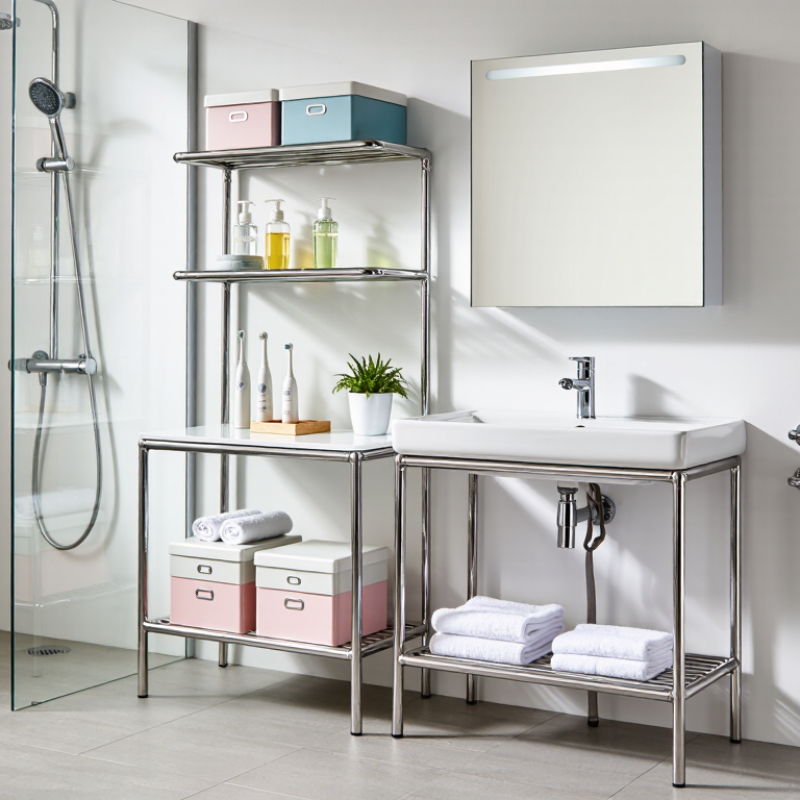
How to Choose the Best Bathroom Shelf

Assess Your Bathroom Space and Storage Needs

Before choosing a bathroom shelf, map the space you actually use. Measure the clear wall area, including the distance from the sink, toilet, and shower. Note doors, drawers, towel bars, and cabinet fronts that need room to open. A shelf can fit on paper yet block a cabinet handle in daily use. Mark the proposed width and depth with painter’s tape. Stand back and check whether it feels crowded. Small details matter.

Next, list what needs a home. Count daily items such as toothbrushes, skincare bottles, and spare toilet paper, then consider their sizes and weight. A narrow ledge may suit a few small bottles, while bulky towels need deeper support. Keep frequently used items within easy reach, but leave enough space to wipe the wall and shelf. Bathrooms stay damp, so consider whether the spot receives direct spray or has poor airflow. This can affect which materials are practical and how often the shelf needs cleaning. I still find storage needs easy to overestimate; a quick inventory helps. Don’t guess. A little unused space is often more useful than a shelf packed edge to edge.

Compare Shelf Materials for Moisture Resistance and Durability

Bathroom humidity affects shelves differently, so compare the material and its fittings. Stainless steel handles splashes well, but lower-quality steel may develop rust around scratches or screw holes. Aluminum resists rust, though a thin shelf can flex under heavy bottles. Small details matter.

Tempered glass does not absorb water and is easy to wipe clean. However, its edges can chip, and secure wall anchors are essential. Plastic shelves avoid rust and often cost less, but some bend under full shampoo bottles or discolor over time. Solid wood feels warm, yet it needs a sound protective finish and prompt drying after spills. I used to think a sealed surface solved everything. It does not; joints and cut edges can still take in moisture.

Check how the shelf is assembled, not just what it is made from. Look for smooth, sealed edges, sturdy brackets, and corrosion-resistant screws. A shelf beside a frequently used shower needs more water resistance than one across the room. Not always. Ventilation, cleaning habits, and the weight you store also affect durability, so a material that works well in one bathroom may disappoint in another.

Choose a Shelf Type and Mounting Method

A bathroom shelf should fit the items you actually reach for, not just the empty wall. Wall-mounted shelves keep the floor clear and work well beside a sink or shower. Corner shelves use awkward spaces, while freestanding units are easier to move but may crowd a narrow room. For damp areas, choose materials made to tolerate moisture, such as stainless steel or well-sealed wood. Check shelf depth against bottles you use every day. Small detail, big difference.

The mounting method depends on both the shelf’s weight and your wall. Screws fixed into a stud offer strong support; where there is no stud, use wall anchors rated for the expected load. Tile needs a suitable drill bit and careful, steady pressure to reduce the chance of cracking. Suction-mounted shelves can be convenient on smooth, clean surfaces, but textured tile and grout may weaken their hold. No method is perfect. I would leave a little extra room around the shelf, even if the measurements look fine on paper; wet hands and tall bottles make tight spaces frustrating. Check the hardware instructions, and avoid loading the shelf until the fixings are secure.

How to Choose the Best Bathroom Shelf — Choose a Shelf Type and Mounting Method
Shelf Type Typical Mounting Method Suitable Surfaces Advantages Things to Consider Best Suited For
Wall-mounted shelf with brackets Screws and wall anchors; attach to a wall stud when practical Tile, masonry, or drywall when the correct fixing is used for the surface Provides a stable, fixed storage space and can support heavier items when properly installed. Requires drilling. Choose anchors and screws that match the wall material, shelf, and expected load; avoid drilling near hidden pipes or wiring. Regularly used toiletries, folded towels, and households that want permanent storage.
Adhesive-mounted shelf Water-resistant adhesive pads or strips applied to the wall Clean, smooth, non-porous surfaces such as glazed tile or glass, subject to the product instructions Usually avoids drilling and is relatively quick to install. Surface preparation and curing time matter. Adhesion may be unreliable on textured, dusty, damp, or porous surfaces. Follow the stated load limit and removal instructions. Lightweight items and renters who need a no-drill option.
Suction-cup shelf One or more suction cups pressed onto a smooth surface Flat, smooth, non-porous surfaces such as glass or glossy tile Can be repositioned without drilling and is convenient for temporary storage. Does not hold reliably on grout lines, textured tile, or porous surfaces. Suction can weaken over time, so check the shelf regularly and observe its load limit. Light shower items on smooth walls, especially when flexible placement is useful.
Over-the-toilet shelf Freestanding frame placed around the toilet; some models secure to the wall Bathroom floor with sufficient clearance; wall fixing depends on the model Adds storage without using much additional floor area. Check the toilet height, tank shape, available floor space, and stability. Secure the unit as directed, particularly in homes with children. Bathrooms with limited wall storage and space above the toilet.
Corner shelf or corner caddy Fixed with screws, adhesive, or suction cups, depending on the model Corner surfaces compatible with the selected fixing method Uses otherwise underused corner space and keeps shower products within reach. Confirm that the corner is suitable for the mounting system. Allow for drainage and check that the shelf does not obstruct taps or shower controls. Shower or bath corners where storage is needed without a wide shelf.
Freestanding tiered shelf Placed on the floor or countertop; no wall fixing required Level floor or counter with enough space Easy to move and does not require wall installation. Can occupy floor or counter space. Look for a stable base and materials suited to repeated bathroom moisture; keep it clear of walkways. Flexible storage, larger bathrooms, or spaces where drilling is not suitable.
Shower-tension-pole caddy Spring-loaded pole held between the floor and ceiling or another surface, as specified Spaces with compatible floor-to-ceiling height and secure contact surfaces Offers several storage levels without fixing each shelf to the wall. Measure the installation height and follow the tensioning instructions. It may not suit sloped, fragile, or unstable contact surfaces; periodically check that it remains secure. Showers needing multiple levels of storage without wall drilling.

Check Weight Capacity, Safety, and Ease of Cleaning

How to Choose the Best Bathroom Shelf

A shelf may look sturdy in a product photo, but its stated weight capacity matters more. Check the limit and compare it with the combined weight of shampoo bottles, jars, and anything else you plan to store. Leave some room below the maximum; wet hands can make heavy items awkward to lift. A wide bottle placed near the edge can also tip more easily than expected.

Mounting affects safety. Follow the installation instructions and use fixings suited to your wall type, especially for tile or hollow walls. Keep the shelf away from places where someone might bump into it, and check for sharp corners or loose parts. Small detail, big difference. Recheck the screws after installation, since a little movement can go unnoticed until the shelf is loaded.

Cleaning should be simple enough to do regularly. Smooth surfaces and open designs are easier to wipe than deep corners that collect soap film and damp dust. Look for materials and finishes intended for humid rooms, but remember that no finish is maintenance-free. A removable shelf or tray can help with cleaning, though it may add another part to wash. I would choose a slightly smaller shelf that is easy to reach and wipe over one that fills every inch of wall space.

Match Shelf Dimensions and Design to Your Bathroom Layout

A bathroom shelf should fit the room’s actual traffic, not just an empty wall. Measure the wall, door swing, shower screen, and nearby fixtures before choosing its width and depth. The National Kitchen & Bath Association’s planning guidance uses 30 inches of clear floor space in front of bathroom fixtures. Treat that as a useful layout reference, not a reason to block a narrow walkway. In a tight bathroom, a shallow shelf above the toilet may work better than a deep unit beside the sink. Small detail. Big difference.

Match the shelf’s material and shape to its location. A corner shelf can keep shampoo bottles within reach without crowding a compact shower; a longer ledge suits a wide vanity wall. Houzz’s 2024 U.S. Bathroom Trends Study reports that 84% of renovating homeowners upgraded their showers, making shower-wall storage especially relevant during layout planning. Check the shelf’s stated dimensions against tile joints and plumbing before drilling. For renters or uncertain wall surfaces, a freestanding or tension-mounted option may be less disruptive, though it can wobble. I would measure twice, then check the fit with a cardboard cutout. It is not elegant, but it catches awkward proportions early.

How to Choose the Best Bathroom Shelf

Match shelf dimensions and design to your bathroom layout. The chart shows practical planning ranges for shelf width by placement.

How to use these ranges: Compact wall shelves often fit at 12–18 inches, while vanity and above-toilet shelves can be wider if the wall allows. Measure the available space and check door, mirror, and fixture clearances before choosing a shelf.

Go to Top