How to Choose a Steel Pipe Making Machine?
Choosing a Steel Pipe Making Machine is a production decision, not simply a search for the fastest line. The World Steel Association reported 1,888.2 million tonnes of crude steel production worldwide in 2023. That figure describes steel output, not pipe demand, but it shows the scale of the material supply behind tube manufacturing. For buyers, the practical question is narrower: can a machine make the required pipe consistently, at the planned volume, with acceptable waste?
Shigeo Shingo, a respected manufacturing engineer, wrote, “The most dangerous kind of waste is the waste we do not recognize.” His warning applies to machine selection. A line that looks inexpensive may consume more material during setup, require frequent roll changes, or struggle to hold dimensions at higher speeds. Check the steel grade, thickness range, pipe diameter, weld process, and expected shift pattern against the machine’s verified capabilities. Ask for sample runs using comparable material. Look closely at the seam, cut ends, and dimensional readings.
Details matter. So does service. Ask how quickly replacement rolls and electrical components can be supplied, and whether operators receive hands-on training. Compare output under realistic conditions, not just the maximum speed printed in a brochure. That number can be useful, but it rarely tells the whole story. No checklist removes every trade-off; sometimes the best machine is not the most advanced one, but the one your team can operate reliably. This guide explains how to assess those trade-offs before choosing a Steel Pipe Making Machine.
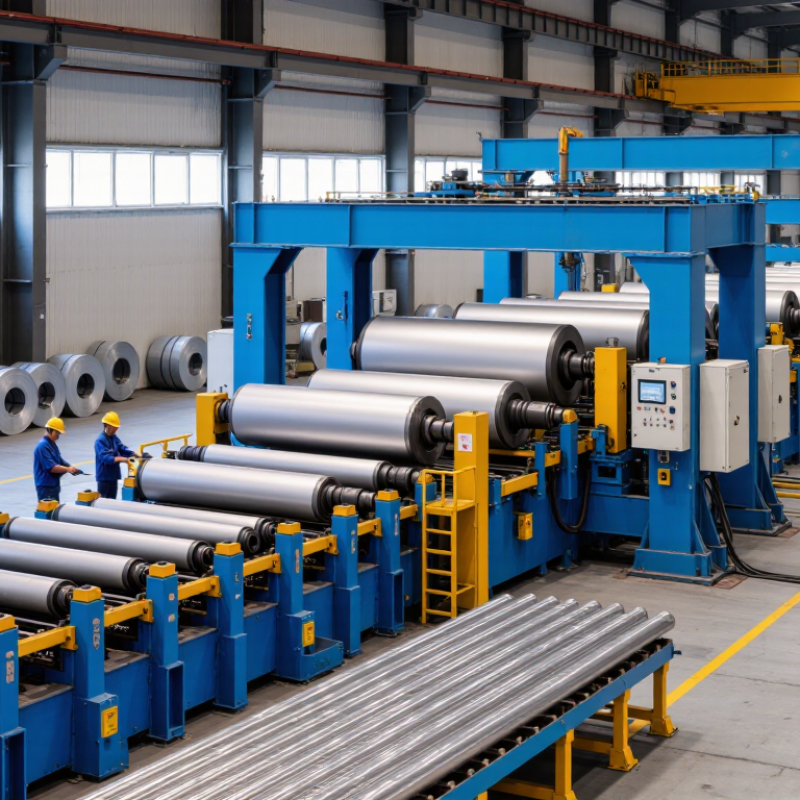
Define Production Requirements and Target Pipe Specifications
Define Production Requirements and Target Pipe Specifications
Before comparing machines, write down the pipe sizes your line must produce. Specify outside diameter, wall thickness, length, steel grade, seam type, and dimensional tolerances. Include the smallest and largest sizes, not just the most common order. A line set up for thin-wall pipe may struggle with heavier gauges. Small details matter.
Capacity needs a realistic measure: required good pipes per shift, changeover frequency, and expected scrap. The World Steel Association’s World Steel in Figures 2024 reports 1,888.2 million tonnes of crude steel production in 2023, with China accounting for 1,019.1 million tonnes. Those figures describe a vast raw-material base, not guaranteed local demand. Avoid sizing a machine from global production totals alone.
Match forming, welding, sizing, and cutting capacity to the target range. Check whether one setup can cover your diameter range, or whether tooling changes will interrupt production. Ask for trial results using your actual material grade and wall thickness. Test it first. Record line speed, weld consistency, dimensional variation, and scrap rate across several shifts. I would revisit any capacity estimate based only on a supplier’s maximum-speed figure; real changeovers and material variation can reduce output.
How to Choose a Steel Pipe Making Machine?
Define Production Requirements and Target Pipe Specifications
Compare the required pipe diameter and wall-thickness range before selecting forming, welding, and sizing capacity. This example uses standard carbon-steel pipe dimensions from ASME B36.10M; confirm the applicable specification and tolerances for your product.
Select Compatible Materials, Pipe Sizes, and Wall Thicknesses
How to Choose a Steel Pipe Making Machine?
Match the machine to the steel grade you plan to run, not just the pipe’s outside diameter. Carbon steel and stainless steel can differ in forming resistance, so check whether the forming stands, shafts, and welding setup suit your material. Ask for the recommended grade range and confirm it against your actual specifications.
Pipe size and wall thickness must also fit the machine’s working range. A line rated for a wide diameter range may still need different tooling for each size. Thin-wall tube can wrinkle or lose roundness if forming pressure is poorly set; thicker stock may demand more power and stronger tooling. Check the minimum and maximum dimensions, changeover requirements, and achievable tolerances. A sample run helps. It can still reveal surprises, especially when the material varies between batches.
Tips: Share a real material specification, target pipe dimensions, and expected production volume with the supplier. Ask how long size changeovers take. Leave room for adjustment; plans are not always perfect.
Match the Forming, Welding, and Finishing Processes
Choose a pipe-making line around the finished tube, not a catalog’s maximum speed. Specify steel grade, strip width, wall thickness, diameter range, tolerances, and product mix. World Steel Association’s World Steel in Figures 2024 reports 1,892.2 million tonnes of crude steel produced in 2023. That scale signals a broad material supply, but it does not guarantee identical coil behavior. Yield strength, coating, and thickness variation can change forming loads and weld settings. Ask for trials using your actual coil.
Small detail, big effect.
For round carbon-steel pipe, roll forming followed by high-frequency ERW suits continuous production. Stainless steel or unusual profiles may require different forming and welding setups. Match the forming stands and changeover rolls to your size range, then test weld settings on the thickest and thinnest gauges.
It still varies.
Plan finishing around the product specification: bead removal, sizing, straightening, cut-off, end facing, inspection, and coating. Eddy-current or ultrasonic testing can identify defects; hydrotesting may also be specified. For line pipe, ISO 3183 defines product requirements and testing, so confirm the applicable standard and customer tolerances before choosing inspection equipment. Do not buy every station by default. A line that produces one good sample may struggle across a full coil.
That risk is easy to underestimate.
Assess Machine Capacity, Automation, and Facility Requirements
Choosing a steel pipe making machine starts with the product mix, not the headline speed. List pipe diameter, wall thickness, steel grade, and target shifts. Then compare the machine’s rated output with saleable output after changeovers, maintenance, and rejected welds. A line rated at 20 metres per minute may not sustain that rate across every specification. Numbers can mislead. The World Steel Association’s World Steel in Figures 2024 reports 1,892.2 million tonnes of crude steel production in 2023. That scale signals a mature, high-volume industry, but your own order pattern should determine capacity. Ask suppliers for trial data using comparable materials and dimensions.
Automation should match both labour availability and production consistency. The International Federation of Robotics reported 4,281,585 industrial robots operating worldwide in 2023 in World Robotics 2024. This shows automation is widespread, not that every pipe mill needs a robot. Check whether automatic coil feeding, welding control, cutting, and stacking solve real bottlenecks. Also verify operator access and recovery procedures when sensors stop the line. Facility limits matter: measure floor space, crane reach, coil storage, electrical supply, and space for finished bundles. Leave room for maintenance access. I would recheck the layout with actual coil and bundle dimensions; drawings often make tight aisles look generous.
Compare Quality Controls, Safety Features, and Operating Costs
A steel pipe making machine should be judged by the controls that keep its output consistent, not just its advertised speed. Ask how operators check wall thickness, weld alignment, and pipe diameter during a production run. Look for clear inspection records and a practical method for tracing defects back to settings or materials. A sample run matters. Watch the pipe as it leaves the line, and check whether measurements stay steady across several pieces. One polished sample proves little.
Safety features deserve a close look on the shop floor. Guards should cover moving rolls, and emergency stops should be easy to reach without crossing a hazard zone. Ask how routine maintenance is performed when the line is isolated. A manual alone is not enough. Operators need training they can actually apply during a noisy, busy shift. Operating costs include more than the purchase price: include power use, tooling, maintenance hours, consumables, and scrap. Request realistic figures based on your pipe sizes and expected shifts, then compare them with your own production assumptions. Those estimates can be imperfect. Admit that. Even a careful review may miss a weak point, so discuss service response times and spare-part availability before committing.
