
How to Choose the Right Double Door for Your Home?

Choosing a Double Door for your home is about more than creating an impressive entrance. The right pair should suit your architecture, fit the opening, and work smoothly every day. Picture carrying grocery bags through a narrow hallway, or opening both doors onto a bright patio. These ordinary moments reveal whether the design is practical. A beautiful door can still feel awkward if its swing blocks furniture or leaves too little clearance.

Start with accurate measurements of the opening, wall depth, and available swing space. Then compare materials, insulation, glazing, hardware, and maintenance needs. Wood can bring warmth, but its finish may need regular care. Fiberglass and steel offer different balances of upkeep, appearance, and durability. Glass panels can brighten a dim entry, though privacy and heat gain deserve attention. Small details count. Check how the locks, hinges, and meeting point between the doors are designed, and follow the manufacturer’s installation specifications.

Do not choose by photographs alone. Samples, finish options, and a site assessment can show how a door will look against your brick, siding, or interior trim. Ask a qualified installer to confirm measurements and explain any changes the opening may require. Prices and performance vary by product and climate, so broad claims are not enough. It is easy to focus on style first; in retrospect, function should have an equal vote. The best choice is the one that feels secure, opens without a struggle, and still suits your home years later.
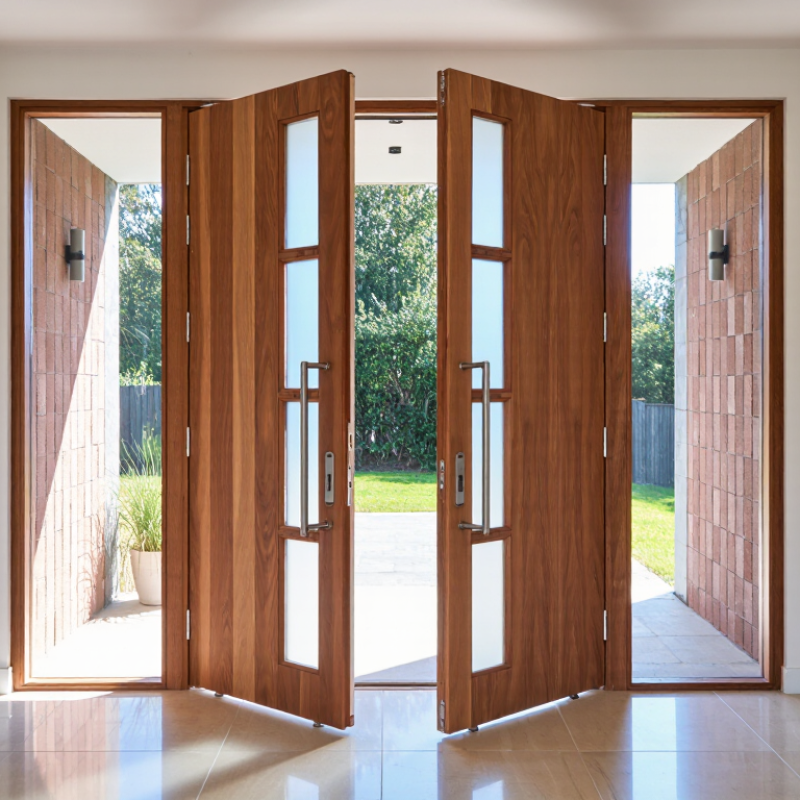
How to Choose the Right Double Door for Your Home?

What Defines a Double Door and How Does It Work?

A double door is an opening fitted with two door leaves, usually hinged at the outer edges and meeting in the middle. One leaf often serves as the active door; the other stays secured with flush bolts until extra width is needed. Open both, and furniture or a wide box can pass through more easily. Keep a tape measure handy.

The center meeting point needs a seal, often an astragal, while hinges, handles, bolts, and the threshold guide movement and limit drafts. A pair may swing inward or outward, so check nearby walls, steps, and furniture before choosing. Small parts matter. The U.S. Energy Information Administration’s 2020 Residential Energy Consumption Survey reports that space heating made up about 42% of residential energy use. That is not a door-specific figure, but it shows why a snug fit deserves attention. The U.S. Department of Energy estimates that windows account for 25–30% of heating and cooling energy use; doors are different, so I would not apply that number directly. Still, weatherstripping and careful installation are practical details worth checking. A beautiful pair can feel awkward if the inactive leaf rattles or the threshold catches shoes.

Which Double Door Style Fits Your Home?

A double door changes more than the entrance; it sets the home’s visual rhythm. French-style doors suit traditional façades, especially with divided glass and narrow sidelights. For a quieter look, choose flush panels with slim glazing. Craftsman homes often feel more balanced with solid lower panels and simple upper windows. Look at the door from the street, not only from indoors. Not every façade agrees.

Measure the opening and check how much clearance each leaf needs. A pair that swings into a small hall can interrupt daily traffic; outward-swinging doors may expose hardware to weather. Glass brightens a dim entry, but consider privacy and afternoon glare before choosing clear panes. The 2024 Cost vs. Value Report by Zonda estimated a 188.1% cost recoup for a typical steel entry-door replacement. That figure is not specific to double doors, and local resale results vary. Still, it signals that material and condition matter alongside style. View samples beside your actual siding and flooring; colors can look surprisingly different in morning light. I still find this easy to overlook.

How to Choose the Right Double Door for Your Home?

Compare common nominal widths for double-door pairs to see which configuration may suit your available opening.

How to read this chart: Each pair uses two door leaves of the same nominal width. Measure your rough opening and check the manufacturer’s specifications before choosing; the total nominal door width is not the same as the clear walk-through width.

How Do Materials and Glazing Affect Performance?

A double door can look substantial, but its material determines how it handles everyday weather. Timber offers a warm, natural finish and can be repaired, though exposed surfaces need regular inspection and upkeep. Aluminium is slim and durable; look for a thermal break, which reduces heat transfer through the frame. uPVC needs little maintenance, but frame quality and reinforcement vary. Composite doors combine materials, yet their performance depends on the specific construction. Details matter.

Glazing affects both comfort and daylight. Double- or triple-glazed units generally insulate better than single glazing, while low-emissivity coatings help limit heat loss. Gas-filled cavities and warm-edge spacers can improve performance, but the whole door assembly matters—not just the glass. Check the stated U-value, and compare like with like. A lower value usually indicates less heat transfer. For a sun-facing entrance, consider whether solar gain might make the hallway uncomfortably warm. Privacy glass can soften views without blocking daylight. Not always the brightest choice.

Even a well-specified door can underperform if it is poorly fitted. Ask how the installer will seal the frame and threshold against drafts and rain. I would not choose by material alone; local exposure, upkeep, and the quality of installation can change the result. A small gap at the bottom is easy to overlook. It can still be felt on a cold morning.

How Should You Measure the Opening and Check Fit?

Measure the finished opening, not just the existing doors. Use a tape measure to check the width at the top, middle, and bottom. Measure the height on both sides and at the center, from the finished floor to the underside of the head jamb. Record every result, then use the smallest width and height when checking door specifications. Small differences matter.

Tips: Check that the frame is square by comparing diagonal measurements; they should be close. Look for a bowed jamb, uneven floor, or loose trim that could affect the fit. Confirm the required clearance and frame dimensions in the door’s installation instructions. For double doors, check how the two leaves meet and whether the center hardware needs extra space.

Do not assume an old pair is a reliable template. A replacement may have different thickness, swing, or hardware, even if its overall size seems similar. Also consider rugs, nearby walls, and furniture along the swing path. It is easy to overlook the threshold; measure from the surface the door will actually clear. If measurements conflict or the opening is visibly out of square, pause before ordering and have the frame assessed. A second measurement can prevent an expensive fit problem.

What Features Should You Compare Before Choosing?

When comparing double doors, look beyond the finish. Measure the opening, including the trim, and check how much floor space both leaves need when open. A pair that looks generous in a showroom may crowd a narrow entryway. Measure twice.

Compare materials against your local weather and maintenance habits. Wood offers a warm, natural look, but its finish may need attention as seasons change. Fiberglass and steel can require less upkeep, though their appearance and feel differ. Check insulation ratings, weather seals, and the threshold design; a small gap can let drafts and rain reach the floor. Looks matter, but comfort matters too.

Examine the locking system, hinge strength, and glass options if the doors include windows. Ask whether the locks engage both leaves, and test the handle for a smooth, firm feel. If the doors face a busy street, consider how clear or textured glass affects privacy and daylight. Confirm that the frame, hardware, and installation suit the same opening. It is easy to focus on the door itself and overlook fitting details. I would compare written specifications, not just sample displays, while remembering that no single feature tells the whole story.

How to Choose the Right Double Door for Your Home? – What Features Should You Compare Before Choosing?

Feature to Compare Fiberglass Double Door Steel Double Door Wood Double Door Aluminum-Clad Wood Double Door
Insulation Often available with an insulated core; performance depends on the complete door assembly and glass. Many models have an insulated core. Check for thermal breaks and the door’s rated performance. Wood is a natural insulator; glazing and overall construction affect total performance. Wood interior provides insulation; performance varies by core, glazing, and frame design.
Weather resistance Resists moisture and does not rust; quality weather seals and correct installation remain important. Durable, but exposed steel can rust if its protective finish is damaged; inspect edges and hardware. Can swell, shrink, or deteriorate with moisture and exposure unless properly finished and maintained. Exterior cladding helps shield the wood from weather; inspect joints, seals, and finish over time.
Maintenance Generally low; clean periodically and check seals, finish, and hardware. Generally low; promptly touch up scratches that expose metal and keep hardware in good condition. Usually requires more upkeep, such as periodic repainting or refinishing, depending on exposure. Typically less exterior upkeep than un-clad wood; interior wood may still need care.
Appearance and customization Can imitate wood grain and comes in different finishes; repainting options depend on the product. Often has a smooth, contemporary look; color and panel choices vary by model. Offers natural grain and can be painted or stained; species and finish affect appearance. Combines a finished exterior with a natural wood interior; finish choices vary.
Security considerations Compare the lock, frame, hinges, and inactive-leaf bolts; material alone does not determine security. The steel skin can resist impacts, but the full assembly, glazing, locks, and installation matter. Security depends on door construction, frame, glazing, locks, hinges, and installation. Assess the complete unit—including glazing, frame, lock, hinges, and inactive-leaf hardware.
Typical cost position Often mid-range; size, glazing, finish, and construction can change the price considerably. Often a budget-conscious option, though design, insulation, and glazing affect price. Ranges widely; wood species, craftsmanship, and custom sizing can increase cost. Often a higher-cost option because it combines wood interiors with exterior cladding.
A good fit if you prioritize… Low maintenance, moisture resistance, and a wood-like appearance. A durable, often cost-conscious option with a simple finish. Natural material, traditional character, and broad finishing flexibility. A natural wood interior with added protection on the exterior.

Compare whole-unit specifications rather than material alone. Check the rough opening, handing and swing, threshold, weather seals, glazing, security hardware, warranty, and applicable local energy requirements. Cost and performance vary by product and installation.

Go to Top