
What Are the Best Types of Trucker Caps?

Trucker Caps have moved from practical workwear into everyday wardrobes, but the best style depends on how and where you plan to wear one. Their familiar shape pairs a curved brim and solid front panels with a breathable mesh back. That simple design can feel airy on a warm walk, yet fit awkwardly if the crown sits too high or the snap closure presses against your head. Small details matter.

This guide compares classic foam-front caps, cotton-front designs, low-profile options, and performance versions made for active days. It looks at materials, fit, ventilation, durability, and the finish of everyday details, such as stitching and brim shape. A mesh back does not guarantee comfort; panel structure, head size, and climate also play a part. Fit comes first. For example, someone wearing a cap on a sunny commute may value a secure adjustable closure, while a traveler might prefer a lighter, softer crown that packs easily. These are useful starting points, not strict rules. A cap can look excellent on a shelf and still feel wrong after an hour outside. That is worth remembering. The sections ahead explain what each type does well, where it may fall short, and how to choose based on real use rather than a trend alone.
What Are the Best Types of Trucker Caps?

Key Features Used to Classify Trucker Caps

What Are the Best Types of Trucker Caps?

Key Features Used to Classify Trucker Caps

Trucker caps are best compared by construction, fit, and intended use—not by a single “best” label. A common design pairs a foam or fabric front with breathable mesh panels, but panel count varies. Five-panel styles often have a broad front, while six-panel crowns use a center seam. Check how the crown sits: a high profile creates more room above the forehead; a low profile feels closer to the head. Fit matters. An adjustable snap closure offers flexibility, while a fitted design depends on accurate sizing.

Material and brim shape also help distinguish styles. Polyester mesh dries quickly, while cotton fronts can feel softer but may hold moisture longer. Textile Exchange’s Materials Market Report 2024 estimates that polyester made up 57% of global fiber production in 2023. That figure covers all textile fibers, not trucker caps specifically, but it shows why polyester is a common material choice. Feel the difference. A curved brim offers a familiar everyday shape; a flat brim gives a sharper outline and can be harder to pack. Look for even stitching, secure mesh seams, and a closure that stays put. I still find labels such as “structured” inconsistent, so checking the cap’s actual crown and fabric is more useful than relying on the name alone.

Classic Foam-Front Trucker Caps

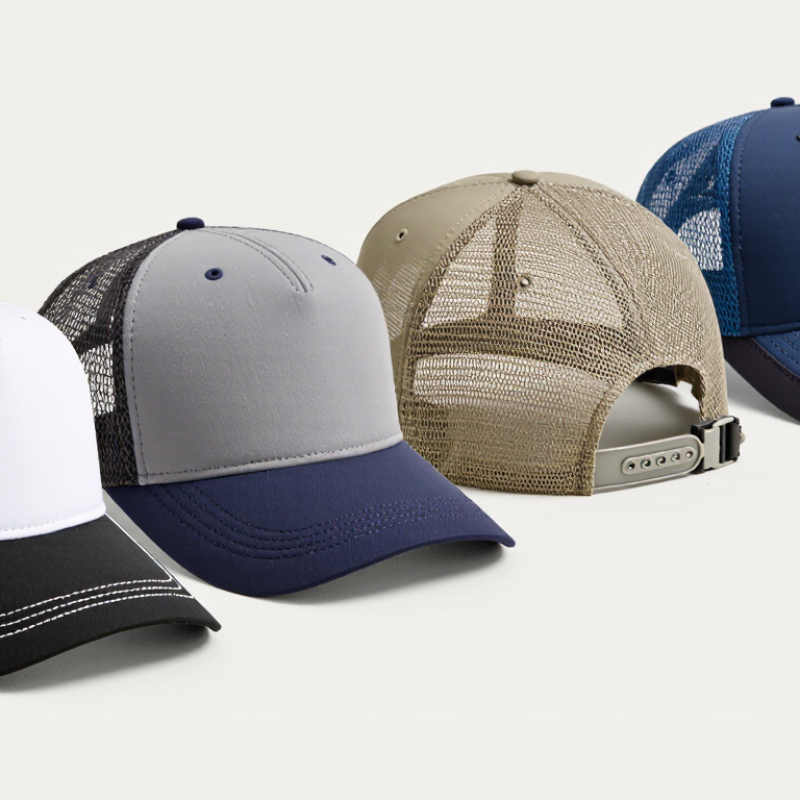
Classic foam-front trucker caps have a firm front panel, a curved or flat brim, and breathable mesh at the sides and back. The foam gives the crown a rounded shape and helps printed artwork stay visible. On a warm day, the mesh can improve airflow, though the solid front may still feel hot during long periods outdoors. The fit depends on more than the closure: check the crown depth, brim curve, and whether the seam sits comfortably above your forehead. Small details matter.

Grand View Research’s headwear industry report estimated the global headwear market at USD 26.5 billion in 2022 and projected a 6.1% compound annual growth rate from 2023 to 2030. That figure covers headwear broadly, not foam-front trucker caps specifically. It signals a sizable category, but it cannot prove that one cap style is more popular than another.

For everyday wear, look for evenly joined mesh, clean stitching around the foam panel, and a brim that keeps its shape without feeling stiff. If you plan to add a design, the smooth front offers a clear display area. Still, it can crease if packed tightly. I would not call this style ideal for every head shape; trying one on is more reliable than judging from a product photo.

What Are the Best Types of Trucker Caps? - Classic Foam-Front Trucker Caps
Cap Type Typical Construction Breathability Shape and Appearance Best For Things to Consider
Classic Foam-Front Trucker Cap Foam front panels, a curved or flat brim, and breathable mesh back panels. Good airflow through the mesh; the foam front is less ventilated. Usually has a prominent, structured front panel that displays graphics clearly. Everyday casual wear, outdoor events, and bold graphic designs. Foam can feel warm in hot conditions and may lose shape if crushed or stored poorly.
Cotton-Twill Front Trucker Cap Cotton-twill front panels paired with mesh back panels. Moderate; mesh improves ventilation, while the fabric front is less airy than mesh. A softer, more fabric-like look than a foam-front cap. Casual wear for people who prefer a less glossy, more traditional fabric finish. Cotton may absorb moisture and can take longer to dry than some synthetic fabrics.
Polyester Performance Trucker Cap Lightweight synthetic front panels with mesh backing; some versions include moisture-managing fabric. Often good, depending on the fabric and amount of mesh coverage. Typically lightweight, with a sporty appearance and a structured or semi-structured crown. Warm-weather activities, travel, and active everyday use. Performance features vary by construction; check the care instructions and fabric details.
Unstructured Trucker Cap Flexible front panels with mesh back panels and little or no stiff front support. Good airflow through the mesh back. Relaxed, lower-profile appearance that follows the shape of the head more closely. People who prefer a soft, casual fit over a tall, rigid crown. The front is less suited to maintaining a crisp, upright shape or displaying large graphics.
Flat-Brim Trucker Cap Foam or fabric front panels, mesh back panels, and a mostly flat brim. Comparable to other mesh-back styles with similar panel construction. More angular, streetwear-inspired profile; the brim may be curved to personal preference. Casual outfits and wearers who like a more pronounced, modern silhouette. A flat brim is a style preference and may not suit everyone’s fit or sun-shading needs.
Low-Profile Trucker Cap Shorter crown with mesh back panels; front material and structure vary. Good when the rear panels use open mesh. Sits closer to the head than a traditional high-crown trucker cap. Wearers who find tall crowns uncomfortable or prefer a less prominent fit. Fit can vary between designs, so crown depth and adjustable range are worth checking.

Cotton-Front and Structured Trucker Caps

Cotton-front trucker caps pair a soft cotton panel with a breathable mesh back. The front feels less slick than fully synthetic fabric and can take embroidery or printed designs well. On a warm walk, the mesh may let heat escape, though it cannot prevent a sweaty forehead. Small detail, real difference.

A structured crown uses firm backing behind the front panels, helping the cap keep its shape when you set it down. This can create a clean, upright profile, but it may feel stiff against a lower forehead. Try the cap on and check that the front does not press or sit awkwardly high. Fit matters more than appearance on a product photo.

Cotton can soften with wear, while sweat and frequent washing may leave marks or affect the panel’s shape. Follow the care label, and avoid assuming every cotton-front cap can be machine washed. Some structured fronts use foam or other support materials, so construction varies. A lightly structured option may feel more forgiving, but it can lose its crisp look sooner. That trade-off is easy to miss.

What Are the Best Types of Trucker Caps?

Cotton-front and structured trucker caps describe different features: cotton-front refers to the front-panel fabric, while structured refers to a reinforced front that holds its shape.

This chart shows a common six-panel layout: two front panels and four mesh back panels. Panel layouts and materials vary by cap.

Unstructured and Performance Trucker Caps

Unstructured trucker caps have a soft front panel that follows the shape of your head instead of holding a stiff, raised profile. They often feel relaxed for everyday wear and pack more easily than structured styles. That softness matters. A low crown may sit comfortably, while a taller one can wrinkle or feel loose, depending on your head shape. Try the cap on and check whether the front panel creases naturally rather than collapsing over your eyes.

Performance trucker caps are designed for active use, with lightweight fabrics, moisture-managing sweatbands, and mesh panels that help air circulate. Look for a sweatband that feels smooth against your forehead, especially if you plan to wear the cap for hours. Mesh can improve airflow, but it cannot keep you cool in every condition. Small details count. Stiff seams or a rough inner edge may become distracting during a long walk or workout.

The two styles can overlap: an unstructured cap may use quick-drying fabric, while a performance cap may still have a soft crown. Check the care label and adjuster, too; a cap that dries slowly or slips during movement can be frustrating. Fit is personal, and product descriptions do not always reveal how a panel will sit on your head. Try it on when possible.

Choosing a Trucker Cap for Fit, Comfort, and Use

Choosing a trucker cap depends on fit, comfort, and where you plan to wear it. A structured foam front keeps a sharper shape, while a soft cotton front often bends more easily. Mesh panels can improve airflow on warm walks or busy workdays. But mesh does not shade your ears or neck. For long outdoor use, check the brim’s width and plan for extra sun protection.

A comfortable cap should sit level without squeezing your temples. Check that the back closure adjusts smoothly, especially if you wear your hair up or use glasses. Sizing charts help, but they can be a little optimistic; head shape and hair thickness change the fit. Try moving your head and looking down. If the cap shifts, or the brim presses your glasses, another profile may work better. A high crown can feel roomy, but not on every head.

Tips: Compare adjustable and fitted styles in person when possible. Wear the cap for a few minutes, not just a quick try-on. Check the seams, mesh edges, and closure for rough spots.

Article Source:

Go to Top