How to Choose the Best Hydraulic Crawler Drill?
Choosing the right Hydraulic Crawler Drill starts with the ground beneath your boots. A machine that performs well on firm quarry rock may struggle on fractured slopes or wet, uneven terrain. The best choice depends on the drilling work, not a brochure’s boldest claim. Small details matter.
Before comparing models, define the hole diameter, depth, rock conditions, and daily production target. Then consider the carrier’s stability, engine output, feed force, and mast reach. Check how the drill handles gradients and whether its tracks can cross the site’s narrow access routes. A crawler that reaches the work area but cannot position safely is not a practical solution.
Look closely at the hydraulic system, too. Smooth control can help operators maintain consistent drilling, while accessible filters and service points may reduce routine maintenance time. Ask suppliers for operating data under conditions similar to yours, and confirm what the figures include. Fuel use and penetration rates can vary with rock hardness, tooling, operator experience, and maintenance. Numbers alone can mislead.
There is no single “best” machine for every project. That may sound inconvenient, but it is honest. Compare the purchase price with expected service costs, parts availability, and local technical support. Request a demonstration where possible, and observe setup, drilling, and routine checks—not just the machine moving across flat ground. This guide explains the key specifications and practical questions that can help you choose a Hydraulic Crawler Drill suited to your site, workload, and operating team. A careful choice begins with clear requirements, and it may still need adjustment after real field experience.
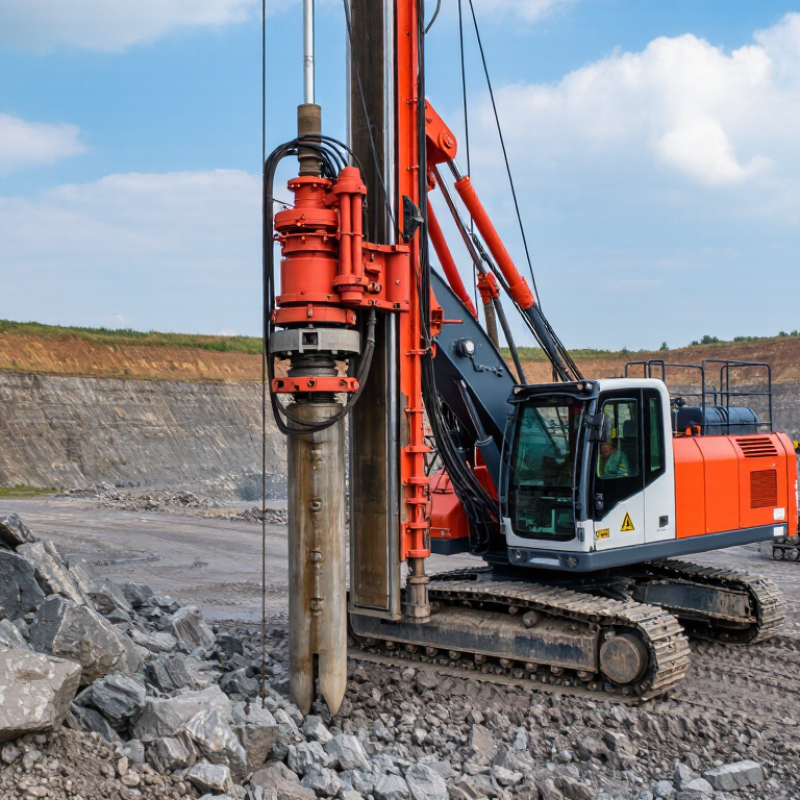
Understand the Purpose and Main Components of a Hydraulic Crawler Drill
A hydraulic crawler drill creates holes in rock or compact ground for construction, quarrying, and geotechnical work. Its tracked undercarriage helps it cross uneven sites and hold position on rough surfaces. That stability matters. Before choosing a machine, match its drilling capacity to the required hole diameter, depth, ground conditions, and available working space. A large drill may offer more power, but can be awkward on a confined site.
The main components work as a system. The hydraulic power unit supplies pressure; hoses carry it to the rotation head and feed mechanism. The head turns the drill string, while the feed system advances it along the mast. Tracks support movement, and the operator controls speed, pressure, and direction from the control panel. Dust or water suppression may also be fitted, depending on the material and site needs. It gets dusty. In practice, small details matter: check hose condition, control visibility, and how easily the drill rods can be handled. Specifications do not tell the whole story. I would also consider maintenance access and whether local technicians can service the hydraulic system, since downtime can outweigh a modest difference in drilling speed.
Define Your Drilling Requirements and Site Conditions
Before comparing hydraulic crawler drills, define the hole diameter, target depth, production rate, and materials you expect to penetrate. A 90-millimeter blast hole in fractured rock calls for different feed force and bit selection than a deep investigation bore in mixed clay and gravel. Record the hardest layer, likely groundwater level, and required drilling angle. Small details matter. FHWA’s Geotechnical Engineering Circular No. 5 emphasizes evaluating soil and rock conditions through subsurface investigation; nearby bore logs can help, but they cannot replace observations at your actual work area.
Walk the site and measure access width, turning space, slope, and overhead clearance. Note soft ground, loose rock, and places where tracks may sink or slip. Then match the machine’s transport dimensions, operating weight, mast reach, and ground pressure to those constraints. Check whether water, air, and dust-control systems suit the job, and whether maintenance access is practical beside the drill. A specification sheet will not reveal every site problem. The U.S. Bureau of Labor Statistics recorded 1,075 fatal work injuries in construction in 2023; this figure covers the entire sector, not crawler-drill incidents, but it reinforces the need to assess hazards and safe operating space. I would revisit the initial machine choice after a site walk. Assumptions often fail.
Compare Performance, Power, and Technical Specifications
Choosing a hydraulic crawler drill starts with the work, not the brochure. Match the required hole diameter, drilling depth, and rock conditions to the machine’s stated operating range. Check ground conditions, too. Loose slopes and uneven benches call for stable tracks, useful ground clearance, and a mast that can be positioned safely.
Compare engine power with hydraulic flow and pressure; a large engine alone does not guarantee efficient drilling. Review feed force, rotation torque, and available drilling speeds against the bit and rod sizes you expect to use. Ask for measured fuel use and output under comparable conditions, rather than relying on a best-case figure. Small details matter. A clear service-access layout can save time when filters or hoses need attention in a dusty site.
Technical specifications deserve a closer look. Confirm transport dimensions, operating weight, compressor capacity if fitted, and noise data. Check how easily the drill handles the angles your jobs require. I would not choose on penetration rate alone; that figure can change with geology, operator setup, and tool wear. Some comparisons remain imperfect, because test conditions are rarely identical. Request the test method and verify key claims with a site demonstration when possible.
How to Choose the Best Hydraulic Crawler Drill
Compare representative power and drilling-capacity figures across three crawler-drill size classes.
The figures are indicative examples, not universal specifications; actual capability depends on configuration, tooling, and ground conditions. Choose a drill based on the required hole diameter and geology, then check engine power, feed force, mobility, and service requirements against the job.
Assess Mobility, Safety, and Operating Costs
A hydraulic crawler drill should reach the work face without repeated repositioning. Compare its transport width, turning radius, ground pressure, and gradeability with the actual access route. A muddy ramp or soft shoulder can make a compact machine more useful than a faster, heavier one. Check how quickly the rig levels on uneven ground, too. Small delays add up.
Safety depends on more than guards and emergency stops. Review visibility from the operator’s seat, access to service points, stability while drilling, and controls for dust and noise. The U.S. Mine Safety and Health Administration recorded 40 mining fatalities in 2023. That figure covers the sector, not crawler drills specifically, but it is a serious reason to assess site hazards and operator training before purchase. Test the sightlines in the field.
Operating cost needs a site-specific estimate. The U.S. Energy Information Administration reported an average retail diesel price of about $3.76 per gallon in 2024; delivered fuel prices at remote sites can differ. Estimate fuel use alongside labor, drill steel, track wear, scheduled maintenance, and transport. Ask for service intervals and parts lead times, then compare cost per drilled meter—not just purchase price. I would still treat fuel projections cautiously: rough ground and long idle periods can distort them.
Check Reliability, Maintenance, and Dealer Support
How to Choose the Best Hydraulic Crawler Drill?
Reliability shows up in small details, not just a machine’s rated output. Inspect welds around the mast, hydraulic hose routing, pin play, and crawler track condition. Dust tells a story. Ask for service records and operating hours, then check whether recurring repairs involve the same component. A clean specification sheet can still miss the awkward part: a filter tucked behind a hot guard.
Maintenance demands should fit the crew and working conditions. Ask how often the drill needs oil, filter, and track checks under dusty or wet conditions. Look for clear service intervals, accessible inspection points, and practical instructions for checking hydraulic leaks. A minor oversight can become costly downtime. I would not assume a machine is easy to maintain just because routine tasks look simple in a brochure.
Dealer support matters when a drill is down at a remote site. Ask about common parts availability, technician response times, and whether service staff can troubleshoot hydraulic systems. Request a sample parts list and confirm which components are stocked locally. That matters. If possible, speak with operators who have needed support after delivery, not only during a sales visit. Their accounts may be imperfect, but details about delays, communication, and repair follow-through can reveal what a service promise really means.
