
How to Choose a CNC Metal Parts Manufacturer

Choosing a Cnc Metal Parts manufacturer is not just a matter of comparing prices. The right partner must understand your drawing, material, tolerances, and intended production volume. A stainless steel bracket for outdoor equipment, for example, may need different machining and finishing choices than an aluminum housing. Small details matter.

A capable supplier should explain its process clearly. Ask how it checks dimensions, manages tool wear, and documents inspection results. Request sample parts or measurement reports when the project warrants them. Look for relevant experience with your material and part geometry, not simply a long list of machines. A precise five-axis mill is useful, but it does not guarantee consistent quality by itself.

Communication deserves equal attention. Share a current CAD file and a controlled drawing, then note how the manufacturer handles questions about tight tolerances or hard-to-machine features. Clear feedback can reveal whether the team understands the work before production begins. Still, no checklist removes every risk. A sample may perform well while a larger batch exposes a process issue; that possibility is worth discussing openly. Compare lead times, inspection methods, finishing options, and production capacity alongside cost. For Cnc Metal Parts, dependable results come from matching technical capability with careful quality controls and practical communication. The best choice is the manufacturer that can support your actual requirements—and explain its limits without overpromising.
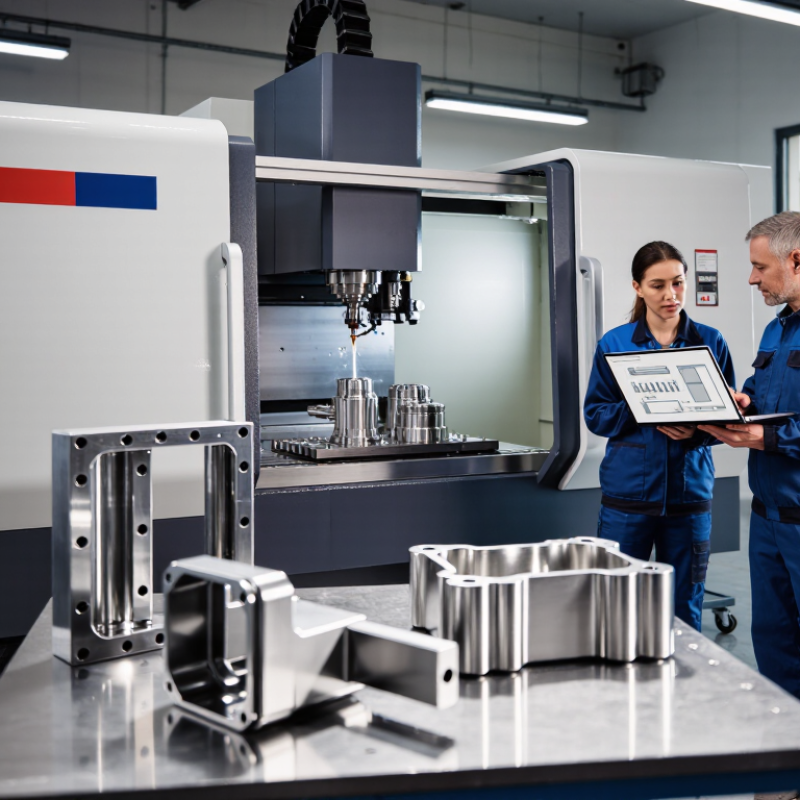
How to Choose a CNC Metal Parts Manufacturer

Define Your CNC Metal Part Requirements

How to Choose a CNC Metal Parts Manufacturer

Define Your CNC Metal Part Requirements

Before requesting a quote, describe what the part must do. A bracket exposed to vibration has different needs from a decorative cover. State the material grade, expected loads, operating temperature, and exposure to moisture or chemicals. These details help a manufacturer assess machinability and recommend suitable processes.

Provide a dimensioned drawing or CAD model, then identify critical dimensions and tolerances clearly. A tight tolerance across every feature can raise machining time and inspection costs without improving performance. Small details matter. Specify thread sizes, hole depths, edge breaks, surface finish, and any faces that must mate with other components. If appearance matters, note visible surfaces and acceptable tool marks.

Include the order quantity, expected production schedule, and whether the design may change. Explain what inspection records you need, such as material traceability or measurement reports. Be specific. One detail is easy to miss: define how parts should be packed if finished surfaces could rub during shipping. If a requirement is uncertain, flag it for discussion rather than presenting a guess as a fixed specification. A clear brief will not answer every manufacturing question, but it gives both sides a practical starting point.

Assess the Manufacturer’s Equipment and Production Capabilities

A manufacturer’s machine list is a useful starting point, not proof of capability. Check whether its CNC mills and lathes suit your part’s size, material, and geometry. A five-axis machine may reach angled features in fewer setups, while a well-maintained three-axis mill can handle many simpler components efficiently. Ask about work-envelope limits, spindle capacity, and typical batch sizes.

Look beyond machine names. For a small aluminum bracket, ask how the shop holds thin walls without distortion and controls burrs around drilled holes. For tighter features, find out whether operators use in-process probing and how often they check tool wear. Request inspection records from a comparable job, including the measuring method and actual results. Ask to see evidence. A stated tolerance means little without context; material, part shape, fixturing, and inspection equipment all affect what can be held consistently.

Production capability also includes people and planning. Confirm who reviews drawings, selects cutting tools, and approves first-article measurements. Ask whether the same equipment and process will be used for repeat orders. A tour can help, but a tidy floor is not the whole story. I would also ask what happens when a tool breaks or a measurement falls outside the target. Some details may take time to verify, and that hesitation is worth discussing.

Verify Quality Controls, Certifications, and Material Traceability

How to Choose a CNC Metal Parts Manufacturer

A quality claim is useful only when you can check the process behind it. Ask how the shop controls dimensions, records inspections, and handles parts that fall outside tolerance. For a machined aluminum housing, request the inspection report for key features such as bore diameter and flatness. Details matter. Check whether measuring tools are calibrated and whether the records match your drawing revision.

Certifications can offer evidence of a documented quality system, but the certificate alone is not proof that every job is controlled well. Confirm that it is current and applies to the facility producing your parts. Ask how operators record setup checks and whether the shop performs first-article inspections before a production run. A polished certificate can still leave gaps. It is tempting to accept familiar paperwork and move on, but a few direct questions may reveal what the paperwork does not.

Material traceability connects finished parts to their source material. Ask for material test reports and confirm that alloy grade, heat or lot number, and purchase records can be linked to the production batch. For stainless steel components, this helps distinguish the specified grade from a similar-looking substitute. Find out how the shop preserves identification when bars are cut into smaller blanks. The answer should be specific. If records are incomplete, discuss the risk before approving the order, rather than assuming it can be fixed later.

Compare Pricing, Lead Times, and Communication Practices

When comparing CNC metal parts manufacturers, look beyond the unit price. Ask for a quotation that separates material, setup, machining, finishing, inspection, and shipping costs. A low price can hide a costly assumption, such as using a different alloy or excluding deburring. Check whether the quote reflects your actual drawing revision and order quantity. Small details matter. For example, a tight tolerance on a short production run may require extra inspection time. Ask what inspection records are included, and whether packaging protects finished surfaces from scratches.

Lead times need the same scrutiny. Confirm when the clock starts: after drawing approval, material arrival, or deposit payment. Ask whether the schedule includes first-article inspection and finishing, not just machine time. If a supplier gives one date, request the milestones behind it. Material delays happen. Clear communication can make them manageable. Notice how quickly and specifically the manufacturer answers questions about a drawing, a changed quantity, or a missed milestone. Agree on a contact person and update frequency before production begins. I would not choose a supplier from a polished quote alone; I have seen that easy comparison overlook unclear assumptions. A brief review of the quote, schedule, and communication process can reveal gaps before they affect delivery.

Evaluate Samples and Confirm Contract Terms Before Ordering

Before placing an order, request a first-article sample made with the proposed material, process, and finish. Measure critical features yourself, such as hole spacing, wall thickness, and thread fit. Ask for the inspection report and material certificates, then compare them with your drawing. Samples can mislead. A polished prototype may not reflect routine production, so ask how the manufacturer controls repeatability across a batch. ASQ’s cost-of-quality guidance notes that quality costs can reach 15–20% of sales in many organizations; definitions and measurement methods vary. That scale makes clear inspection criteria worth agreeing on early.

Tips: Put the details in writing. Specify tolerances, surface finish, inspection method, acceptable defect limits, packaging, delivery dates, and payment milestones. Define how nonconforming parts will be handled, including replacement or rework timelines. State that design or material changes need written approval. Clarify who owns custom fixtures and tooling, and whether the quoted price includes them. If an item is ambiguous, ask for a drawing revision rather than relying on a call. It can feel slow, but assumptions are expensive.

Review the contract against the approved sample and drawing before signing. Check whether the sample is a reference or a binding acceptance standard, and record its revision and approval date. Confirm what happens if production parts differ. I would not treat a certificate alone as proof of capability; review recent inspection records and ask how measurement tools are calibrated. A small pilot order can expose gaps, though it cannot guarantee every later batch will match.

How to Choose a CNC Metal Parts Manufacturer — Evaluate Samples and Confirm Contract Terms Before Ordering
Stage Evaluation item Practical acceptance criteria Evidence to review Decision record
Sample Evaluation
Sample setup Production-intent parts Request samples made with the proposed material, machining process, tooling approach, and finishing operations—not hand-finished demonstration pieces. Sample description, process route, and confirmation of material and finish. Pass / Follow up / Fail
Quantity Representative sample set Review several pieces, commonly 3–5 where practical, to check consistency. Agree on the sample quantity before the supplier begins work. Sample quantity and identification numbers recorded on the inspection report. Quantity received: _____
Dimensions Critical and specified features Every inspected dimension must meet the limits on the approved drawing. Pay particular attention to tolerances, hole locations, datums, and mating features. Dimensioned inspection report using suitable calibrated instruments; CMM results where appropriate. Conforms to drawing: Yes / No
Material Grade and traceability Confirm the material grade, condition, and any required traceability match the purchase specification. Do not accept a substitute without written approval. Material test certificate or other agreed material documentation linked to the supplied lot. Verified: Yes / No
Threads and interfaces Fit and functional features Check specified thread size, pitch, depth, and fit with the mating part or an appropriate gauge. Confirm deburring does not damage functional edges. Thread-gauge results or documented functional checks, as applicable. Verified: Yes / No
Finish and workmanship Surface, edges, and visible defects Compare finish, coating, burr removal, and appearance with the drawing or an approved sample. Apply any stated roughness or coating requirements as written. Visual inspection under agreed conditions; roughness or coating measurements when specified. Approved / Rework / Reject
Repeatability Part-to-part consistency Compare the sample pieces for consistent critical dimensions and features. Resolve any variation that could affect assembly or function before approving production. Inspection results for each sample, not only a single “typical” part. Variation acceptable: Yes / No
Approval control Sample sign-off Identify the approved sample and revision in writing. Define whether the approved sample is a visual reference, a dimensional acceptance standard, or both. Dated approval record, drawing revision, and retained sample identification. Approval date: _____
Contract Terms to Confirm Before Ordering
Scope Drawing and specification control List the drawing number and revision, material grade, finish, quantity, packaging requirements, and all applicable inspection documents. Purchase order or signed specification referencing the correct revisions. Confirmed: Yes / No
Quality Inspection and nonconformance handling Agree on inspection requirements, required certificates, defect notification, corrective action, and the process for replacement, rework, or credit. Written quality requirements and an agreed response process. Confirmed: Yes / No
Commercial Price and payment terms Specify unit price, tooling or setup charges, taxes or duties where applicable, payment milestones, and any price-break quantities. Itemized quotation incorporated into the order documents. Confirmed: Yes / No
Delivery Lead time and shipping responsibility State the production lead time, delivery date or schedule, shipping method, named delivery location, and the agreed delivery term. Written delivery schedule and clearly stated shipping terms. Delivery date: _____
Changes Engineering and order changes Require written approval for changes to material, process, tooling, subcontracting, drawing revision, or delivery schedule before implementation. Change-control clause identifying who may approve changes. Confirmed: Yes / No
Risk control Tooling, intellectual property, and cancellation Clarify tooling ownership, storage and maintenance, permitted use of supplied designs, confidentiality obligations, and cancellation or rescheduling charges. Relevant terms included in the signed agreement or purchase order. Confirmed: Yes / No

Note: Acceptance limits should come from the approved drawing, purchase specification, and applicable agreement. The suggested sample quantity is a practical starting point, not a universal requirement.

Go to Top