
China Top 10 Reinforcing Steel Bars Manufacturers?

China remains a major source of reinforcing steel bars for construction projects worldwide. Its manufacturers serve bridges, residential towers, industrial facilities, ports, and large infrastructure developments. However, identifying the top ten requires more than comparing production volume or export claims.

This introduction examines leading Chinese producers through practical purchasing criteria. These include steelmaking capacity, rolling technology, product consistency, delivery performance, and quality documentation. Relevant standards may include GB/T 1499.2, ASTM A615, BS 4449, and other project-specific requirements. Mill certificates should confirm chemical composition, yield strength, tensile strength, elongation, and heat numbers. Independent testing can add confidence when project risks are high.

Factory experience also matters. A reliable supplier should explain billet sourcing, furnace control, rib geometry, bundle marking, and loading procedures. Clear photographs of test equipment can reveal more than polished marketing language. ISO 9001 certification is useful, but it does not replace product testing or shipment inspection. No ranking is perfect. Market conditions change, and a strong producer may not suit every buyer’s required grade, diameter, or delivery schedule.

The companies discussed in this article are therefore assessed with evidence, not reputation alone. Buyers should verify certificates, inspect samples, review recent export records, and confirm production capacity before signing contracts. Small details matter. A missing heat number can create serious traceability problems later. This guide aims to support informed comparison while recognizing that supplier performance must be checked for each order.
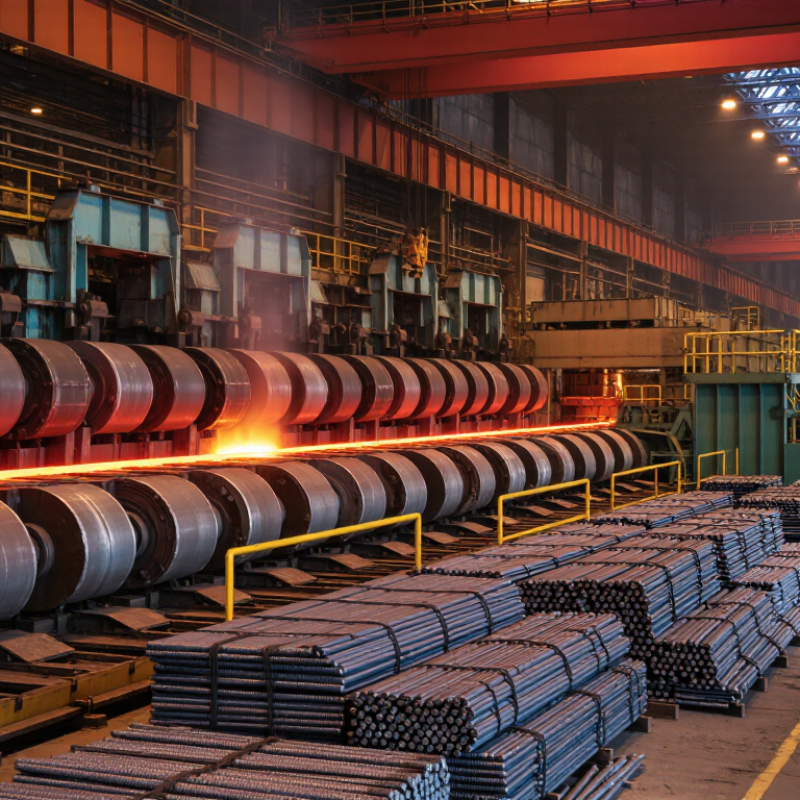
China Top 10 Reinforcing Steel Bars Manufacturers?

Understanding Reinforcing Steel Bars and Their Role in Construction

Reinforcing steel bars, commonly called rebar, give concrete tensile strength. Concrete resists compression well but performs poorly under tension. Steel bars carry those pulling forces through beams, columns, slabs, and foundations. Their ribbed surfaces improve mechanical bonding with surrounding concrete. That bond helps control cracking and supports load transfer during daily use.

Demand remains closely linked to construction activity. The World Steel Association reported global crude steel production of about 1.89 billion tonnes in 2023. Construction and infrastructure consumed roughly half of global steel output, according to industry estimates published by the association. The Global Infrastructure Hub’s Global Infrastructure Outlook estimated a $15 trillion infrastructure investment gap through 2040. These figures explain why dependable reinforcing steel remains important in housing, bridges, ports, and industrial facilities.

For a China-focused manufacturer review, buyers should examine yield strength, elongation, rib geometry, chemical composition, traceability, and test certificates. Relevant requirements may include ISO 6935-2 and applicable national standards. Mill certificates should match delivered heat numbers, not only catalogue claims. A neat ranking can still mislead. Production capacity does not prove consistent quality. Site experience also shows that storage matters; muddy ground, standing water, and careless stacking can encourage corrosion before installation. I would also question unusually low prices, because reduced inspection or inconsistent chemistry may create hidden structural risks.

How China’s Reinforcing Steel Bar Industry Is Structured

China Top 10 Reinforcing Steel Bars Manufacturers?

China’s reinforcing steel bar industry is large, regional, and more complex than a simple top-ten ranking suggests. The World Steel Association reported that China produced about 1.019 billion tonnes of crude steel in 2023, representing nearly 54% of global output. Rebar production sits inside this enormous system, alongside plate, wire rod, and structural steel.

Industry structure has three main layers. Large integrated steel groups produce billets, roll rebar, and serve major infrastructure projects. Electric arc furnace producers use more recycled steel and often operate closer to scrap markets. Smaller regional mills focus on construction demand within nearby provinces. Distribution companies then connect mills with contractors, fabricators, and public projects.

Regional demand matters greatly. Coastal markets benefit from ports and large construction networks, while inland mills often compete through transport efficiency. Product compliance depends on national standards, including GB/T 1499.2, covering mechanical properties, dimensions, and chemical requirements. The China Iron and Steel Industry Association regularly highlights capacity control, energy use, and low-carbon production as major industry concerns.

A reliable top-ten comparison should examine annual rebar volume, certified capacity, delivery coverage, quality records, and energy performance. Public data is not always consistent. That is the difficult part. Some rankings mix crude steel output with finished rebar sales, creating misleading comparisons. Buyers should verify mill certificates, heat numbers, inspection results, and delivery history before treating any ranking as definitive.

China’s Steel Industry Context for Reinforcing Bars

China’s reinforcing steel bar market operates within the world’s largest steel-producing system. National crude steel output remained above 1 billion metric tonnes from 2020 to 2024, although production declined after its 2020 peak. Rebar is primarily a long-steel product used in construction and infrastructure, and the sector includes large integrated mills, electric-arc-furnace producers, and regional rolling mills.

Source: World Steel Association, World Steel in Figures 2025. Figures represent total crude steel production, not rebar-only production; 2024 data are reported as the latest annual estimate.

Top 10 Reinforcing Steel Bar Manufacturers in China

Top 10 Reinforcing Steel Bar Manufacturers in China

China remains the largest steelmaking country worldwide. The World Steel Association reported about 1.02 billion tonnes of crude steel production in 2023. That represented nearly 54% of global output. This scale supports a deep market for reinforcing steel bars, especially in construction, transport, and energy projects.

A credible top-ten evaluation should examine more than production volume. Key indicators include annual rebar capacity, compliance with GB/T 1499.2, tensile strength, elongation, and batch traceability. Large manufacturers usually operate integrated furnaces, automated rolling lines, and laboratory testing systems. Mill certificates should match heat numbers, chemical composition, and mechanical results. Delivery reliability also matters, particularly for projects requiring thousands of tonnes in repeated shipments.

Capacity alone can mislead. A large plant may still produce inconsistent bar diameters or delay export documents. The World Steel Association’s World Steel in Figures 2024 confirms China’s exceptional industrial scale, but it does not rank rebar quality directly. Buyers should compare recent inspection records, third-party test reports, and factory audit evidence. This process is slower. It is also safer.

Some evaluations remain imperfect because public data often combines wire rod, bar, and other long products. A useful ranking should therefore explain its method clearly. Price is important, but stable chemistry, accurate rib patterns, and dependable delivery deserve equal attention.

Key Products, Standards, and Production Capabilities

China Top 10 Reinforcing Steel Bars Manufacturers: Key Products, Standards, and Production Capabilities

A credible top-ten list should measure certified rebar output, not furnace size alone. The World Steel Association reported 1,882.6 million tonnes of global crude steel production in 2024. China produced about 1,005.1 million tonnes, confirming its strong manufacturing base. However, crude steel capacity does not automatically mean reliable reinforcing bar quality.

Leading Chinese producers typically supply HRB400E and HRB500E bars under GB/T 1499.2-2018. Export-oriented facilities may also produce grades aligned with ASTM A615, BS 4449, or ISO 6935-2. Common products include straight bars, threaded bars, and seismic-grade reinforcement. Diameters often range from 6 to 50 millimetres. Some mills integrate ironmaking, steelmaking, continuous casting, and high-speed rolling. This integration can improve traceability and reduce billet handling.

Production capability should include tensile testing, bend testing, chemical analysis, and dimensional inspection. The China Iron and Steel Industry Association has repeatedly emphasized efficiency, low-carbon production, and quality control across the steel sector. Energy-saving furnaces and controlled cooling systems are increasingly important. Small details matter.

A ranking can still be imperfect. Public capacity figures may combine merchant steel and construction steel. Buyers should verify mill certificates, heat numbers, inspection records, and shipment consistency before selecting any manufacturer. Price alone is a weak technical indicator.

How to Evaluate and Choose a Chinese Steel Bar Manufacturer

China Top 10 Reinforcing Steel Bars Manufacturers: How to Evaluate and Choose a Chinese Steel Bar Manufacturer

China produced about 1,005 million tonnes of crude steel in 2024, according to World Steel Association data. That scale creates choice, but it also creates uneven quality. Do not rank suppliers by website design or quoted price alone. Request production records, factory photographs, and recent test certificates. Confirm whether the mill actually produces rebar or only trades it.

Technical compliance matters most. Check the required standard, such as GB/T 1499.2-2018, before comparing offers. Review yield strength, tensile strength, elongation, bend performance, chemical composition, and bar diameter tolerance. Each bundle should carry a traceable heat number. An independent laboratory should verify samples before shipment. The International Trade Centre reports that China remains a major global steel exporter, so documentation and shipment control deserve equal attention.

Look closely at the inspection process. Ask for calibration records, sampling frequency, and nonconformance procedures. A serious manufacturer should explain how it isolates defective batches. Visit the plant, if possible. Observe billet storage, rolling temperatures, cooling beds, and bundle marking. A polished factory tour can still mislead. No checklist is perfect. I would also compare three recent orders, not one unusually good sample. Evaluate delivery reliability, packaging strength, export experience, and response speed. The cheapest quotation may become expensive after delays, retesting, or rejected material.

China Top 10 Reinforcing Steel Bars Manufacturers? - How to Evaluate and Choose a Chinese Steel Bar Manufacturer
No. Evaluation Dimension Objective Benchmark or Data Point Documents or Evidence to Request Why It Matters Applicable Reference
01 Applicable Product Standard The manufacturer should clearly identify the standard used for production, such as GB/T 1499.2 ASTM A615/A615M BS 4449 or ISO 6935-2. Product specification sheet, standard declaration, sample mill certificate, and contract quality clause. Different standards use different requirements for grade designation, chemical composition, mechanical properties, dimensions, and testing. GB/T 1499.2; ASTM A615/A615M; BS 4449; ISO 6935-2
02 Steel Grade and Yield Strength Common Chinese seismic grades include HRB400E and HRB500E. Their nominal yield-strength levels are 400 MPa and 500 MPa respectively, subject to the applicable standard and test result. Heat number, mechanical test report, yield strength, tensile strength, elongation, and strength-ratio results. Correct grade selection affects structural design, load-bearing capacity, ductility, and project approval. GB/T 1499.2
03 Dimensional Range and Tolerance Reinforcing bars are commonly supplied in nominal diameters from approximately 6 mm to 50 mm, depending on the product standard and production line. Diameter, mass per metre, rib geometry, and length tolerance must be verified. Dimensional inspection report, nominal mass table, rib-pattern drawing, bar-length tolerance, and random inspection records. Accurate dimensions ensure compatibility with rebar schedules, lap lengths, concrete cover, and fabrication equipment. GB/T 1499.2; ISO 6935-2; ASTM A615/A615M
04 Chemical Composition Control The supplier should control carbon, manganese, silicon, sulfur, phosphorus, and other elements required by the selected standard. Carbon-equivalent limits may also apply when weldability is specified. Heat chemical analysis, ladle analysis, product analysis, carbon-equivalent calculation, and laboratory test method. Chemical composition influences strength, weldability, ductility, corrosion behavior, and consistency between heats. Applicable product standard and project welding requirements
05 Mechanical and Seismic Performance For seismic applications, evaluate yield strength, tensile strength, elongation, uniform elongation where required, and the tensile-to-yield strength ratio specified by the purchasing standard. Third-party test report, batch mechanical test results, sample test records, and evidence of compliance for seismic grade products. Seismic-grade reinforcement requires adequate ductility and controlled strength variation, not only high nominal strength. GB/T 1499.2; ASTM A706/A706M where applicable
06 Traceability and Mill Test Certificates Every bundle or coil should be traceable to a heat number, production date, product grade, nominal size, quantity, and test result. Mill test certificate, bundle tag, heat-number records, packing list, certificate of origin, and shipment photographs. Traceability supports quality claims, incoming inspection, dispute resolution, and construction-site control. ISO 9001 quality-management practices; EN 10204 inspection-document principles
07 Quality-System and Laboratory Capability Prefer suppliers with a documented quality-management system, calibrated testing equipment, chemical analysis capability, tensile-testing equipment, and retained inspection records. Quality certificate, calibration certificates, laboratory scope, internal inspection plan, nonconformity records, and audit results. A functioning quality system reduces variation and makes production claims independently verifiable. ISO 9001; applicable national or project quality requirements
08 Production and Delivery Capacity Compare confirmed monthly output, available rolling lines, standard production lead time, minimum order quantity, loading method, and export-container or bulk-vessel capability. Capacity statement, recent production schedule, lead-time commitment, loading plan, and records from comparable shipments. Capacity should be assessed against the project schedule rather than judged only by a supplier’s stated annual output. Commercial and project-specific purchasing requirements
09 Packaging, Marking, and Logistics Bundles should be securely tied and marked with grade, diameter, length, quantity or weight, heat number, and manufacturer identification required by the contract. Packing specification, bundle-marking sample, container-loading photographs, weight records, and cargo-insurance details. Correct marking and packaging prevent mix-ups, corrosion damage, unsafe handling, and delivery discrepancies. Contract packing requirements; applicable product standard
10 Pre-Shipment Inspection and Commercial Risk Use an agreed inspection plan covering document review, visual inspection, dimensional checks, weight verification, mechanical testing, chemical testing where required, and sampling frequency. Inspection and test plan, independent inspection report, approved sample, payment terms, warranty clause, and corrective-action procedure. Pre-shipment verification reduces the risk of receiving incorrect grades, mixed bundles, nonconforming dimensions, or incomplete documentation. Purchase contract; agreed inspection and testing plan
Note: The table uses manufacturer-neutral evaluation criteria and does not rank or publish company-specific data. Final acceptance should be based on the contract, the destination-country requirements, and the product standard stated in the purchase order.
Go to Top