
China Top 10 PCB Electrical Testing Manufacturers?
Choosing among China’s PCB electrical testing manufacturers requires more than comparing prices or factory photos. A dependable supplier should explain how it checks continuity, isolation, and short circuits, and which methods suit each board. Flying-probe testing can help with prototypes and changing designs; fixture-based testing may be more efficient for repeat production. Details matter. Ask what data the supplier records, how it handles failed boards, and whether test reports can be shared with each shipment.
This introduction to China’s top 10 PCB electrical testing manufacturers is intended as a practical starting point, not a universal ranking. Supplier capabilities, equipment, lead times, and quality systems can change, so buyers should verify current information directly. Compare experience with your board type, sample turnaround, fixture costs, communication, and the clarity of test results. Electrical Testing Pcb is not a single service specification: requirements differ with design, volume, and product use. A polished website is useful, but it cannot replace a clear test plan or traceable results. Even a detailed checklist has limits. I would revisit any shortlist after reviewing recent reports and discussing a real test job with the supplier.
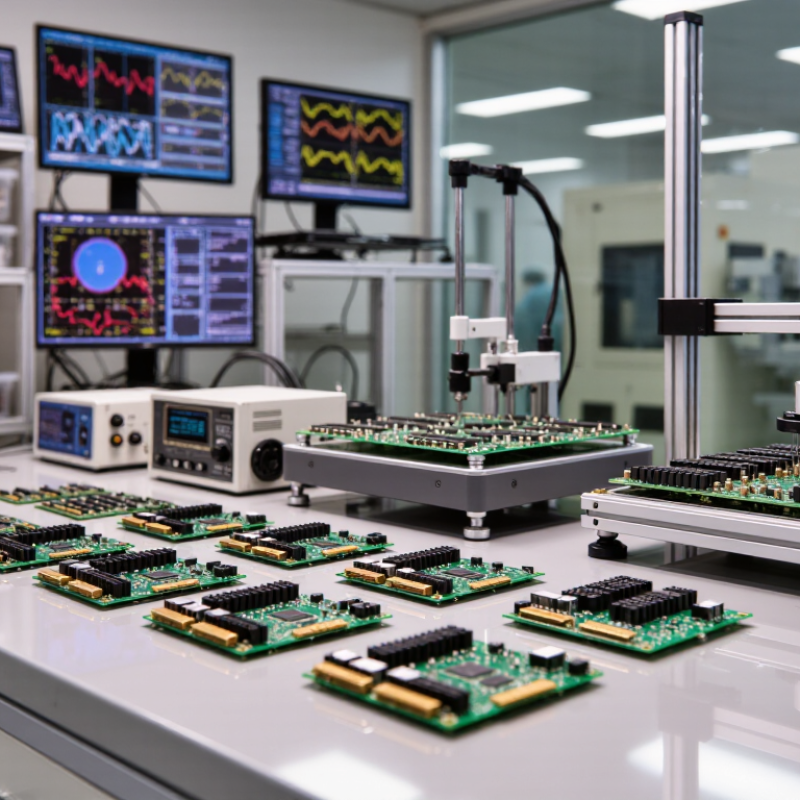
Understanding PCB Electrical Testing and Its Role in Manufacturing
PCB electrical testing verifies that copper connections match the board’s design. It checks for open circuits, unwanted shorts, and incorrect connections between conductive paths. A test system compares measured results with a netlist, the record of intended electrical connections. This matters because a tiny copper bridge can disrupt an entire circuit.
Manufacturers commonly use fixture-based testing for repeat, high-volume production and flying-probe testing for smaller batches or changing designs. During a flying-probe test, moving probes touch specified pads while instruments measure continuity and isolation. A technician may review failed points against the board layout, then check whether the issue comes from fabrication, contact, or setup. Small details matter. Oxidation or a poorly seated board can affect readings.
Testing helps catch defects before components are assembled, when repair may be more practical. It does not prove that a finished product will work in every operating condition; functional tests address different questions. Test coverage also depends on accessible pads, design data, and process settings. No test catches everything. Teams should review recurring failures and refine their methods, while recognizing that some borderline readings still require careful judgment.
China Top 10 PCB Electrical Testing Manufacturers? – Understanding PCB Electrical Testing and Its Role in Manufacturing
This industry-neutral overview compares ten common PCB electrical test methods and related checks. It describes testing approaches, not a ranking of manufacturers.
| Test Method | Typical Product Stage | Primary Purpose | What It Can Detect or Verify | Practical Consideration |
|---|---|---|---|---|
| Flying-probe test | Bare PCB | Check electrical connections without a dedicated fixture | Opens, shorts, and selected net or component values, depending on the test program | Useful for prototypes and low-to-medium volumes; test time can be longer than fixture-based testing. |
| Fixture-based continuity test (bed of nails) | Bare PCB | Test many designated electrical points using a custom fixture | Unintended opens and shorts between tested points | A dedicated fixture is required; it is generally suited to repeat production runs. |
| Netlist comparison | Bare PCB | Compare measured electrical connections with the intended design data | Missing, added, or incorrectly connected nets covered by the test setup | Results depend on accurate design data and adequate access to test points. |
| Insulation-resistance test | Bare PCB | Assess electrical insulation between specified conductors | Insulation resistance below the specified acceptance limit | Test voltage, duration, conditioning, and acceptance criteria should follow the applicable specification. |
| Dielectric-withstand (hipot) test | PCB or assembly, when specified | Verify insulation withstands a prescribed voltage stress | Breakdown or excessive leakage under the defined test conditions | Not interchangeable with a simple continuity test; inappropriate settings can damage a product. |
| Four-wire (Kelvin) resistance measurement | Bare PCB or assembly | Measure low resistance while reducing lead and contact resistance effects | Resistance of selected traces, vias, joints, or other conductive paths | Requires suitable access points and a defined measurement method. |
| Controlled-impedance measurement | Bare PCB, typically with test coupons | Check whether selected transmission structures meet specified impedance requirements | Impedance of designated traces or coupons using an appropriate measurement method | Coupon design, stack-up, and measurement method affect how representative the result is of the board. |
| Time-domain reflectometry (TDR) | Bare PCB or interconnect | Analyze impedance changes along a transmission path | Locations of impedance discontinuities, subject to instrument setup and resolution | Requires appropriate fixtures, calibration, and interpretation of the waveform. |
| In-circuit test (ICT) | Assembled PCB | Test accessible components and electrical nodes on a populated board | Selected assembly faults, such as shorts, opens, and incorrect or out-of-limit components | Coverage depends on test-point access, fixture design, and the test program. |
| Functional test | Assembled PCB or finished product | Operate the product or board under defined inputs and conditions | Whether tested functions and interfaces behave as specified | Complements structural tests; results are limited to the functions and conditions included in the test. |