
China Top 10 Cylinder Piston Rod Manufacturers

A Cylinder Piston Rod may look like a simple steel shaft, but its surface finish, straightness, hardness, and corrosion resistance influence how reliably a hydraulic cylinder works. A small defect can damage a seal, invite leakage, or shorten service life. Buyers comparing China’s leading manufacturers should therefore look beyond price and production capacity. Material traceability, coating consistency, machining controls, and documented inspection results matter on the factory floor.

The market context is substantial, though reported figures cover hydraulic cylinders rather than piston rods alone. Grand View Research estimated the global hydraulic cylinder market at about US$14.08 billion in 2023 and projected a 4.2% compound annual growth rate from 2024 to 2030. This broader category includes many cylinder types and applications, so it should not be mistaken for a rod-only market estimate. Still, it signals continuing demand for dependable components across construction, agriculture, and industrial equipment.

A useful engineering reminder comes from Theodore von Kármán, the aeronautical engineer: “Scientists study the world as it is; engineers create the world that has never been.” For piston-rod sourcing, that idea points to practical questions: Can a supplier hold tight tolerances across repeat orders? Can it show coating and inspection records? And will its rod withstand the buyer’s actual operating conditions? The answers are rarely captured by a glossy catalog. Sometimes, a sample tells more. This Top 10 overview introduces Chinese manufacturers through those practical considerations, while recognizing that rankings depend on project requirements, available evidence, and changing factory performance.
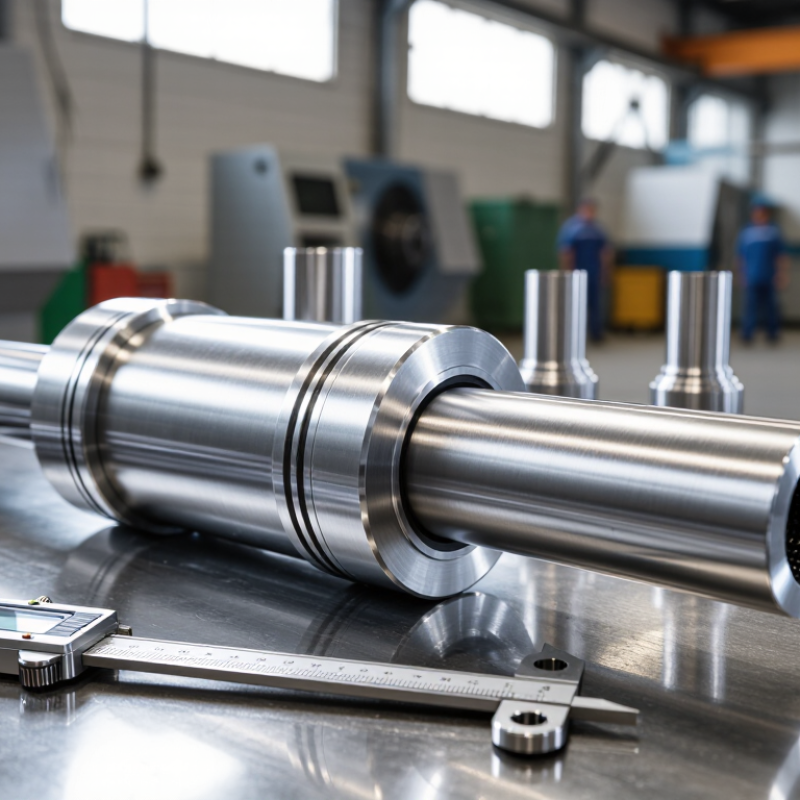
China Top 10 Cylinder Piston Rod Manufacturers

How China’s Cylinder Piston Rod Manufacturers Are Selected

Selecting a cylinder piston rod manufacturer in China takes more than comparing quotations. Buyers should check steel grade certificates, heat-treatment records, chrome-layer thickness, surface roughness, and straightness tolerances. Ask how each value is measured, and request inspection records linked to the actual production batch. A supplier’s process should also cover corrosion testing, dimensional checks, and packaging that prevents edge damage during transit. Numbers matter. So does repeatability.

Tips: Request a sample and its inspection report together. Compare the measured coating thickness and straightness with your drawing, then ask whether the same controls apply to routine production. A polished sample is reassuring, but it proves little by itself.

Material sourcing deserves attention, too. World Steel Association’s World Steel in Figures 2025 reports global crude steel production of 1,882.6 million tonnes in 2024, down 0.9% year on year. This broad industry figure does not measure rod quality, but it underlines why buyers should verify material traceability instead of relying on country-of-origin claims. Review a factory’s nonconformance records, corrective actions, and capacity for repeat orders. If the audit is brief, some details may be missed; an independent inspection can help confirm the evidence.

Profiles of China’s Top 10 Cylinder Piston Rod Manufacturers

China’s top ten cylinder piston rod manufacturers represent a varied industrial landscape, from specialized machining workshops to larger production facilities. Their profiles are best understood through manufacturing capabilities, quality controls, and the applications they serve. Some focus on custom dimensions, while others produce standardized rods for agricultural, construction, or material-handling equipment. Details matter. A polished product photo cannot show how closely a rod’s diameter is controlled or how consistently its surface is finished.

Across these profiles, useful indicators include steel sourcing, heat-treatment options, chrome-plating processes, and inspection methods. Experienced manufacturers can explain how they check straightness, hardness, coating thickness, and surface roughness. Ask for measurable specifications, not broad assurances. Production capacity also deserves context: a large monthly output may suit repeat orders, while flexible small-batch work can help with specialized equipment. These differences are not always clear in short company descriptions.

A careful comparison should consider communication and documentation alongside machinery. Can the supplier clarify tolerances, packaging, lead times, and test records before an order is placed? Requesting a sample or inspection report may reveal gaps early. No profile tells the whole story, and published information can be incomplete. That is worth admitting. Buyers should verify technical claims against their own operating conditions, especially where corrosion exposure, side loading, or frequent movement affects rod life.

China Top 10 Cylinder Piston Rod Manufacturers

Cylinder Piston Rod Cross-Sectional Area by Nominal Diameter

Cross-sectional areas are calculated from nominal diameter using A = πd²/4. The diameter values are a representative selection; actual dimensions vary by cylinder design. This engineering comparison is not a manufacturer ranking or a load-capacity rating.

Key Products and Manufacturing Capabilities

China Top 10 Cylinder Piston Rod Manufacturers

Key Products and Manufacturing Capabilities

China’s hydraulic-cylinder supply base serves construction, agriculture, mining, and industrial automation. Common products include chrome-plated, induction-hardened, stainless-steel, and hollow piston rods.

Grand View Research estimated the global hydraulic-cylinder market at about USD 14.3 billion in 2023, with projected annual growth of 4.3% through 2030. This figure covers cylinders, not piston rods alone.

Manufacturing capability depends on more than machining speed. Look for controlled heat treatment, precision grinding, coating adhesion checks, and inspection records for straightness and surface finish. These details matter when a rod slides through a seal under repeated pressure. Some factories also offer custom diameters, lengths, threads, and corrosion-resistant coatings. Ask how they verify each batch. A catalogue cannot answer that.

For buyers comparing the top ten suppliers, production evidence matters more than a broad product list. Request sample inspection data, coating-thickness results, and traceability documents. Still, a polished sample does not prove stable output; that distinction is easy to miss. Check whether the supplier can reproduce the same finish across regular production runs. Small variations can cause seal wear. Supplier claims should be checked against measurable results.

Industries Served and Typical Applications

Cylinder piston rods work across construction, agriculture, manufacturing, and material handling. In an excavator, a rod extends to lift a bucket through wet soil; in a farm machine, it may steer or raise heavy equipment. Factory systems use rods in presses, clamping units, and automated handling equipment. The International Federation of Robotics reported 541,302 industrial robots installed worldwide in 2023, reflecting the scale of modern factory automation. Not every robot uses hydraulic cylinders, but motion systems still demand precise, repeatable components.

Application conditions shape rod selection. Grand View Research estimated the global hydraulic cylinder market at about US$14.5 billion in 2023, with mobile and industrial equipment among its key application areas. For manufacturers, that means rods may face very different demands: shock loads on construction sites, repeated cycles in factories, or moisture and grit in agricultural fields. Surface finish, corrosion protection, straightness, and fatigue resistance matter. A catalog rating can still mislead if impact loads or poor alignment are overlooked. Dust gets everywhere.

Tips: Match the rod coating and material to the working environment, not just the nominal load. Check stroke, side loading, and seal compatibility with the cylinder design. Ask suppliers for inspection records and test details; a polished sample alone proves little. Revisit the choice after field use, because real wear can expose assumptions that looked sound on paper.

China Top 10 Cylinder Piston Rod Manufacturers - Industries Served and Typical Applications

The rows below summarize common manufacturer capability profiles and their typical markets. They are illustrative categories, not a verified ranking or a directory of named companies.

No. Manufacturer Capability Profile Industries Served Typical Applications Common Rod Options Key Selection Considerations
1 Heavy-duty hydraulic cylinder rod production Construction machinery and infrastructure equipment Excavator booms, arms and buckets; loaders; cranes; road-building machinery Hard-chrome-plated carbon steel; induction-hardened rod surfaces Rod diameter, straightness, surface hardness, chrome-layer quality and resistance to impact and abrasive contamination
2 Agricultural hydraulic component production Agriculture and forestry Tractor implements, harvesters, forestry attachments, ploughs and lifting mechanisms Chrome-plated carbon steel; corrosion-resistant options for exposed equipment Exposure to moisture, soil and fertilizer; seal compatibility; fatigue life under repeated cycling
3 Mining and quarrying cylinder rod production Mining, quarrying and mineral processing Drilling rigs, underground equipment, haulage machinery and material-handling cylinders Heavy-duty chrome-plated or hardened carbon steel rods Resistance to dust, abrasive wear, shock loading and damage to the rod’s sealing surface
4 Material-handling cylinder rod production Warehousing, logistics and industrial handling Forklifts, scissor lifts, loading platforms, dock equipment and lifting systems Chrome-plated carbon steel; ground and polished rods for hydraulic cylinders Load capacity, buckling resistance, stroke length, surface finish and reliable operation over frequent cycles
5 Industrial hydraulic rod production General manufacturing and factory automation Presses, clamping units, machine tools, fixtures and production-line actuators Precision-ground chrome-plated steel; stainless steel for selected environments Dimensional tolerance, concentricity, surface finish and compatibility with the cylinder’s seals and guides
6 Injection-molding and plastics machinery rod production Plastics processing and packaging machinery Mold clamping, ejector systems, core pulling and auxiliary hydraulic units Precision chrome-plated steel rods; corrosion-resistant grades where process conditions require them Repeatability, alignment, surface quality and resistance to wear from high-cycle operation
7 Marine and coastal-equipment rod production Shipbuilding, ports and coastal engineering Deck machinery, hatch covers, steering systems, port lifts and marine handling equipment Stainless steel or corrosion-protected carbon steel, selected for the exposure conditions Saltwater exposure, corrosion protection, material grade, coating integrity and maintenance requirements
8 Waste and recycling equipment rod production Waste management, recycling and sanitation Compactors, refuse-collection vehicles, balers, sorting equipment and container lifts Hard-chrome-plated carbon steel; corrosion-resistant options for wet or chemically exposed service Contamination, washdown conditions, side loading, impact resistance and protection of seals from debris
9 Energy and power-equipment rod production Power generation and energy infrastructure Hydraulic gates, turbine auxiliaries, maintenance platforms and heavy positioning systems Engineered carbon steel rods with suitable plating or corrosion protection Environmental exposure, operating temperature, load profile, traceability and applicable project specifications
10 Transport and vehicle hydraulic rod production Commercial vehicles, rail and transport equipment Vehicle lifts, tail lifts, suspension-related hydraulic systems and rail maintenance equipment Chrome-plated carbon steel; stainless steel for applications with specific corrosion requirements Vibration, packaging constraints, operating cycles, corrosion exposure and applicable vehicle or project requirements

Comparing Quality, Customization, and Production Capacity

A useful comparison of China’s leading cylinder piston rod manufacturers starts with measurable quality, not polished catalog photos. Ask how each supplier checks rod straightness, surface finish, hardness, and coating consistency. Request inspection records for the actual part and batch. A smooth sample matters, but repeatable results matter more. Small differences can cause uneven seal wear. Check whether the supplier can explain its inspection method clearly and provide traceable material information. One detail is easy to miss: confirm that the sample matches the production drawing.

Customization should be judged by how well a manufacturer handles real design constraints. Share the required diameter, length, end threads, tolerances, and operating environment, then compare the proposed process and timeline. Ask whether changes require new tooling or affect minimum order quantities. Production capacity also needs careful checking. Review monthly output, equipment availability, and how urgent orders are scheduled. A large factory is not automatically the right fit. Lead times should account for machining, coating, inspection, and packing, rather than quoting only the production step. It may take extra questions to get a clear answer, but that conversation can reveal gaps before they become delays.

Go to Top