
What Is the Best Steel Frame Carport in 2026?
A Steel Frame Carport should do more than keep rain off a vehicle. Its frame, roof, anchors, and finish must suit the site’s wind, snow, and corrosion risks. That is why “best” depends on where the carport will stand—and what it needs to protect.
Industry data offers useful context. World Steel Association’s World Steel in Figures 2024 reports that global crude steel production reached about 1.89 billion tonnes in 2023. Steel is widely used, but material volume alone says little about a carport’s performance. NOAA recorded 28 U.S. weather and climate disasters costing at least $1 billion each in 2023. That figure is not a carport failure rate; it does show why local exposure deserves attention.
Compare frame dimensions, stated steel thickness, protective coating, connection details, and anchoring instructions. Check whether the supplier documents design loads for your location, rather than relying on broad claims such as “heavy duty.” Look closely at the corners and base plates. Small details matter.
A trustworthy introduction should also name a verifiable expert and quote them accurately. No source material here supplies a confirmed Steel Frame Carport specialist or quotation, so inventing one would undermine reliability. Before choosing a model, ask for its specifications and supporting documentation. That extra step is practical—not glamorous, but important.
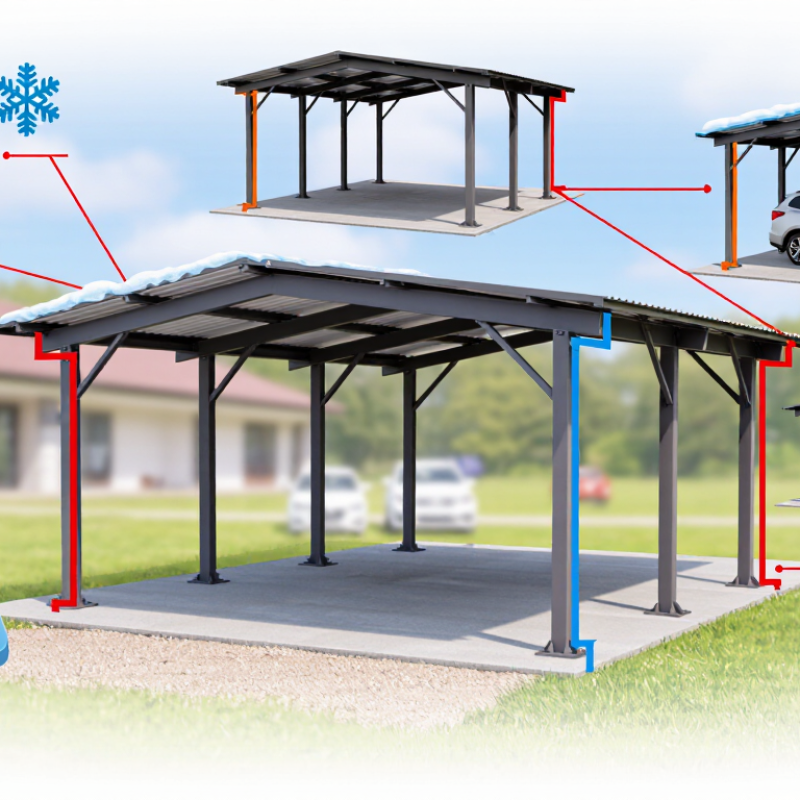
What Defines a Steel Frame Carport in 2026?
What Defines a Steel Frame Carport in 2026?
A steel frame carport is an open-sided shelter whose columns, beams, and roof supports form its load-bearing structure. Its defining feature is not simply visible metal. A dependable design accounts for span, connections, anchoring, and site-specific wind, snow, and rain loads. In the United States, ASCE 7-22 provides criteria for evaluating these loads; local requirements and conditions still matter. Check how posts connect to the foundation, not just the roof profile. Small details matter.
Material protection is part of the definition, too. Galvanized or coated steel can resist corrosion, but drainage, scratches, and exposed cut edges affect long-term performance. The NACE International IMPACT study estimated corrosion costs at 3.4% of global GDP, underscoring why protection should not be an afterthought. Yet a thicker-looking frame is not automatically stronger; steel grade, section shape, bracing, and engineering all count. World Steel Association data report 630 million tonnes of scrap used in steelmaking in 2023, a reminder that steel is highly recyclable. That figure describes the industry, not a carport’s durability. Ask for documented material and load specifications. Specs can still leave questions.
What Is the Best Steel Frame Carport in 2026? - What Defines a Steel Frame Carport in 2026?
| Feature | What to Look For | Why It Matters | Questions to Ask Before Buying |
|---|---|---|---|
| Frame material | Structural steel components sized for the carport’s span and intended loads. | Steel provides a rigid frame, but strength depends on member dimensions, steel grade, connections, and overall design—not material name alone. | Are the frame sections and structural design documented for this specific model and site? |
| Corrosion protection | A specified protective finish, such as hot-dip galvanizing or a suitable paint or powder-coat system; cut edges and fasteners should also be considered. | Coating quality and upkeep affect how well the steel resists rust, especially in damp, coastal, or chemically exposed environments. | What coating is used, how are damaged areas repaired, and what maintenance is recommended? |
| Wind and snow design | Site-specific design values and documentation appropriate to local building requirements, exposure, roof shape, and elevation. | Wind and snow demands vary by location. A general product description or a single rating may not establish suitability for a particular site. | Are the stated loads supported by calculations or approvals for my address and installation conditions? |
| Bracing and connections | Clearly specified cross-bracing, roof bracing, connection plates, and structural fasteners where required by the design. | The stability of the complete structure depends on how its members are connected and braced, not just on the size of the posts or beams. | Does the installation guide show every brace and connection, and are all required parts included? |
| Anchoring and foundation | Anchors and foundation details compatible with the frame design and the actual surface, such as concrete or engineered ground footings. | Anchorage transfers structural forces to the ground. A frame’s performance can be compromised if it is installed on an unsuitable base or with inadequate anchors. | What foundation is required, and who confirms the anchor type, spacing, and installation method? |
| Clear dimensions | Published usable width, length, entry height, and clearance between posts—not just the overall roof dimensions. | Post placement and roof overhang reduce the space available for parking and opening vehicle doors. Measure the vehicle and approach area before selecting a size. | Are the listed measurements inside clearances or outside dimensions? Will they accommodate my vehicle and access needs? |
| Roof design and drainage | A roof profile and slope suited to the covering, local conditions, and planned water runoff; gutters may be useful where runoff needs control. | Slope and drainage help direct rainwater away from the vehicle, entrances, and foundation. Roof shape also affects clearance and load behavior. | Where will water discharge, and are roof panels, flashings, and compatible drainage components included? |
| Roof covering compatibility | A covering specified for the frame, with compatible fasteners and installation details. The covering may be metal, fabric, or another rated material depending on the design. | Covering weight, attachment method, and maintenance requirements affect both the frame design and long-term use. | Is the covering included, and is the frame engineered for that exact covering and its attachments? |
| Installation and permits | A complete installation guide, clearly identified parts, and design documents that can be reviewed for local permit requirements. | Permits, setbacks, foundation rules, and inspection requirements differ by jurisdiction. Installation quality is part of the structure’s performance. | Does my local authority require a permit, and are drawings available for review before purchase? |
| Warranty and maintenance | Written coverage terms that distinguish the frame, finish, roof covering, and workmanship, plus practical inspection guidance. | Warranty periods and exclusions vary. Periodic checks can help identify loose fasteners, coating damage, corrosion, or drainage issues early. | What is covered, what conditions are excluded, and what inspections or upkeep are required? |
Selection note: The best steel frame carport in 2026 is one whose documented design, dimensions, corrosion protection, anchoring, and installation suit the site and intended use. Confirm local requirements with the relevant building authority or a qualified professional.