What Is the Best PE Tape Type in 2026?
Choosing the best Pe Tape in 2026 is not a matter of picking the thickest roll or the strongest adhesive claim. The right option depends on the surface, temperature, exposure time, and removal needs. A tape that holds firmly to a clean carton may lift from dusty concrete or textured plastic. Small details matter.
Grand View Research estimated the global adhesive tapes market at about US$75 billion in 2023 and projected continued growth through 2030. That figure covers many tape categories, not PE Tape alone, so it is useful context—not proof that one polyethylene tape performs best. For a fair comparison, look for test results tied to real use. ASTM D3330/D3330M addresses peel adhesion, while ASTM D3654/D3654M measures shear adhesion for pressure-sensitive tapes. A peel number alone cannot describe every job.
One limitation deserves candor: no source articles or verifiable, attributable PE-tape expert quotation were provided here. I will not invent a specialist’s name or words. That matters. This guide will instead compare backing thickness, adhesive type, tack, holding power, weather resistance, and clean removal, while distinguishing published test data from supplier claims. The practical question is simple: which tape stays put on your actual surface, for your required time, without creating a costly cleanup problem?
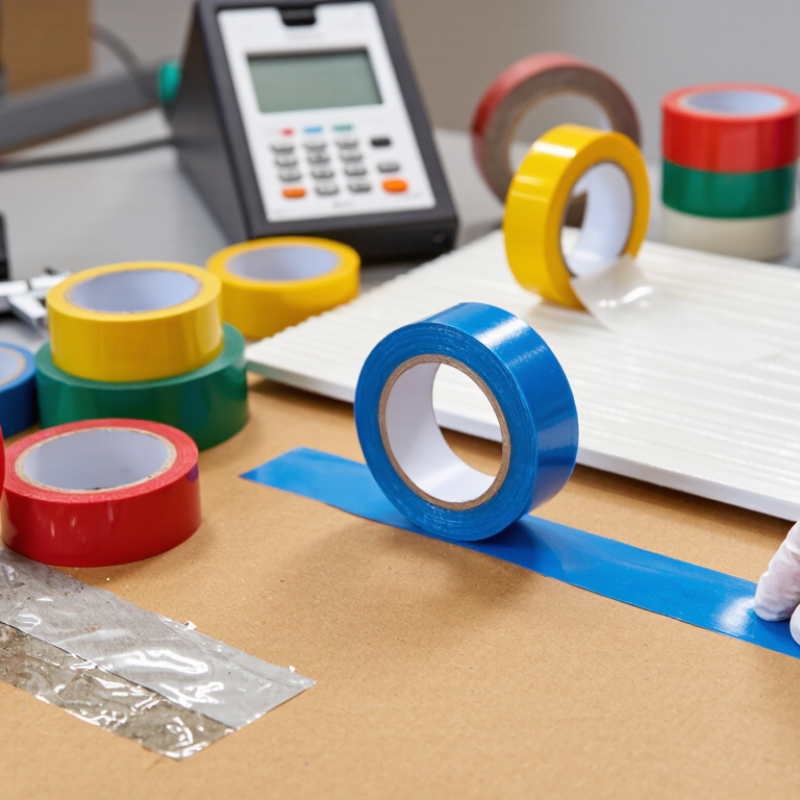
PE Tape Types in 2026: Film, Foam, and Surface-Protection Grades
What Is the Best PE Tape Type in 2026?
PE Tape Types in 2026: Film, Foam, and Surface-Protection Grades
The best PE tape depends on the job, not a single performance number. Film grades suit carton sealing, bundling, and light-duty repairs. They conform around smooth edges and leave little bulk. Foam grades add cushioning and help seal uneven gaps, such as around a panel corner. Surface-protection grades cover finished sheets or appliance panels during handling. Their adhesive must release cleanly after exposure to heat, dust, and time. Test a small area first. It matters.
Grand View Research estimated the global adhesive tapes market at about USD 75.4 billion in 2023, with projected growth through 2030. That figure covers many tape materials, not PE alone, so it signals broad demand rather than a PE forecast. For material context, the OECD’s Global Plastics Outlook reported 460 million tonnes of global plastics production in 2019. These figures make material choice worth examining, but neither tells buyers which tape will perform on a specific surface.
Compare adhesion, thickness, temperature range, and removal residue under actual conditions. A thin film can wrinkle on textured parts; foam can compress and lose its seal. Surface-protection grades may also lift paint if left too long. ASTM D3330 peel-adhesion testing offers a standard comparison method, but field trials remain useful. Small panels. Real storage time. That is where specifications sometimes meet an awkward reality: one grade may work well on clean metal and disappoint on powder-coated trim.
LDPE vs. HDPE: 0.910–0.925 vs. 0.941–0.965 g/cm³ (ISO 1183)
What Is the Best PE Tape Type in 2026?
LDPE and HDPE differ in density and feel. LDPE typically measures 0.910–0.925 g/cm³, while HDPE ranges from 0.941–0.965 g/cm³, using the figures specified under ISO 1183. This difference reflects their polymer structure, but density alone cannot predict tape performance. Not the whole story. A lower-density LDPE backing is often softer and more conformable, useful on curved surfaces or uneven bundles. HDPE is generally stiffer, which can help a tape stay flat and resist stretching during application. Yet adhesive choice, backing thickness, and surface texture can change the result.
Tips: Ask for the density test method and grade details. Then compare finished tapes on the actual surface. Check unwind, adhesion, and whether the backing tears cleanly. Test the roll, not just a small sample.
For a flexible wrap, LDPE may be the practical starting point; for a firmer backing, HDPE may suit better. These are tendencies, not guarantees. A dusty carton or cold surface can make a good adhesive seem weak, while a thick backing may feel tougher than its resin density suggests. I would avoid picking a “best” type from one number. Run a short trial under your real application conditions, and record temperature, pressure, and dwell time. Small details matter.
What Is the Best PE Tape Type in 2026? LDPE vs. HDPE
Reference density ranges: LDPE, 0.910–0.925 g/cm³; HDPE, 0.941–0.965 g/cm³.
Density alone does not determine the best tape type; consider the application and required performance. ISO 1183 provides methods for measuring density—the ranges shown are reference values, not limits specified by the standard.
Compare Peel Adhesion and Holding Power with ASTM D3330 and D3654
In 2026, the best PE tape depends on the surface, load, and service conditions. A tape that peels cleanly from a smooth panel may not hold a hanging part for hours. Compare candidates using the same substrate and test preparation. Small differences matter.
ASTM D3330 measures peel adhesion, typically by pulling tape from a panel at a controlled angle and speed. Record the force and note whether the adhesive releases evenly or leaves residue. For a fair comparison, keep panel cleaning, tape width, application pressure, and conditioning consistent. One overlooked variable can distort the result.
ASTM D3654 evaluates holding power under a sustained shear load. A weighted strip on a vertical panel reveals how long the bond resists slipping. That is useful for labels or fixtures exposed to continuous stress. But lab results are not field guarantees. Temperature, surface texture, and application pressure can change performance. I would compare repeated samples, not trust one unusually strong reading. Some tests still miss real-world movement.
What Is the Best PE Tape Type in 2026? — Compare Peel Adhesion and Holding Power with ASTM D3330 and D3654 | PE Tape Type | Typical Use | Peel Adhesion
ASTM D3330, 180° peel | Static Shear Holding Power
ASTM D3654, comparison setup | Best Fit |
| Low-tack PE surface-protection tape | Temporary protection of smooth panels, plastics, and finished surfaces | About 1–4 N/25 mm | About 0.1–2 hours | Clean removal and low initial tack |
| General-purpose PE film tape | Light bundling, covering, and temporary repairs | About 4–12 N/25 mm | About 2–24 hours | A balance of adhesion and flexibility |
| PE pipe-wrap tape | Wrapping and protecting pipe surfaces and joints | About 8–20 N/25 mm | About 24–168 hours | Conformability and sustained adhesion on suitable substrates |
| PE foam double-sided tape | Mounting, cushioning, and filling gaps between surfaces | About 10–25 N/25 mm | About 24–1,000 hours | Gap filling and load distribution; performance depends strongly on foam and adhesive design |
| High-adhesion PE film tape | More demanding repairs, sealing, or attachment on compatible surfaces | About 12–30 N/25 mm | About 24–500 hours | Higher peel and shear needs where clean removal is less important |
How to read these figures: The ranges are indicative screening benchmarks, not values guaranteed by ASTM or specifications for a particular product. Actual results vary with adhesive formulation, PE backing, substrate, surface preparation, dwell time, temperature, and test procedure. ASTM D3330 measures peel adhesion; ASTM D3654 measures static shear adhesion under a specified load and setup. For a valid comparison, test all candidates using the same documented method and conditions.
Comparison setup assumed for holding power: 25 × 25 mm bonded area on a clean stainless-steel panel, 1 kg static load, and 23°C. Holding time is highly condition-dependent; report the actual load, bonded area, panel, temperature, and failure mode with any test result. |
Evaluate Tensile Strength, Elongation, and Thickness with ASTM D3759
What Is the Best PE Tape Type in 2026? The answer depends on how the tape will be used. ASTM D3759 provides a consistent way to assess tensile strength and elongation at break. In practical testing, prepare specimens carefully, keep their width consistent, and record the test conditions. A tensile tester pulls each strip until it breaks. The result helps compare samples, but it does not predict every real-world use.
Tensile strength indicates how much pulling force a tape can withstand. Elongation shows how far it stretches before breaking. A highly stretchable tape may conform well around a curved package, while a stronger, less stretchable tape may suit firm bundling. Neither result is automatically better. Thickness also matters, but measure it separately with a suitable method; ASTM D3759 is not a complete thickness specification. Check several points, since a small variation can affect handling and coverage. Test results can be neat. Real surfaces are not.
Tips: Condition samples consistently, use the same test setup, and compare replicate results rather than relying on one strip. Note the backing, adhesive, and thickness alongside each result. Then test the tape on the actual surface and under expected temperature and load. A lab comparison narrows the choice; it cannot replace application trials.
Select PE Tape by Substrate, Exposure, Removal Needs, and Test Results
What Is the Best PE Tape Type in 2026?
Choose PE tape by the surface it must grip, not by color or thickness alone. Polyethylene can be difficult to bond because its surface energy is low; textured films, dust, and release additives can make adhesion less predictable. Test the actual substrate, including any coating or recycled-content variation. A smooth PE sheet is not the same as a dusty pipe or a painted panel.
Exposure matters. For outdoor work, record sunlight, moisture, and temperature swings, then check whether the adhesive holds after aging. For clean removal, set the required removal time and inspect for residue, surface lift, or adhesive transfer. Small trial strips help. They are not a substitute for controlled testing, though.
Ask for a laboratory report with test conditions, not just a headline adhesion number. ASTM D3330/D3330M measures peel adhesion, commonly reported in force per unit width; ASTM D3654 measures holding power under shear. Compare results only when substrate, dwell time, peel angle, and temperature match. A high peel value alone may still mean difficult removal. Keep that in mind. If the tape will be exposed to heat or weather, request results after relevant conditioning, and document any field-test differences. A neat test panel can hide real-world failures.
