7 Best Electric Furnace Transformers for Global Buyers
Choosing the right Electric Furnace Transformer can determine whether a melting line runs smoothly or loses valuable production hours. Global buyers face different grid conditions, furnace cycles, ambient temperatures, and compliance requirements. A transformer designed for a stable European network may perform differently in a high-dust steel plant or a remote installation with voltage fluctuations.
Martin J. Heathcote, author of The J&P Transformer Book, describes the transformer as “one of the most reliable items of electrical plant in service today.” Reliability, however, depends on correct application. Buyers should examine furnace capacity, secondary voltage, short-circuit impedance, harmonic loading, cooling method, insulation system, and duty cycle. Oil-filled and dry-type designs each have practical advantages. The best choice depends on the site.
Small details matter. Check the nameplate. Review temperature-rise data. Ask for routine test reports, factory experience, spare-parts support, and clear warranty terms. Local standards, installation altitude, fire-safety rules, and after-sales response should also influence the decision. A low purchase price can become expensive when service access is weak.
This guide compares seven Electric Furnace Transformer options for global buyers. It focuses on technical suitability, manufacturing credibility, operating efficiency, and long-term service value. No ranking is universal. That is worth admitting. Project data may be incomplete, and supplier claims still require verification. A careful buyer should confirm every critical specification before placing an order.
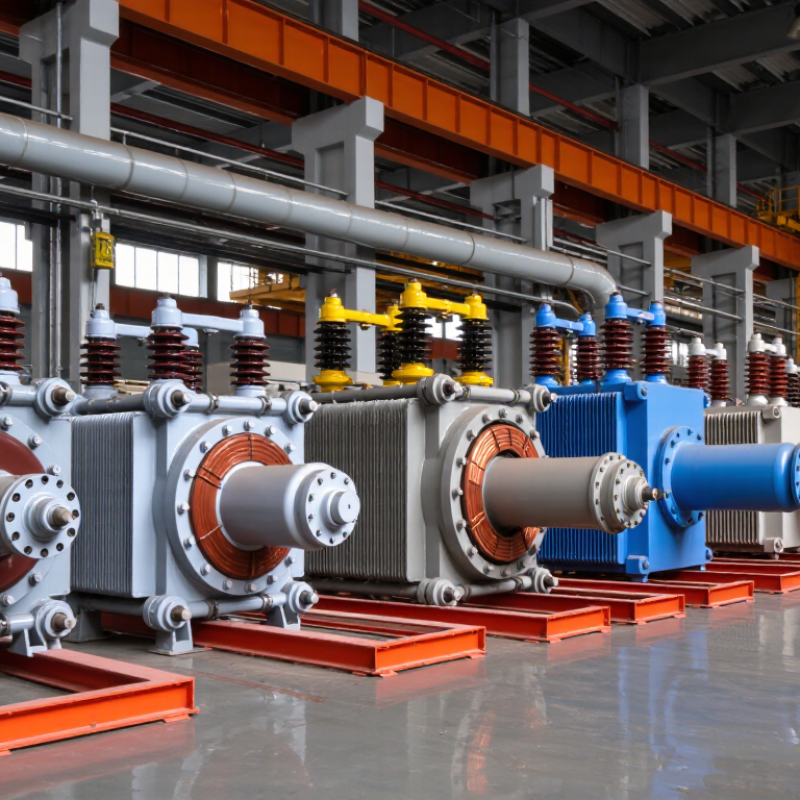
Electric Furnace Transformer Basics and Selection Criteria
7 Best Electric Furnace Transformers for Global Buyers
Electric Furnace Transformer Basics and Selection Criteria
An electric furnace transformer converts incoming power into the high-current supply required by arc or resistance furnaces. Its secondary voltage is usually low, while current can reach several thousand amperes. The correct design begins with the furnace duty cycle, not only its peak rating. Record melting time, tapping intervals, electrode movement, and expected daily output.
Check rated power, primary and secondary voltage, frequency, impedance, and short-circuit strength. Impedance affects furnace stability and limits damaging fault current. A mismatch can cause voltage flicker, excessive heating, or poor arc control. Harmonic levels also deserve attention, especially with modern control equipment. Ask for verified test data, temperature-rise results, insulation levels, and efficiency figures.
Cooling selection depends on load pattern, ambient temperature, altitude, and available maintenance skills. Oil-immersed units may suit demanding continuous service, while dry-type designs can simplify indoor installation. Confirm tap-changer performance under frequent adjustments. Protection should include temperature monitoring, pressure relief, grounding, and suitable differential protection. Field engineers should inspect cable connections carefully; loose joints often create localized hot spots before alarms appear. A clean calculation sheet is not enough. Real furnace behavior can be irregular, and early assumptions sometimes need revision. Local grid standards, installation rules, and certified testing requirements must be checked before purchase.
Key Specifications for Comparing Global Transformer Options
Choosing an electric furnace transformer requires more than comparing price or catalogue capacity. Start with the furnace load profile, including melting cycles, inrush current, and short-term overloads. A transformer rated only for average demand may overheat during repeated charging. Check primary and secondary voltages carefully. Confirm the required kVA, frequency, phase arrangement, and allowable voltage variation. Small mismatches can create serious operating problems.
Impedance is equally important because it affects fault current and voltage stability. Lower impedance may improve voltage regulation, but it can increase short-circuit stress. Review insulation levels, cooling method, temperature rise, and enclosure protection for the installation environment. Outdoor sites may require stronger protection against dust, moisture, and corrosive air. Tap-changing equipment can support voltage adjustment, although its control range and maintenance needs should be examined. Efficiency matters, but harmonic performance should not be ignored when power electronics control the furnace. This detail is sometimes overlooked.
Tips: Request certified test data, not only promotional figures. Compare guaranteed losses, noise levels, service clearances, and delivery documentation. Ask whether the transformer supports local grid conditions and applicable safety standards. Check spare-part access before signing. A lower purchase cost can become expensive when downtime, transport, or specialist repairs are added. I would also leave design margin, but not excessive margin; an oversized unit may operate inefficiently at light load. Reliable selection often depends on measurements from the actual furnace, not assumptions.
7 Best Electric Furnace Transformers for Global Buyers - Key Specifications for Comparing Global Transformer Options
Representative commercial configurations for electric arc, induction, ladle, and resistance furnace applications
| Option | Typical Furnace Duty | Rated Power | Primary Voltage | Secondary Voltage | Frequency | Phase | Impedance | Cooling Method | Tap-Changer Arrangement | Vector Group | Insulation Level | Typical Application |
| Option 1 | Medium-duty electric arc furnace | 10 MVA | 33 kV | 400–690 V | 50/60 Hz | 3-phase | 8–10% | ONAN/ONAF | Off-circuit tap changer, ±5% in 2.5% steps | Dyn11 | LI 170 kV / AC 70 kV | Steel melting, foundry operations, and compact EAF systems |
| Option 2 | High-current induction furnace | 12.5 MVA | 22 kV | 600–1,200 V | 50/60 Hz | 3-phase | 6–8% | ONAN/ONAF | Off-circuit tap changer, ±5% in 2.5% steps | Dyn11 | LI 125 kV / AC 50 kV | Ferrous and non-ferrous metal melting with medium-frequency converters |
| Option 3 | Large electric arc furnace | 25 MVA | 33 kV | 500–900 V | 50/60 Hz | 3-phase | 10–12% | ONAF | On-load tap changer, ±10% in 1.25% steps | YNd1 | LI 170 kV / AC 70 kV | Continuous steel production and high-load scrap melting |
| Option 4 | Ultra-high-current EAF transformer | 40 MVA | 66 kV | 600–1,000 V | 50/60 Hz | 3-phase | 10–14% | ONAF/OFWF | On-load tap changer, ±12.5% in 1.25% steps | YNd11 | LI 325 kV / AC 140 kV | Large steel mills requiring high short-circuit withstand capability |
| Option 5 | Ladle furnace transformer | 15 MVA | 33 kV | 250–600 V | 50/60 Hz | 3-phase | 8–12% | ONAF | On-load tap changer, ±10% in 1.25% steps | Dyn11 | LI 170 kV / AC 70 kV | Secondary metallurgy, temperature adjustment, and alloy treatment |
| Option 6 | Resistance furnace transformer | 5 MVA | 11 kV | 400–800 V | 50/60 Hz | 3-phase | 5–8% | ONAN | Off-circuit tap changer, ±5% in 2.5% steps | Dyn11 | LI 75 kV / AC 28 kV | Heat treatment, annealing, sintering, and industrial thermal processing |
| Option 7 | Submerged arc furnace | 30 MVA | 33 kV | 100–300 V | 50/60 Hz | 3-phase | 9–13% | ONAF/OFWF | On-load tap changer, ±15% in 1.25% steps | YNd11 | LI 170 kV / AC 70 kV | Ferroalloy, silicon, calcium carbide, and mineral smelting processes |
Comparison note: Ratings, voltages, impedance values, cooling systems, insulation levels, and tap-changer ranges are representative specifications commonly used for furnace-transformer designs. Final selection should be verified against furnace operating cycles, harmonic content, short-circuit duty, ambient conditions, utility requirements, and applicable IEC or IEEE standards.
Seven Leading Electric Furnace Transformer Categories
Electric furnace transformers serve demanding loads with rapid current changes, heat, dust, and frequent production cycles. Seven leading categories deserve attention: arc-furnace transformers, induction-furnace transformers, resistance-furnace transformers, rectifier transformers, dry-type transformers, oil-immersed transformers, and shell-type transformers. Each category answers a different operating problem.
Arc-furnace transformers handle severe short-circuit conditions and repeated thermal stress. Induction-furnace transformers support stable melting with high-frequency equipment.
Resistance-furnace transformers suit controlled heating zones and predictable loads. Rectifier transformers supply direct current to specialized furnace systems.
Dry-type units reduce fire concerns inside cleaner indoor facilities. Oil-immersed units usually support higher capacities and stronger cooling performance.
Shell-type designs offer compact magnetic paths and mechanical strength.
The IEA Electricity 2024 report projects global electricity demand growth of about 4% in 2024 and 2025. That pressure encourages efficient furnace upgrades. IEC 60076 testing principles remain essential for insulation, temperature rise, and short-circuit performance. The U.S. Department of Energy also links transformer efficiency improvements with long-term energy savings across industrial networks.
Numbers help, but site evidence matters more. A dusty steel plant may punish a dry-type design. A clean workshop may not need oil cooling. Engineers should examine load curves, harmonics, cooling space, maintenance access, and local grid conditions. Mistakes happen. A higher rating alone cannot solve unstable furnace operation.
Safety, Efficiency, and Maintenance Considerations
7 Best Electric Furnace Transformers for Global Buyers
Safety, Efficiency, and Maintenance Considerations
Choosing the seven best electric furnace transformers requires more than comparing rated capacity. Buyers should examine short-circuit strength, cooling performance, insulation class, voltage regulation, harmonic tolerance, tap-changing control, and service access. IEC 60076 testing provides a useful technical baseline for transformer safety and performance. Furnace loads are severe. Rapid current changes can create heat, vibration, and insulation stress.
Efficiency deserves equal attention. The U.S. Department of Energy reports that distribution transformers consume about 2.5% of national electricity use. Furnace transformers are not identical, but the figure shows why idle losses matter. High-efficiency cores, low-resistance windings, and suitable cooling can reduce wasted energy. The IEA’s Energy Efficiency 2023 report also identifies industry as a major global energy consumer. Small efficiency gains can become substantial at continuous production sites. I may be too optimistic here; actual savings depend on load patterns and maintenance quality.
Tips: Request temperature-rise data, loss certificates, and short-circuit test results. Check the transformer’s cooling method against furnace duty cycles. Keep infrared inspections, oil tests, and bushing checks in the maintenance plan. Dust is easy to overlook. It is often expensive. Clean ventilation paths and tighten connections during scheduled shutdowns. Use condition-based maintenance where possible, but retain manual inspections. Sensors can miss loose hardware or unusual noise. Local grid frequency, ambient temperature, spare-part access, and technician training should also influence the final purchase.
7 Best Electric Furnace Transformer Configurations for Global Buyers
Typical efficiency benchmarks with key safety and maintenance considerations
The chart compares representative industrial transformer configurations by typical operating efficiency. Actual performance depends on furnace load profile, cooling method, voltage regulation, harmonics, ambient conditions, and applicable IEC or local standards. For global procurement, buyers should verify insulation coordination, overload protection, temperature monitoring, oil or dry-type maintenance requirements, and documented routine test results.
Safety
Confirm short-circuit withstand capability, grounding, pressure relief, fire protection, and protective relays.
Efficiency
Higher efficiency reduces electrical losses, operating temperature, and total energy cost over the service life.
Maintenance
Use scheduled inspections, thermal scans, connection checks, insulation testing, and oil analysis where applicable.
