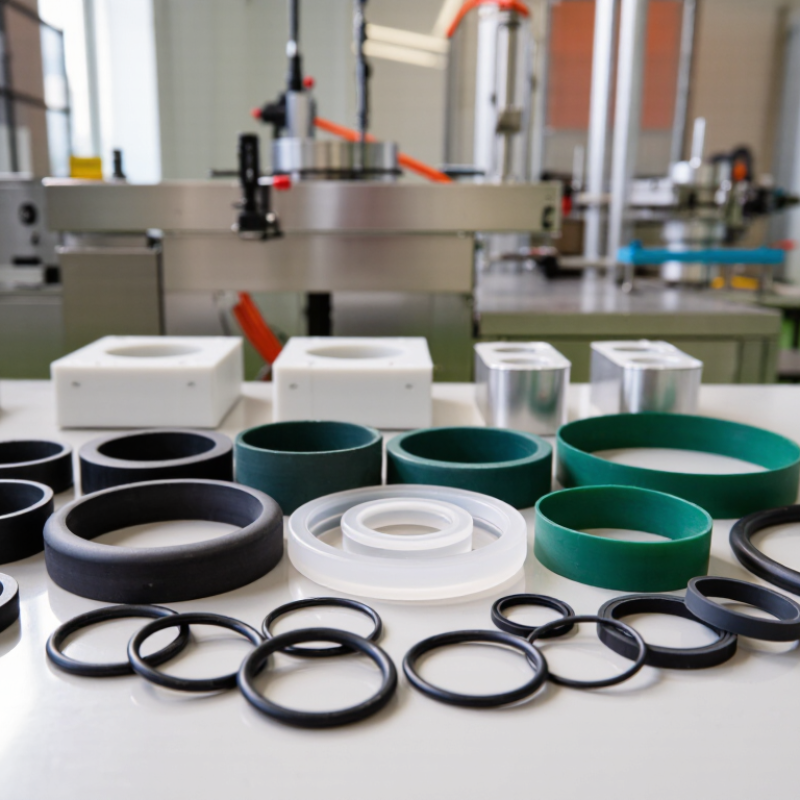
2026 Top ODM O Ring Manufacturer for Global Buyers

Choosing a reliable partner in 2026 requires more than comparing prices or polished factory photographs. Global buyers need an ODM O Rubber Ring Manufacturer that understands sealing performance, production consistency, and real operating conditions. The right supplier should support material selection, custom tooling, prototype development, and controlled mass production. Silicone, NBR, EPDM, FKM, and other elastomers behave differently under heat, pressure, oils, and outdoor exposure. That difference matters.

An experienced manufacturer can explain tolerance limits, compression set, hardness, surface finish, and dimensional stability in practical terms. It should provide material certificates, inspection records, batch traceability, and clear sampling procedures. During supplier evaluation, buyers may review mold accuracy, automated inspection, laboratory equipment, and packaging protection. A sealed sample should arrive clean, evenly molded, and free from flash around its inner diameter. Small defects often reveal larger process weaknesses.

This guide examines leading ODM O-ring manufacturers for international purchasing teams in 2026. It considers engineering support, customization, quality systems, communication, delivery capability, and after-sales reliability. Certifications can strengthen confidence, but they should not replace independent verification. A supplier may appear excellent during an audit and still struggle with urgent changes. We should acknowledge that limitation. No ranking can remove every sourcing risk.

The strongest partnerships develop through documented specifications, trial orders, performance testing, and honest technical discussion. Buyers should ask difficult questions early. That saves time later. A dependable manufacturer does not promise perfection; it demonstrates control, responds to problems, and improves when evidence exposes a weakness.

2026 Top ODM O Ring Manufacturer for Global Buyers

What Is an ODM O-Ring Manufacturer?

An ODM O-ring manufacturer develops, tests, and produces sealing products from a buyer’s performance requirements. It is more than a factory making supplied drawings. The manufacturer may recommend rubber compounds, alter cross-section geometry, create tooling, and prepare production documentation. The buyer receives a usable design, not merely molded parts.

This model matters because seal performance depends on temperature, pressure, fluid exposure, compression, and installation conditions. A reliable ODM partner should provide material traceability, dimensional inspection, hardness testing, and compression-set results.

Grand View Research reported that the global industrial rubber market reached approximately USD 46.7 billion in 2023, reflecting strong demand across machinery, transportation, and industrial equipment. O-rings remain small components, but failure can stop a large system.

The design process should include samples, tolerance reviews, and application testing. ASTM methods are often used for hardness, tensile strength, and compression-set evaluation. Mordor Intelligence also identifies industrial sealing demand as a continuing growth area, driven by equipment maintenance and fluid-control applications.

However, market reports use different definitions. Their figures should not be treated as exact O-ring sales. That is an important weakness.

Experienced ODM teams usually ask uncomfortable questions.

What happens after one year in hot oil?

Will installation twist the seal?

Is the selected compound suitable for regional regulations?

A polished quotation cannot answer these questions. Test records can. An ODM manufacturer earns credibility through repeatable evidence, controlled changes, and honest limits.

How ODM O-Ring Manufacturing Supports Global Buyers

How ODM O-Ring Manufacturing Supports Global Buyers

ODM O-ring manufacturing gives global buyers more than a finished seal. It provides material selection, mold development, testing, and production control under one technical process. Experienced manufacturers can match compounds to temperature, pressure, chemicals, and movement. They can also adjust dimensions for a buyer’s housing design. This reduces repeated tooling changes and sampling delays.

The 2024 Industrial Rubber Market report by Grand View Research indicates steady growth, with demand supported by automotive, industrial, and fluid-control applications. The U.S. Department of Energy reports that compressed-air systems may lose 20% to 30% of output through leaks. A poorly specified O-ring can contribute to that waste. ODM teams should verify hardness, compression set, tensile strength, and media resistance. ISO 3601 dimensional checks are useful, but they do not replace application testing. Real conditions are messier.

Tips: Request a material certificate, inspection record, and batch traceability before approval. Ask for samples tested at actual temperatures and pressures. Keep a second compound option when supply risks matter. Cost is important. It is not everything. A practical weakness remains: many buyers approve drawings before testing installation force, surface finish, or storage aging. That decision can create failures months later. A stronger ODM workflow includes design review, pilot runs, aging tests, and documented corrective actions before full production.

Key Materials and Designs for Custom O-Rings

Custom O-rings begin with service conditions, not a catalog size. Temperature, pressure, media exposure, and movement determine the compound. Material choice matters. Nitrile suits many oil-based applications and offers practical cost control. EPDM performs well with hot water, steam, and weather exposure. Fluorocarbon compounds support demanding heat and chemical environments. Silicone remains useful where flexibility and clean processing are priorities. Each option has limits.

An experienced ODM team translates these conditions into hardness, cross-section, and tolerance requirements. Shore hardness affects sealing force and installation effort. Groove dimensions must allow compression without excessive friction or extrusion. Backup rings may help in high-pressure applications. Surface finish matters too. Even a sound compound can leak against scratches, gaps, or poor alignment. Design reviews should include drawings, samples, and controlled measurement records.

Reliable production depends on traceable materials, calibrated inspection tools, and repeatable curing conditions. Sample testing should reflect real temperatures, pressure cycles, and chemical contact. Visual checks alone are not enough. One overlooked detail can change compression after assembly. Global buyers also need clear documentation, packing protection, and consistent batch identification. Still, no design is perfect on paper. Field feedback may reveal swelling, hardening, or installation damage that laboratory tests missed. That feedback should reshape the next custom revision.

2026 Top ODM O Ring Manufacturer for Global Buyers - Key Materials and Designs for Custom O-Rings

Category Material or Design Typical Technical Range or Standard Key Advantages Common Application Conditions ODM Customization Considerations
Material Nitrile Rubber (NBR) Typical service temperature: approximately −40°C to +120°C. Common hardness range: 70–90 Shore A. Good resistance to mineral oils, fuels, hydraulic fluids, abrasion, and compression set at moderate temperatures. Hydraulic and pneumatic equipment, fuel systems, general industrial sealing, and rotating shafts. Specify acrylonitrile content, hardness, low-temperature requirement, fluid exposure, color, flash control, and dimensional tolerance.
Material Fluorocarbon Rubber (FKM) Typical service temperature: approximately −20°C to +200°C, with some formulations rated beyond this range. Excellent resistance to mineral oils, fuels, many chemicals, ozone, and high-temperature aging. Automotive fuel systems, chemical processing, high-temperature hydraulic equipment, and vacuum service. Confirm the formulation for steam, hot-water, low-temperature, amine, or concentrated-chemical exposure because resistance varies by compound.
Material Ethylene Propylene Rubber (EPDM) Typical service temperature: approximately −45°C to +150°C. Excellent ozone and weathering resistance. Strong resistance to hot water, steam, glycol-based fluids, dilute acids, alkalis, and outdoor aging. Cooling systems, water valves, sanitation equipment, outdoor machinery, and braking systems using compatible fluids. Do not use standard EPDM with petroleum oils or hydrocarbon fuels. Define drinking-water, food-contact, or steam requirements separately.
Material Silicone Rubber (VMQ) Typical service temperature: approximately −60°C to +200°C. Available in multiple grades for special regulatory requirements. Very wide temperature range, good flexibility, low compression set at moderate conditions, and good weathering resistance. Medical and food equipment, low-temperature sealing, electrical enclosures, lighting, and static sealing. Review tear strength, abrasion, gas permeability, steam exposure, pigment requirements, and applicable food or medical compliance.
Material Polytetrafluoroethylene (PTFE) Typical service temperature: approximately −200°C to +260°C. Usually supplied as a molded, machined, or energized seal. Very broad chemical resistance, low friction, non-stick behavior, and strong performance in aggressive chemical environments. Chemical processing, laboratory equipment, high-purity systems, cryogenic service, and high-temperature static sealing. Account for low elasticity, installation stretch, cold flow, surface finish, backup components, and whether an elastomer energizer is needed.
Material Hydrogenated Nitrile Rubber (HNBR) Typical service temperature: approximately −40°C to +150°C, depending on compound and application. Improved heat, ozone, aging, and mechanical strength compared with standard NBR while retaining useful oil resistance. Automotive air-conditioning systems, oil and gas equipment, high-pressure hydraulic systems, and dynamic sealing. Define hydrogenated polymer grade, refrigerant or gas compatibility, explosive-decompression resistance, hardness, and pressure-cycle profile.
Design Standard Round O-Ring Common dimensional systems include ISO 3601 metric sizes and AS568 inch sizes. Cross-sections are selected according to groove geometry. Simple design, broad availability, economical tooling, and suitability for many static and moderate dynamic applications. Flanges, covers, fittings, valves, cylinders, pumps, and general-purpose enclosures. Provide groove diameter, seal diameter, cross-section, gland fill, squeeze, stretch, pressure, and installation direction rather than relying only on nominal size.
Design X-Ring or Quad-Ring Four-lobed cross-section designed to create two sealing lines and reduce rolling in some dynamic applications. Can reduce twisting and rolling during reciprocating or rotary movement when the groove is correctly designed. Hydraulic rods, rotary shafts, actuators, and applications where a conventional O-ring may spiral or roll. Use a groove designed specifically for the X-ring profile; verify clearance, lubrication, movement speed, surface finish, and extrusion risk.
Design Back-Up Ring Assembly An elastomer O-ring is paired with one or more rings made from PTFE or another harder material to limit extrusion. Improves resistance to high pressure, large clearances, and pressure cycling compared with an unprotected O-ring. High-pressure hydraulics, pneumatic equipment, valves, and systems with pressure reversal or extrusion risk. Specify pressure, temperature, clearance gap, pressure direction, groove dimensions, backup-ring split style, and installation sequence.
Design Encapsulated O-Ring An elastomer core is enclosed by a seamless or jointed fluoropolymer jacket; common core options include FKM or silicone. Combines elastomeric resilience with improved chemical resistance and a low-friction outer surface. Chemical processing, pharmaceutical equipment, semiconductor manufacturing, and aggressive-fluid service. Match jacket material, core elasticity, temperature limits, compression level, corner radius, and installation method.
Design Metal-Detectable or Conductive O-Ring Elastomer compound contains functional fillers or conductive additives selected for detection or electrical performance. Can support contamination control, grounding, static dissipation, or electromagnetic shielding requirements. Food-processing lines, pharmaceutical production, electronics, instrumentation, and controlled manufacturing areas. Define detection method, minimum detectable fragment, electrical resistance, regulatory requirements, hardness, and compatibility with cleaning chemicals.
Quality Dimensional and Visual Inspection Typical controls include inside diameter, cross-section, flash, surface defects, mold parting line, and batch traceability. Reduces assembly failures caused by incorrect size, surface damage, excessive flash, or inconsistent molding. All custom O-ring programs, especially safety-critical, high-volume, and automated-assembly applications. Agree on sampling plans, inspection equipment, drawing tolerances, appearance limits, lot identification, and certificate requirements.
Validation Performance and Compatibility Testing Potential tests include compression set, tensile properties, hardness, fluid immersion, leakage, pressure cycling, and temperature aging. Confirms that the selected compound and geometry perform under the buyer's actual operating conditions. New product development, fluid changes, elevated pressure, wide temperature cycles, and regulated applications. Set acceptance criteria before production and test against actual fluid, pressure, temperature, speed, surface finish, and installation conditions.
Technical note: Temperature ranges and material capabilities are typical engineering guidelines, not universal ratings. Final O-ring selection should be validated against the exact fluid, pressure, speed, clearance, surface finish, installation method, and applicable standards. ISO 3601 and AS568 define commonly used O-ring dimensional systems; they do not replace application-specific material validation.

How to Evaluate a Reliable ODM O-Ring Supplier

2026 Top ODM O-Ring Manufacturer for Global Buyers
How to Evaluate a Reliable ODM O-Ring Supplier

A reliable O-ring supplier should prove performance, not only display a certificate. The ISO Survey 2023 recorded more than 1.26 million ISO 9001 certificates worldwide. That number shows certification is common, but it does not guarantee strong rubber engineering or process control.

Ask for material traceability from compound batch to shipped parts. Request test records for hardness, tensile strength, elongation, compression set, and dimensional accuracy. These tests should match ISO 3601, ASTM D2000, or the application’s required specification. A serious supplier can also explain media compatibility, temperature limits, tooling ownership, and expected service life.

Review samples under realistic conditions. Use the actual fluid, pressure, temperature, and installation method. An O-ring that passes a laboratory test may still fail after repeated assembly. The supplier should provide first-article inspection reports and clear change-control procedures. Statistical process control is valuable, especially for high-volume orders. Industry quality reports often emphasize traceability and corrective-action speed as major supply-chain risks.

Do not rely on a polished factory tour. Audit mixing, molding, trimming, inspection, and packaging records. Check whether rejected parts are analyzed or simply discarded. This is where evaluation becomes uncomfortable. Some suppliers promise tight tolerances before confirming the design. Ask for a written feasibility review before approving the mold.

Global Quality, Compliance, and Delivery Considerations

2026 Top ODM O Ring Manufacturer for Global Buyers

Global Quality, Compliance, and Delivery Considerations

Global buyers need more than a low quotation when selecting an ODM O ring manufacturer. They need repeatable quality, clear documentation, and realistic delivery planning. An experienced supplier should understand sealing pressure, temperature range, media exposure, and installation conditions. These details shape the compound, hardness, cross-section, and tooling design.

Quality begins with controlled materials and traceable production lots. Each lot should include inspection records, dimensional checks, and relevant test results. Useful tests may include tensile strength, elongation, hardness, compression set, and leakage performance. Samples should match mass production conditions. Testing must be practical.

Compliance requires market-specific attention. Material declarations, restricted-substance assessments, and food or medical documentation may apply to certain applications. Buyers should request current certificates, audit records, and change-control procedures. A certificate alone proves little without traceability. This is often overlooked.

Delivery depends on more than promised lead time. Tooling readiness, raw material availability, packaging details, and inspection capacity can affect shipment dates. Clear approval milestones reduce surprises. A reliable ODM partner should provide production updates and contingency plans. Still, no factory is flawless. Forecasts change, and delays sometimes happen. Honest communication matters more than unrealistic promises. Buyers should review past performance, question weak evidence, and leave time for independent verification before full-scale production.

Go to Top